Decolonizing God (Re-Indigenizing Spirit)

“In order to perpetuate itself, every oppression must corrupt or distort those various sources of power within the culture of the oppressed that can provide energy for change.” — Audre Lorde

In a recent conversation, I found myself defending the spiritual traditions of the Akan against one of its descendants, who, now spiritualized in and by the West, harbors that familiar yet loathsome contempt many Africans still feel towards the spiritual traditions of their people.

I am a Nigerian woman who has lived with and embraced alternative spiritual beliefs in a country that is almost evenly split between Christianity and Islam. The casual disdain many Nigerians show towards African spiritual traditions, due to their upbringing in either the Church or the Mosque, is not new. Until proven otherwise, I have come to expect this disdain and, consequently, the dismissal of African spirituality from Nigerians and other Africans.

Yet, even though this disdain no longer shocks me, it still manages to surprise. Like when a Nigerian global superstar dismissed the spiritual culture of her ancestors and clung firmly, and rather ironically, to the spiritual beliefs of another people. Or when my Akan counterpart, a rather queer individual, casually demonized the water spirits of her ancestral land.

These dismissals are surprising and reflect a self-denial that was externally imposed by the colonial machine and is now perpetuated by the colonized. What are the consequences of this ongoing self-denial? Who benefits when Africans and other colonized peoples worldwide continue to self-abnegate?

Since the pandemic shattered our collective illusion about the world we live in, it has become even clearer and easier to see how the hetero-patriarchal-capitalistic world we have created is unsustainable for our survival now, let alone for future generations. Movements have sprung up across all corners of the globe demanding a shift from these oppressive and anti-life ways of being. Over the last year, nearly two years, we have witnessed a concerted global effort to draw attention to the atrocities in Palestine, a movement that has rippled through and is bringing awareness to injustices in other places like the Congo, Sudan, West Papua, and so on.

The world is awakening to the lies that the West has told for eons, and humans are demanding external change. This is positive; it signifies progress for the species. However, our push for change should not begin and end with external ways of survival. The emphasis on the external and material aspects of existence is part of the deception we have been sold. It has necessitated a focus on material gains and excessive consumption at the expense of the individual and collective human spirit.

The word ‘spirit’ comes from the mid-13th century, meaning: “life, the animating or vital principle in man and animals.” 

Spirit also has the following derivatives, “spirit, soul” (12c., Modern French esprit) and derives directly from Latin spiritus “a breathing (of respiration, also of the wind), breath;” also “breath of a god,” hence “inspiration; breath of life,” hence life itself.”

A disconnection from the spirit means a disconnection from life itself, and we wonder why we live in an anti-life world. No person or people disconnected from their spirit can make sense of life or find any true joy or meaning because they are essentially separated from the spring (Spirit), which is the source of all things. Thus, it becomes easier for such people to become agents of destruction or be easily destroyed.

The myths and Spirits of indigenous cultures nourished life in the people and imparted a sense of meaning that has since been lost and, in many cases, replaced by the spiritual beliefs of a more dominant culture. Many Nigerians who are now Christian or Muslim have embraced these spiritual traditions at the expense of their ancestral beliefs. Even though history is visible to all, we often pretend that many of these conversions did not occur violently.

Perhaps denying the violence that led to the loss of our spirits is necessary for our survival, but I find that the question remains: who benefits from our self-abnegation? What systems—spiritual, economic, agricultural, etc.—thrive when we continue to either willingly, passively, or unknowingly reject ourselves?

This brings us to the opening quote: To perpetuate itself, every oppression must corrupt or distort those various sources of power within the culture of the oppressed that can provide energy for change.

For the colonial machine to establish itself, it had to strip indigenous people of their sources of power. For the colonized, this meant the destruction and distortion of all systems and practices that connected them to an idea of God or the Great Spirit, as many traditions called it, who is the source of life and, therefore, power.

In a world where injustices are apparent and the fight against them shapes how many of us live our lives, it is crucial to make a connection between the state of the world and the separation from Spirit//God. As stated earlier, this separation necessitates our fixation with the physical and everything that concerns it.

Yet, Spirit can only be ignored for so long before it demands a reckoning.

To emphasize this point, let’s recall the beliefs of the Mawri in Niger, who explained this essential connection to the spirit through the belief that each human is born a twin. One twin is bound to the human world of existence, while the other is bound to the spirit world. It is the responsibility, then, of humans to nurture the connection with their spirit sibling; otherwise, they would have a difficult life.

The story captures the current state of human existence. We have, for so long, lived as if separate from our individual and collective spirits, and now we are all feeling the pain of that separation. The degree of the pain felt is proportional to how far a person, group, or society has strayed away from their Spirits, but there is no mistaking it: we are living in difficult times, a situation only worsened by the fact that many of us refuse to recognize that our true source of power is not anything that can be seen, touched, or felt in the material.

We are now doing the colonizers’ work for them by refusing to see that we were a complete people with cosmologies, ontologies, and views of the world that shaped our lives and thus gave them meaning before the trauma of colonization fractured our identities. The work of decolonization, which I argue should be termed ‘reindigenization,’ can never be complete without addressing and tackling this crucial separation between the colonized and their Spirits.

If our Spirits animate life, give it meaning, and are the breath of God within us, and thus life itself, then the separation between the colonized and their spirits has created zombie-like people who are alive and animated but lack the crucial vital energy that infuses life and gives it any meaning. As such, our efforts to ‘decolonize,’ perhaps also lacking the true essence of Spirit, will only bring us so far.

We will never know true freedom until we remember who we are, and we will never remember who we are if we continue to reject our Spirits because we learned long ago that only the spirits of our oppressors are good, even when they tortured us to drive the point home.

Much Ado About Decolonization

Female Nok Head from the ancient Nok Civilization in Modern Day Kaduna State, Northwestern Nigeria

I have lived in Europe for a little over a year now. The experience has felt like a personal social experiment to find a place in the world I belong outside of my ‘natural habitat’ and the lands of my ancestors in the far northwestern state of Kaduna, Nigeria. 

As I settle into these Western worlds and attempt to create for myself a place in it, I am continually jarred by what I can only describe as a prevailing disconnection between the human and their soul. This is not necessarily a new phenomenon that I have observed. The case is also largely true for many people in the country I come from. In Nigeria, I met, loved, cared for, and even worked with people whose detachment from their spirits was glaring in how they treated themselves and responded to the world around them. 

Having lived here now for a over year, I am observing that the major difference between the human-soul separation in the West and my ancestral lands is the fact that this separation from spirit has gone on for much longer and has thus happened so extensively that it feels almost hopeless that there may be redemption for the populations in these parts of the world. 

In my home country, I see that this separation is happening quite gradually and it makes me fear for the future of my country, and the people I love who are still there. It makes me wonder if there will ever be a safe way back home, to the heart and soul of what it originally meant to know ourselves and perceive each other as powerful spirits who have incarnated here on Earth for a collective human experience. 

A buzzword I have come to have a love-hate relationship with is “decolonization.” Everybody and their grandmama wants to decolonize something. I am not even going to play innocent, I have been on the decolonization bandwagon for years now and this is evident in at least three well-funded projects I have been a part of. What has however remained a jarring experience is that many people I have come across who are on this decolonization train, that is headed only god knows where, are still very much colonized in their thinking and how they relate to the world around them. 

Now, I will be the first to make excuses for people because most of us alive today have been socialized in a colonized world. Many of us know nothing of a world before colonization and that is not necessarily of our own making. However, after being a part of the conversation now for some time, and having questioned my intentions, beliefs, and actions, I have come to see that decolonization is nothing more than a buzzword that gets people and institutions a certain kind of attention and access when they need it. Worse, the actions of many agents and institutions that seem to center this idea of decolonization are, in fact, a sort of neo-colonization of already colonized populations and cultures. 

This is dangerous territory because these people and institutions are only interested in specific aspects of the culture and lives of already subjugated people that fit a certain narrative and agenda. These folks are not interested in the sovereignty of previously colonized cultures or even restoring colonized peoples and cultures to their former glory. For them, ‘decolonization’ is a cool word to throw around to show that they are aware of the evils of colonialism, and possibly that they also believe in the autonomy of the colonized. However, when one attempts to engage deeper in the discourse on decolonization, beyond the niche area that has been chosen as the main lens through which we can engage in the discourse, one begins to find various gaps in the knowledge, understanding, and even interest of what it truly means to decolonize.

As a spiritual practitioner and a person who leads and lives spirit-first, quite like my pre-colonial ancestors did, I have come to find the discourse on decolonization to be shallow, lacking in spirit and thus substance. Furthermore, this emphasis on decolonizing still centers the ‘colonial’, and that simply rubs me the wrong way. 

I love a good inquiry, questions have led me down the path of many a life-changing realization and revelation. So, my question to everyone, and no one at all, is this: 

When you use the word ‘decolonize’ what are you attempting to say or do? 

Do your ‘decolonization’ efforts only begin and end when a project is proposed, planned, and implemented, or are you working also on decolonizing your mind, beliefs, and the structural systems that prevail?

I simply am unable to see beyond the fact that this word continues to center a system of oppression many of us claim we do not want. I wonder what alternative words and nomenclature exist for our collective and individual efforts to return to a place before the horrors of colonialism separated us from our individual and collective human spirits.

Speaking of spirits, people want to talk about decolonization and yet are deathly afraid of admitting that they are spirit beings having a human experience. There is no Indigenous culture on Earth that does not allude to humans having a spirit or the fact that we are, by existing, in a relationship with a higher realm beyond this physical and material existence. Yet, I continue to meet people who want to decolonize the world and cannot even fathom this crucial aspect of Indigenous life. 

It makes me wonder, if we cannot understand and reconcile this crucial separation that has happened between spirit and matter, what exactly are we then trying to decolonize? If these so-called decolonial efforts are not leading back to a union between spirit and matter, what exactly are we fighting for?

It is laughable at best, and at worst, we are witnessing the coopting of Indigenous knowledge and wisdom in a similar way that colonizers took land, resources, and anything else of value they could lay their hands on after they encountered Indigenous folks. The people and institutions pushing for decolonization without first doing an internal soul-search of how their actions and systems maintain a colonized structure are simply paying lip service and are thus not different from the colonizers who pillaged Indigenous cultures.

The way I see it, this is what it comes down to: are we truly interested in restoring Indigenous systems where people lived in communion with the Great Spirit, the Earth, and each other, or are we simply interested in surviving and getting by in these post and neo-colonial worlds?

Channeling Goddess: the Divine Feminine as a Necessary Balancing Force

The increasing awareness of the feminine’s powerful and necessary balancing force to the masculine has necessitated a reacquaintance with the concept of divine feminine energy. The embodiment of these energies is an ongoing endeavor to restore balance in a world almost entirely overrun by exploitative masculine energies.

This article provides an overview of six feminine deities from the Continent, highlighting their attributes, the energies they symbolize, and their associated meanings.

The Divine Feminine in African Culture

The Yoruba pantheon includes the primordial goddess of the ocean, Yemoja, who embodies motherhood and fertility. Yemoja is associated with childbirth, nurturing, and protection. She is often depicted as a nurturing mother figure known for her compassion and care.

Yemoja is a deity of great significance in the Yoruba cultural tradition. Her dominion over the ocean represents her vastness and depth, symbolizing water’s nurturing and life-giving aspects. Yemoja is also associated with the moon, which is known to influence ocean tides and women’s fertility cycles. As a mother goddess, Yemoja embodies fertility, compassion, and protection and is revered as a maternal figure who guides and nurtures her children.

The Yoruba deity Oshun is commonly associated with love, beauty, fertility, and rivers. She is also the goddess of sensuality, creativity, and abundance. Her association with rivers symbolizes her sovereignty over emotions, creativity, and the life force. Oshun’s reputation for healing powers precedes her, and she is frequently called upon for matters of love and fertility. Also, the goddess of love and fertility, Oshun embodies feminine beauty, sensuality, and fertility and is often revered as a protector of women and children.

Mami Wata is a water spirit that pervades many West and Central African cultures and the African diaspora. This spirit is strongly associated with water, fertility, wealth, and beauty, much like Oshun and Yemoja. Mami Wata is depicted as a mermaid or a water serpent, symbolizing a connection to the underworld. The spirit embodies both positive and negative aspects of femininity, representing beauty, allure, and danger.

Mami Wata, a deity revered for its mysterious and superior powers, embodies the traits of fertility, abundance, and feminine allure, much like Yemoja and Oshun. This spirit is often invoked to seek blessings of wealth, fertility, and protection.

Isis was a widely revered goddess in ancient Egyptian mythology, notable for her associations with motherhood, magic, fertility, and wisdom. Frequently depicted as a protective mother and a powerful magician, Isis was highly regarded for her role as a devoted wife and mother. One of her most well-known accomplishments was her ability to use her magical abilities to resurrect her husband, Osiris, and safeguard her son, Horus. Often depicted with a throne-shaped headdress, Isis was known as the queen of the gods.

Isis shares similarities with Yemoja and other mother goddesses regarding her nurturing, protective, and maternal qualities. She is revered as a symbol of feminine strength and is often associated with magic and wisdom. Her representation of feminine power and intuition is further reinforced by her role as a protector of the dead, her ability to heal the sick, and her status as a fertility goddess. 

Within the Dahomey tradition, the deity Mawu-Lisa is perceived as a twin godhead characterized by a dual-gendered entity. Mawu, the female aspect, represents the moon, whereas the male element, Lisa, embodies the sun. Mawu-Lisa is primarily associated with creation, fertility, balance, and harmony. This dual-gendered being symbolizes the complementary aspects of both masculine and feminine energies. As such, Mawu represents the nurturing, receptive qualities associated with the moon, while Lisa embodies the active, creative forces of the sun.

Mawu-Lisa particularly represents the delicate balance between opposing forces, emphasizing the harmonious coexistence of masculine and feminine energies and underscoring the importance of balance in African spiritual traditions. This theme of equilibrium is a recurring motif throughout many African cultures, reflecting a deep-seated belief in the interdependence of all things.

In the Baganda Tradition of Uganda, Nambi is regarded as a deity who embodies the attributes of the moon, love, fertility, and the cycle of life. Nambi holds a central position in the creation myth of the Baganda people, where she descends from the heavens to be with Kintu, the first man. The journey of Nambi symbolizes the interconnectedness between the divine and the earthly realm. Further, Nambi is associated with fertility rituals and ceremonies, integral to the Baganda tradition.

Recurring Characteristics of the Divine Feminine

Role in Creation and Fertility: The goddesses mentioned in this discourse and many others not cited are well-noted for their prominent roles in the myths and rituals surrounding creation and fertility. For instance, Yemoja, Oshun, and Mami Wata are revered as the principal deities of fertility in the ocean, rivers, and other water bodies vital for agriculture and sustenance. Similarly, Nambi occupies an essential position in the creation myth of the Baganda people, where she embodies the life-giving aspects of the moon and fertility. Although male deities can also be affiliated with creation and fertility, goddesses are often associated with nurturing and generative qualities more directly and, as such, are frequently invoked in ceremonies related to childbirth, agriculture, and abundance.

Association with Emotional and Intuitive Aspects: Deities and divine figures often hold significant cultural and symbolic value, and their representations can vary greatly depending on the culture and context. In many traditions, goddesses and feminine energies are revered for their emotional and intuitive qualities that resonate with devotees seeking nurturing and empathy. For instance, Isis is renowned for her wisdom, compassion, and magical abilities, while Oshun embodies love, sensuality, and creativity. These qualities make them essential figures for matters of the heart, emotional healing, and spiritual guidance. In contrast, male deities may emphasize different aspects such as strength, leadership, or wisdom. However, the goddesses tend to embody emotional depth and intuition in a way that speaks to the human experience.

Protectors of Women and Children: The goddesses under discussion are highly esteemed as protectors of women, children, and families. Yemoja, for instance, is renowned for her compassionate and protective nature, especially towards mothers and children. Similarly, Mami Wata is believed to bestow protection and blessings upon her devotees, particularly women and children who seek her guidance. While many male deities also offer protection, goddesses are often regarded as nurturing and guardians of vulnerable members of society, reflecting their more maternal and compassionate traits.

Representation in Rituals and Ceremonies: Goddesses have been a significant part of rituals and ceremonies that celebrate various life events, including childbirth, marriage, and harvest festivals. The devotees often present prayers and sacrifices to the goddesses, such as Yemoja and Oshun, seeking safe childbirth and blessings of love and fertility. Moreover, since the goddess is typically associated with the earth, many goddesses are invoked before planting season and during harvests.

Goddesses are often associated with an embodiment of feminine energy and play a pivotal role in various domains such as creation, fertility, emotional and intuitive realms, and protection of women and children. They are also represented in rituals and ceremonies that emphasize nurturing and empathy. These attributes reflect a diversity of roles and qualities within their respective cultural contexts, which enrich the spiritual landscape and provide a balance to the divine masculine energy that often asserts dominance and control in the physical material world. This balance, therefore, is necessary to promote harmony and a sense of equilibrium.

Further Reading:

Featured Image:

Animism: Exploring the Ancient Belief System Connecting Humans and Nature

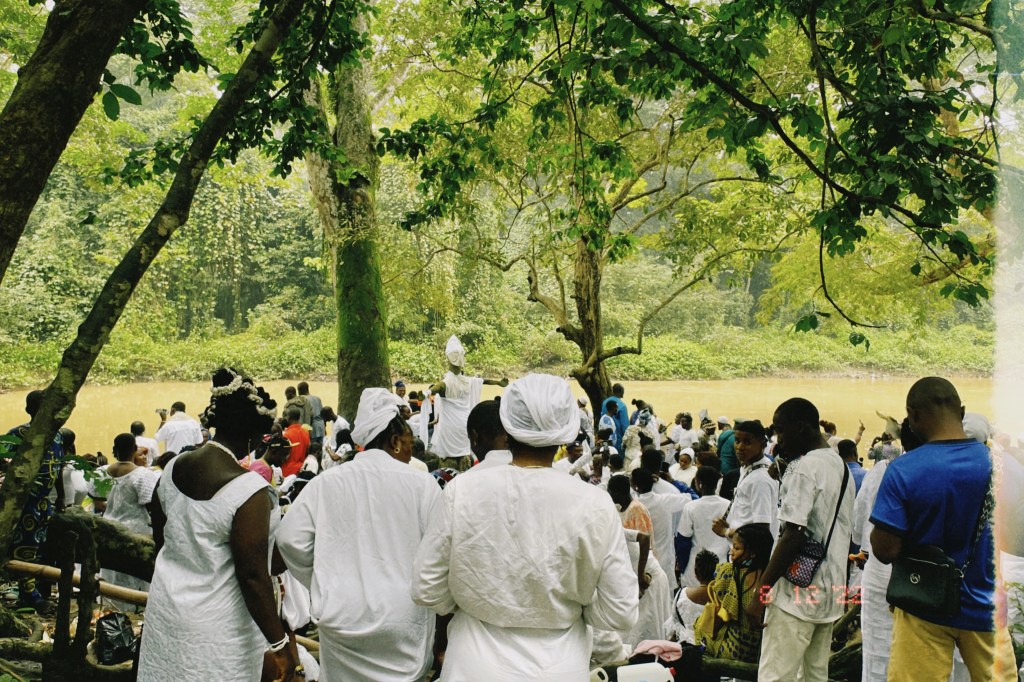
Devotees at the Osun-Osogbo Festival, Osun State, Credit: Oyefeso, Folu

Animism, among humanity’s oldest philosophical and spiritual belief systems, continues to play a vital role in the cultural and spiritual lives of numerous indigenous communities worldwide. Central to animism is the conviction that all elements of the natural world—trees, mountains, rivers, and more—possess a distinct spiritual essence. Far from being confined to a specific region or era, animism has influenced a wide array of civilizations across different geographies and historical periods.

This article explores the multifaceted nature of animism, tracing its origins, foundational principles, and ongoing relevance in contemporary society. By examining animism’s historical and cultural context, we aim to present a concise yet comprehensive overview of this enduring worldview. Our analysis highlights animism’s contemporary importance, including its influence on spiritual practices, environmental ethics, and evolving cultural traditions worldwide.

Historical Roots of Animism

The etymology of the term “animism” can be traced back to the Latin word “anima,” which translates to “soul” or “life force.” However, the underlying idea predates the term and has its roots in the ancient cultures of prehistoric societies. Animism emerged as a means for early societies to comprehend the world and forge a relationship with the natural environment. The Paleolithic era offers evidence of animistic practices, as seen in cave paintings and artifacts, which suggest a profound reverence for animals, plants, and celestial bodies.

At the core of animistic philosophy lies the belief that all entities, regardless of form, possess a spiritual essence. This essence is not limited to humans, but also animates animals, plants, rivers, mountains, and even inanimate objects such as rocks and tools. Moreover, animists perceive the natural world as intrinsically interconnected and interdependent, underscoring a complex web of relationships among all beings. This worldview inspires reverence, respect, and a profound sense of responsibility toward nature. Animistic traditions frequently incorporate elaborate rituals and ceremonies intended to sustain this delicate balance and promote harmony between humans and the natural environment.

Notably, animism has served as a significant cultural force throughout human history and continues to inform the worldview of many indigenous societies. Its emphasis on the spiritual dimension of existence and the interconnectedness of all things resonates with those seeking a deeper and more meaningful relationship with the world.

Illustrative Cases of Animism

Although animism does not adhere to a single cultural tradition, its presence can be identified wherever indigenous peoples have lived. In northern Nigeria, for instance, the indigenous pre-Islamic inhabitants of what is now Kano practiced animism. They worshipped a supreme being, venerated spirits, and offered sacrifices beneath a sacred tree known as Shamuz (or Shamus in some records). Only the high priest, Barbushe, was permitted to approach the Shamuz shrine and conduct sacrifices on behalf of the community. Similarly, the Mawri of Dogondoutchi in Niger believe that humans were separated by the creator from their spirit siblings and are required to appease these spirit siblings to maintain a balanced life.

The presence of elemental deities and spirits associated with various facets of nature attests to the extensive reach of animistic beliefs among prehistoric cultures. The Earth was frequently regarded as the domain of fertility goddesses, such as Uwargona in Hausa tradition, Ala in the Igbo pantheon, and Assase Ya among the Akan. Likewise, the reverence for water spirits—for instance, the goddess Osun in Yoruba tradition—underscores the enduring and profound connection to elemental forces within animistic societies.

Contemporary Relevance of Animism

Anthropologists have observed a renewed interest in animism, often termed “new animism.” This contemporary movement centers on fostering respectful relationships with all beings, both human and non-human—including spirits and entities believed to exist beyond ordinary perception. New animism encourages environmental awareness and draws attention to the widening disconnect between humanity and the natural world. As ecological crises become more acute, this perspective is poised to exert significant influence, promoting stewardship, sustainability, and holistic approaches to planetary well-being.

It is crucial to recognize that, despite the term “new animism,” these beliefs are anything but new. Animistic worldviews and relationships with nature have been foundational for indigenous peoples across history—though they were often denigrated and suppressed by colonial, missionary, and jihadist forces, especially in Africa. Across cultures, animists have cultivated a profound respect for the natural world, recognizing the intrinsic value and agency of all living beings.

Embracing animist principles offers a compelling framework for confronting ecological challenges. It is essential, however, to recognize that animism is a holistic worldview grounded in the spiritual interconnectedness of all beings, and should not be viewed merely as a tool for utilitarian or extractive purposes. Adopting animistic perspectives enables individuals to deepen their awareness of the interdependence of all life forms, thereby fostering more sustainable and harmonious relationships with the environment. Meaningful engagement with animism requires respect, cultural sensitivity, and an informed appreciation of its significance and its potential to advance environmental stewardship.

Image Credit: Oyefeso, F. (2022, September 11). The Osun-Osogbo Festival, Osun State. https://www.foluoyefeso.com/post/the-osun-osogbo-festival-osun-state

Spirits and Deities: Exploring the Distinctions in Supernatural Beings

The belief in supernatural beings is a common thread that ties diverse cultures and spiritual traditions among indigenous people. Spirits and deities are two distinct categories of supernatural beings, each with various characteristics and roles within belief systems. This article will explore the differences between spirits and deities, examining their nature, attributes, and the various cultural contexts in which they are revered.

Spirits are often considered less powerful than deities and may be associated with specific places, objects, or events. Deities are often considered more powerful and may be associated with wider aspects of the natural world or human experience. The nature of spirits and deities can vary greatly from culture to culture. In some cultures, spirits may be considered benevolent, while in others, they may be malevolent. Deities may also be considered benevolent, malevolent, or a mix of both.

Deities: Divine Beings of Power and Worship

Spirits are ethereal beings that occupy an intermediary position between the human and divine realms. In indigenous belief systems, spirits are often associated with specific locations, natural elements, or ancestors. They possess individual identities, consciousness, and agency, yet many spirits lack the grandeur and worship typically accorded to deities, which are a different kind of spirit.

John Mbiti has famously categorized spirits into two groups: those created as spirits and those once human beings. Among those created as spirits are divinities or deities, also known as “those who are associates of God”. Divinities—deities from here—often refer to spirits who are personifications of a supreme being’s activities and manifestations of natural phenomena and objects. Examples of these beings include nature (elemental) spirits, deified heroes, and mythological figures.

Deities are supernatural entities regarded as powerful and transcendent beings embodying various divine aspects. They typically possess elevated status and supreme powers and are revered through worship, rituals, and other religious practices. The Yoruba belief system, for example, recognizes over a thousand deities, Orisa—the most extensively recorded of any African belief system. The Orisa are associated with various aspects of nature, human life and experiences. They are revered as direct messengers who are also often described as an aspect of the supreme itself governing specific domains or spheres, such as love, fertility, war, iron, and wisdom.

Deities are often depicted in human form, but they may also be represented by animals, plants, or other objects. They may be benevolent or malevolent, and they may be invoked for help or protection. Deities play an important role in many cultures and religions, and they continue to be a source of fascination and inspiration for people worldwide.

Non-Deific Spirits

In addition to deities, there are also ordinary spirits, or “spiritual beings who are beneath the status of divinities and above the status of men” (Mbiti, 1970). The origin of spirits varies by spiritual belief system. For example, the Mawri in Dogondoutchi, Niger, believe that spirits are the invisible siblings of humans who were condemned to remain unseen as punishment by the supreme being for the sins of their parents, the first man and woman. In this narrative, and others similar to it, spirits are considered contemporaries of humans because they exist in the same plane as humans, with the most obvious difference being that humans cannot perceive them with their sense of sight.

Perhaps the most commonly recognized spirits are those of deceased humans whom their living relatives often venerate. Beliefs about what happens to our spirits after they depart the human body vary from culture to culture. However, formerly embodied spirits are widely recognized within African spiritual systems. A previous post discussing what happens when we die established that the supernatural plane, where formerly embodied spirits reside, is regarded as an integral part of the material world. As such, in every aspect of our human existence, transitioned spirits “are not merely invoked and observed; their participation and benediction are also requested” (Okwu, 1979). Invoking formerly embodied spirits for their participation and benediction constitutes ancestral veneration.

One key distinction of spirits is their accessibility to human interactions. They are considered approachable, often mediating between humans and higher supernatural powers. Spirits can be invoked, propitiated, and engaged through various rituals, offerings, or acts of reverence.

Key Differences between Spirits and Deities:

The main differences between deities and non-deific spirits can be seen in their power, status, modes of veneration, domains of influence, and transcendence. Deities are often considered more powerful and hold higher status than non-deific spirits. They are worshipped on a grander scale and are associated with broader cosmic functions and mythologies. Deities often receive “formal” veneration through organized practices, such as rituals and ceremonies. 

On the other hand, non-deific spirits may be venerated through more informal means, such as offerings or prayers. Deities are typically associated with specific domains and spheres of influence, such as nature, love, war, or wisdom. Non-deific spirits often have a narrower focus and are connected to ancestral lineages within familial clans and groups.

Deities are often perceived as being transcendent, transcending beyond the human realm. Non-deific spirits are more immanent, tied to specific locations or natural phenomena.

The distinctions between spirits and deities can vary in cultural and religious contexts. For instance, in some belief systems, certain spirits may be elevated to the status of deities over time through communal recognition, while in other cultures, deities may have originated as spirits before gaining prominence and broader worship. Moreover, the line between spirits and deities can blur in certain traditions, with beings possessing both qualities. In these cases, the categorization may depend on the cultural lens and individual interpretations within the belief system.

Summing Up Supernatural Beings: Key Takeaways

Deities and non-deific spirits represent two distinct categories of supernatural beings that hold significant roles within various cultural and religious frameworks. While spirits are intermediary beings with accessible and localized presence, deities are powerful and transcendent entities, often venerated on a larger scale. Understanding the differences between spirits and deities enhances our comprehension of diverse belief systems, providing insight into the complex relationships between humans and the supernatural world.

It is important to recognize that the nuances of these distinctions can vary greatly across cultures, emphasizing the diversity of human spiritual experiences and the multifaceted nature of supernatural beliefs. By exploring these differences, we can better appreciate the rich tapestry of human spirituality and the myriad ways individuals and communities connect with the unseen realms.

Citation

  • Mbiti, J. S. (1970). African religions & philosophy. Heinemann.
  • Okwu, A. S. O. (1979). Life, Death, Reincarnation, and Traditional Healing in Africa. Issue: A Journal of Opinion, 9(3), 19. 10.2307/1166258

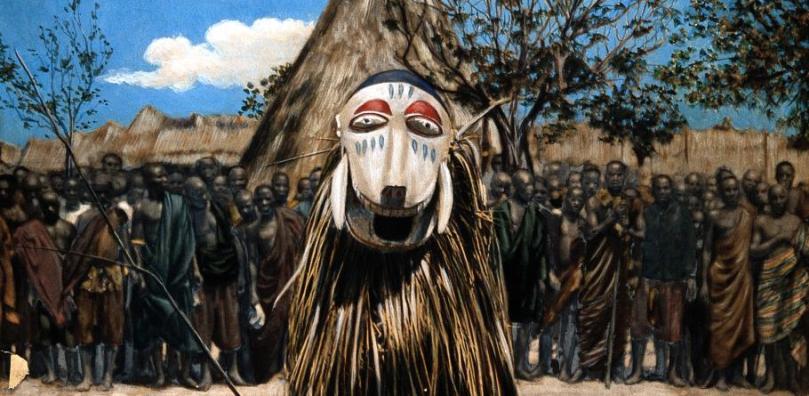
Image credit: Heywood, Paolo. (2017) 2023. “Ontological turn, the”. In The Open Encyclopedia of Anthropology, edited by Felix Stein. Facsimile of the first edition in The Cambridge Encyclopedia of Anthropology. Online: http://doi.org/10.29164/17ontology