The West is Dead: Re-imagining Global Order through Indigenous Autonomy and Interdependence

My name is Martha Laraba Sambe. Before any titles or identities—those I claim for myself or those others may assign—the most important truth about me is that I am human, and this is the same for each of us here today; we are human, first and foremost.

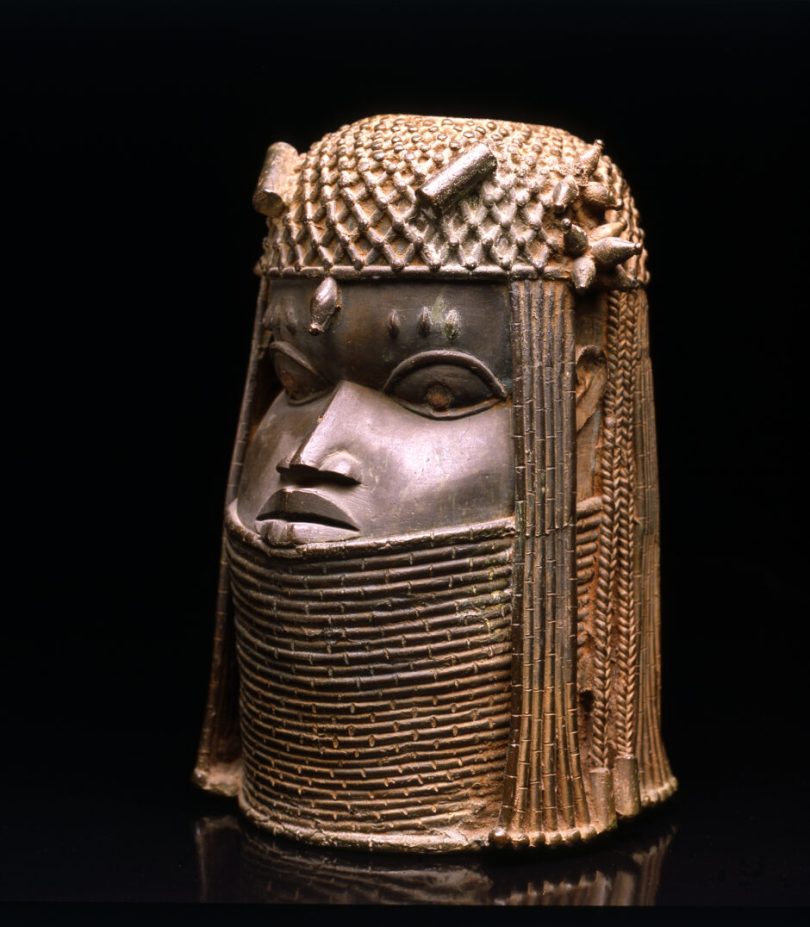
I begin by expressing my sincere gratitude to everyone who made it possible for me to speak here today: the organizers, volunteers, funders, donors, and this remarkable museum, whose open doors welcome us all. It is a profound honor to stand within an institution that houses artifacts from my home country, Nigeria. I pay respect to the ancestors, lineages, and nations from which these treasures originated. In the spirit of Ubuntu, I recognize that our gathering today is possible because of those who came before us, the ancestors whose lives were fundamentally changed by Western imperialism.

I stand here to reclaim my ancestors’ time, to give voice to their silenced stories, and to demonstrate the meaning of resilience in the face of forces that have sought to dominate and erase our existence. If my words appear critical, it is because I carry the pain and anger not only of my own people, but also of many nations that have been pillaged across Africa and the world. Nevertheless, even as I speak from this place of pain, I commit to speaking with care, as nothing built solely on anger and pain can endure.

The history of Western imperialism is not a distant past; it remains an ongoing reality that shapes and influences every aspect of our lives. The theft of cultural artifacts was not merely about ownership, but about power—the right of colonized peoples to tell our own stories, to define and understand ourselves, our value systems, and the heritages that shaped our ancestral communities. The loss of these artifacts represents a rupture in the continuum of collective memory, pride, and shared identity among many Indigenous peoples.

Yet, we are not solely defined by what was taken from us. We are also defined by what we have preserved, even under the persistent and oppressive gaze of imperialism. Our ancestors found strength in community while honoring the wisdom embedded in our traditions, and the unbreakable thread that connects us. The philosophy of Ubuntu, ‘I am because we are,’ continues to affirm this shared connection, reminding us that humanity is intertwined, that healing must be a collective process because our struggles are shared.

The Rise and Demise of Western Imperialism

Right now, we are witnessing the breakdown of systems in the Western world: environmental disasters, deep social inequality, resource shortages, and wars are increasingly prevalent. The Global South faces parallel struggles, including genocides, conflict, climate crises, and social unrest. These are not isolated incidents, but interconnected threads within a broader process of global transformation.

What unites these overlapping crises? What underlying cause connects the challenges experienced by both the West and the Global South?

At the core of these crises is Western imperialism, a force whose legacy extends across continents and centuries. A comprehensive understanding of Western imperialism requires recognizing that it did not emerge independently. Rather, imperial expansion unfolded within a complex, interconnected, and culturally diverse global context. Before European expeditions began in the sixteenth century, international affairs were characterized by multiple centers of influence, resulting in a polycentric distribution of power, knowledge, and cultural development. Civilizations across Africa, Asia, and the Americas flourished, each contributing unique knowledge systems and innovations to the world.

In West Africa, empires such as Benin, Mali, and Songhai prospered through vibrant trans-Saharan trade networks. The city of Timbuktu stood as a beacon of intellectual pursuit, supporting the study of poetry, astronomy, and theology. These were societies of sophistication and depth, with thriving economies and centers of learning. Along the Swahili Coast, cities such as Kilwa and Mombasa engaged in extensive trade with India, Arabia, and China, participating in a widespread Indian Ocean commercial network that stretched from inland Africa to distant shores. Across Asia, China during the Song and early Ming dynasties maintained the largest global economy, introducing innovations such as the compass, paper, and printing. Indian kingdoms influenced international markets for textiles and spices. At the same time, the Islamic world fostered cities like Baghdad and Cairo as prominent centers of scholarship and science, facilitating the translation of Greek philosophy and the advancement of algebra, medicine, and astronomy.

​Likewise, in the Americas, civilizations such as the Aztec, Maya, and Inca established sophisticated urban societies rooted in ritual practices, reciprocal relationships, and environmental stewardship. These diverse societies were united by a relational approach to power—where spiritual and political spheres were intertwined, and trade was defined by mutual exchange rather than domination. Across many of these societies, power operated through relational dynamics rather than absolute authority. Spiritual and political spheres were interconnected, and trade was characterized by mutual exchange rather than domination.

Around 1500, the world experienced significant transformations. Europe, still recovering from plagues and wars, sought new expansion opportunities. Rather than establishing cooperative relationships, European states pursued power and conquest. Through colonization, enslavement, and resource extraction, European powers fundamentally transformed global structures by imposing their socio-political and economic models on diverse societies. This period marked the rise of Western dominance, which was established through exploitation and control rather than mutual benefit.

Between the 1500s and 1800s, Western powers established global dominance primarily through control and force. In the twentieth century, Western dominance reached its apex with the worldwide dissemination of ideas such as capitalism, democracy, and Christianity—systems imposed on societies encountered during Western conquests. Subsequently, these and other Western systems have served as mechanisms for continued control and domination over the non-Western world.

In English, there is a saying that goes: “A house built on shaky foundations cannot stand.” European exploration of the non-Western world was marked by violence and aggression rather than cooperation and benefit, and we are currently witnessing the unraveling of the structures established through conquest and maintained by violence. The foundational elements of Western imperialism, including endless extraction, oppressive hierarchies, and domination over land and life, are collapsing under their own weight as evidenced in accelerating ecological collapse, increasing inequality, political fragmentation, and a litany of violent conflicts across the globe.

The world created by Western domination, no longer able to sustain itself, is gradually imploding, and we are all witnesses. We are witnesses to ecological disasters, multiple genocides, increased polarization, famine, etc., etc. Yet, we are also witnesses to a refusal, across various parts of the globe, to accept systems that treat both humans and the Earth as expendable. And as convoluted as this era is, it does not signify the end of the world, but rather the conclusion of a specific global order. The myth of Western indispensability is diminishing, thus creating space for new possibilities and alternative ways of being.

The Prescient Wisdom of Indigenous Traditions

As we transition from reflecting on the collapse of Western imperial structures to exploring the enduring wisdom of Indigenous and non-Western societies, it is crucial to recognize that the answers to our contemporary crises may not lie in reinventing new systems from scratch. Instead, we can look to longstanding traditions that have withstood centuries of disruption and marginalization. These worldviews, grounded in interdependence and reverence for all life, offer not only a critique of past injustices but pathways for renewal and healing. By turning our attention to these alternative frameworks, we move toward reimagining a future rooted in balance, reciprocity, and collective well-being.

When an established system can no longer accommodate the full range of human potential, it inevitably disintegrates both internally and externally. Mystics refer to this as a “Dark Night of the Soul.” I argue that humanity as a whole is currently in a Dark Night of the Soul, a nebulous transitional phase of moving beyond the era of Western domination and into an uncertain yet open future.

In a previous post, we explored how many African and Indigenous traditions perceive time as cyclical rather than linear. In these worldviews, looking toward the future often means drawing on the past, as the past and future are interconnected within the same temporal framework. Therefore, any effort to envision a world beyond the West, its domination, and the consequences we are experiencing must first seek to understand what preceded it.

Before Western expansion, global societies possessed—and continue to retain—complex systems of governance, scientific knowledge, spiritual beliefs, and ecological management. Societies across Africa, the Americas, Asia, and the Pacific maintain unique cultural practices, yet share core concepts regarding existence and interconnectedness. These indigenous worldviews emphasize relationality, indicating that all beings are interconnected within a shared system of life. This shared concept of relationality, along with other worldviews present in Indigenous and non-Western cultures, is what I refer to as ‘indigenous schemas’.

The following discussion will focus on three principal indigenous schemas, which primarily center on these core ideas:

  • The land—our Earth—is a living ancestor, not an object to be bought, sold, or exploited.
  • Governance is based on consent, accountability, and community involvement, and knowledge is always shared—passed down through oral stories, rituals, and hands-on experience.
  • Economies operate on reciprocity, focusing on fair exchange and the replenishment of used resources.

Western colonizers dismissed Indigenous philosophies as primitive because these ideas fundamentally challenged a worldview rooted in hierarchy, scarcity, and domination. However, Indigenous philosophies across the globe share a foundational principle: The Earth, as all beings in it, is sacred, and each being is an expression of the Divine Spirit and/or Creator. In contrast to Western thought, which positions humans above nature, Indigenous perspectives see humans as one component within a vast, interconnected cosmos. In this perspective, relationships, rather than hierarchies, serve as the main organizing principle.

In indigenous systems, value is not determined by productivity or profit; rather, it is seen as inherent to existence itself. Western colonialism sought to undermine this perspective because domination conflicts with the recognition of the natural world as sacred. Colonial systems initially portrayed land, forests, animals, and entire populations as soulless, justifying their exploitation and dispossession. For this reason, reclaiming the sacredness of all life is not merely an abstract ideal but a concrete, actionable process encompassing socio-political, ecological, and spiritual dimensions. This foundation is essential for societies aiming to achieve sustainability beyond Western paradigms.

Indigenous systems emphasize the sacredness of all life and highlight the interdependence of all living things while respecting each being’s autonomy within the larger whole. In Indigenous societies, the concept of freedom does not mean being separate from others or acting without regard for their well-being. Instead, freedom is evident in how individuals honor their relationships with the community, the land, and their spiritual connections. Each being has a role and corresponding responsibilities that come from belonging to this greater whole. Ultimately, a person’s identity is shaped by their contributions to the community, and power is shared collectively rather than imposed by a single authority.

Western perspectives often define freedom as independence from others. In contrast, Indigenous societies emphasize the interdependence of all living beings and the importance of maintaining balanced relationships with them. This viewpoint highlights that even those we may dislike or disagree with are part of the interconnected web of life, and nurturing balance is essential for both personal and societal well-being. Strength, resilience, and meaning are cultivated through reciprocity—an ongoing exchange of support, knowledge, and care. To move beyond Western notions of autonomy, it is important to embrace interdependence as a form of sovereignty rather than seeing it as a sign of vulnerability.

Within Western capitalist systems, value is extracted from land, labor, and life until resources are depleted. In contrast, Indigenous societies have traditionally operated under economic systems that prioritize giving back to the environment, rather than ceaselessly taking from it. Regenerative economics is based on the belief that the Earth is a living entity, not merely a resource. This economic model also emphasizes the following principles:

  • Resources extracted from the environment must be replenished
  • Well-being is measured over many generations, and not just by short-term profits
  • Wealth is distributed to sustain the community, rather than concentrated to maintain individual or institutional power.
  • Growth is signalled by societal wellbeing, nature thriving, and the health of relationships within communities.

These ideas have endured despite colonization because they are rooted in the very logic of nature. Nature functions in cycles, where decay, renewal, giving, and receiving all play vital roles. The environmental and social crises we are currently witnessing suggest that our existing systems are fundamentally misaligned with the laws of nature. There are many lessons to learn from the regenerative economic models of indigenous cultures, which can help the world protect both the environment and society, allowing both to flourish and, importantly, ensuring a sustainable future.

To Decolonize or Not?

Finally, it is important to consider the role of decolonization in shaping contemporary society. I do not fully concur with the mainstream definition of decolonization as “the process of undoing colonialism by ending the domination of one country over another.” Nobody can undo colonization, just like none of us can go back in time to stop Western Imperialists from setting sail to conquer other parts of the world.

So where does that leave us? Should we just give up on “decolonizing”?

Well, yes and no.

I argue that the term “decolonization” deserves reconsideration because it tends to focus on the very concept that needs to be transcended. Additionally, it is crucial to address and repair the extensive harm caused by colonization. In this respect, I differ from many scholars who view decolonization as primarily a governmental or institutional effort. I believe that decolonization should also be understood as an individual endeavor. Fundamental changes in perception and relationships with the world begin in each person’s mind. Everyone is born into and lives under imperialist-colonial systems, and the legacies of these systems continue to shape contemporary life.

The influence of dominant and hierarchical systems is evident in all areas of life, including international and local politics, workplace dynamics, personal friendships, relationships, and even spiritual spaces. These hierarchies shape our perception of human life, suggesting that some lives are more valuable than others. One of the most damaging legacies of the West is its role in teaching us to devalue life to such an extent that it can be easily ignored and destroyed. In Germany and much of the Western world, this devaluation of life continues, particularly in the mainstream and government responses to the genocide of Palestinians following the attacks on October 7, 2023.

This devaluation is particularly evident in the thousands of deaths occurring in Sudan and the Congo, where prolonged conflicts have persisted for decades. However, these countries have not received the same level of media attention or public outcry as the Palestinian crisis. Why do you think this disparity exists? Why do many in the West seem desensitized to the deaths of Black and Brown people around the world? It ultimately comes down to how dominance and hierarchical thinking have shaped our perceptions of the “other” and how those perceptions influence our responses to global events.

When discussing decolonization, it is essential to recognize individual responsibility. Everyone has been socialized within systems that perpetuate hatred and devalue others. Decolonization fundamentally involves unlearning hatred and relearning values such as respect for all life, reciprocity, and stewardship.

In conclusion, the decline of the West does not merely signify the end of a civilization; it represents the end of a particular mode of thought.

  • Domination, extraction, and greed have reached their limits and can no longer support life or provide meaning.
  • The future must not be shaped by the same logic that created our current unsustainable world order.

Thank you for your attention.

A lecture delivered at the 2025 Fluctoplasma Festival under the Theme “Visions Beyond the West”. Go here for further readings and sources.
Spirit and Nature: An Exploration

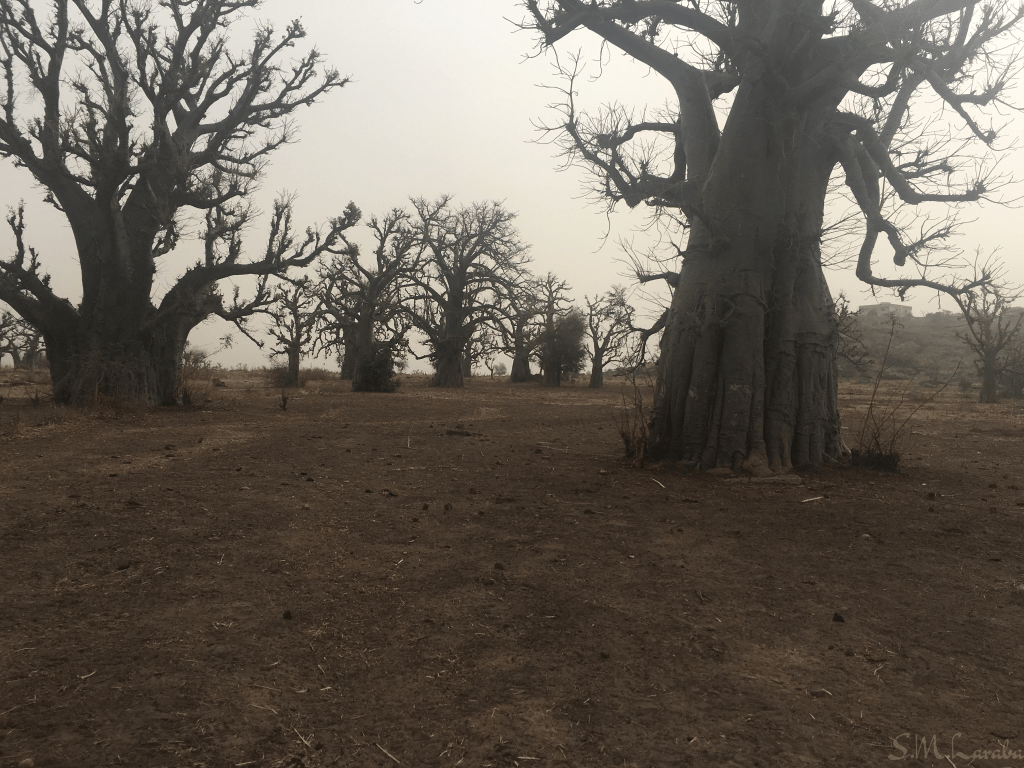
Photo: ‘Baobab Yola’ by Laraba Sambe © 2019

Previously, we discussed animism as a worldview that regards every aspect of nature as imbued with, and therefore an extension of, Spirit. This perspective fosters a profound respect for and connection with nature, as seen across diverse animistic traditions worldwide. Building upon that foundation, this piece elaborates on the central belief that nature, as an extension of Spirit, is sacred. It also examines the resulting sense of ecological responsibility—expressed through reciprocity and ritual—that enabled indigenous cultures to thrive in harmony with nature prior to Western imperialism.

The Separation Myth: Nature as Commodity

Life in 2025 is characterized by ongoing confrontations with a range of crises that, although distinct in time and place, collectively signal a profound disconnection between humanity and its spiritual essence. Western imperialism, as a systemic force, has permeated virtually every facet of global society. Today, numerous genocides—widely covered by the media but insufficiently challenged by the international community—serve as stark illustrations of a system that devalues the sanctity of life. Within this paradigm, all life is commodified for profit, and the loss of innocent lives is regarded as an acceptable cost in the relentless pursuit of resources.

Recent mass killings in regions such as Gaza, Sudan, and the Congo are often linked to the exploitation of natural resources by imperialist forces. To facilitate resource extraction, these entities frequently seek to suppress resistance from local populations, who are often indigenous to these areas. As a result, the environment itself becomes central to the broader context of violence and conflict. The large-scale attacks witnessed today reflect a continuation of historical tactics employed by imperial powers against indigenous populations that resisted their operations.

Over time, Western imperialism has continually refined its justifications for dominance. Initially, expansion was framed as the divine right of monarchs. Before that, Christian missionaries felt compelled to spread their faith worldwide. Unfortunately, colonial expansion frequently followed missionary activity, converting colonies into sites for resource extraction by European powers. Consequently, contemporary global power structures are a reflection of the disparities established during the colonial era. While former colonies may no longer be directly exploited for their land and resources, they still experience significant indirect consequences. Today’s global politics constitute a competitive arena in which powerful nations vie for control over land, resources, and markets. Within Western economic frameworks, these resources are considered scarce, and the ongoing struggle for them has perpetuated and intensified imperialistic practices.

Sankofa: Reconnecting with the Spiritual Essence of Nature

Long before the concept of the divine right of kings emerged and before missionaries arrived in indigenous lands, animistic cultures around the world—despite differences in belief—shared a central principle: profound reverence for nature. In these traditions, the Cartesian distinction between Spirit and matter does not exist. Indigenous peoples view themselves as integral to nature, not separate from it. For them, every aspect of life that is not human-made is regarded as an extension of God or Spirit. As Godwin Sogolo (1993) notes, “To the African [Indigenous] mind, reality is one unified whole. What happens to one part of creation reverberates through the entire system.”

The concept of interconnectedness is central to animistic beliefs and, over centuries, has fostered a sense of duty and stewardship for nature within indigenous cultures. Trees, forests, rivers, animals, and soils are not merely resources to be exploited; instead, they are recognized as essential components of the cosmos, imbued with Spirit, and thus regarded as sacred. Unfortunately, colonial missionaries—often agents of imperial expansion—dismissed these beliefs as superstition or, at times, labeled them as witchcraft. As a result, animism and its sophisticated ecological philosophy have largely faded from collective human consciousness (Kimmerle, 2006; Gumo et al., 2012). Now, at a pivotal moment in history, when the consequences of this loss are increasingly apparent, humanity must confront its past and reclaim the sacred knowledge that once enabled harmonious coexistence with the natural world.

The wisdom embedded in animistic practices is extensive. In recent years, modern science and Western academic thought have begun to incorporate animistic principles, particularly in fields such as spiritual ecology, ecofeminism, and environmental conservation. Scholars, theologians, and conservationists increasingly turn to animism as both a philosophical framework and a relational approach to engaging with the natural world—an orientation that may prove vital to humanity’s survival. Distinct aspects of animistic thought and humanity’s relationship with nature have generated significant interest among Western thinkers.

Reciprocity as an Animistic Principle

Reciprocity stands as a fundamental principle in animistic traditions. In “Ontology and Ethics in Cree Hunting,” Colin Scott (2014) explains that, among the Cree—especially hunters who engage with wild animals—reciprocity is rooted in respect. Although the meaning of respect may shift depending on the context and entities involved, it consistently serves as the ethical foundation for all relationships. Scott frames “respectful reciprocity” as the approved way of relating not only between hunters and animals but also between humans and the natural world as a whole.

The importance of reciprocity is deeply embedded in animistic cultures and is manifested in various forms. In Cree mythology, for instance, this idea is woven through cosmological narratives, illustrating how humans received culture, fire, language, and tools from animals who originally possessed them. Scott’s observations of the relationship between Cree hunters and the animals they pursue exemplify how animistic cultures perceive their connection to non-human nature as one of gift exchange (Adloff, 2025). Indigenous animistic traditions emphasize drawing resources from nature while simultaneously giving back, fostering a balanced and enduring exchange between humans and the natural world. These societies demonstrate profound respect for nature and honor the sacred partnerships formed through reciprocal exchanges in hunting and sustenance.

Adloff (2025) asserts that in cultures maintaining reciprocal relationships with nature, the notion of human superiority is inconceivable. Instead, these societies emphasize gratitude for nature’s gifts, recognizing that both humans and nature are components of a unified whole. As Sogolo (1993) notes, ‘what happens to one part of creation reverberates through the entire system.’ The resources offered by nature and the stewardship provided by humans circulate in a continuous cycle that sustains all life. Ultimately, indigenous societies flourish by acknowledging nature’s abundance and reciprocating through responsible care and stewardship of the environment.

The Role of Rituals in Honoring Nature

Within indigenous cultures, rituals are essential for nurturing, preserving, and honoring the connection to the divine and the spirit world. In “Ritual: Power, Healing and Community,” Elder Somé (1993) underscores the significance of rituals, observing that “the abandonment of ritual can be devastating.” He further asserts, “from a spiritual standpoint, ritual is inevitable and necessary if one is to live.” Recognizing this sacred imperative, indigenous societies have formalized their commitment to the Earth through diverse rituals and celebrations that honor the natural world.

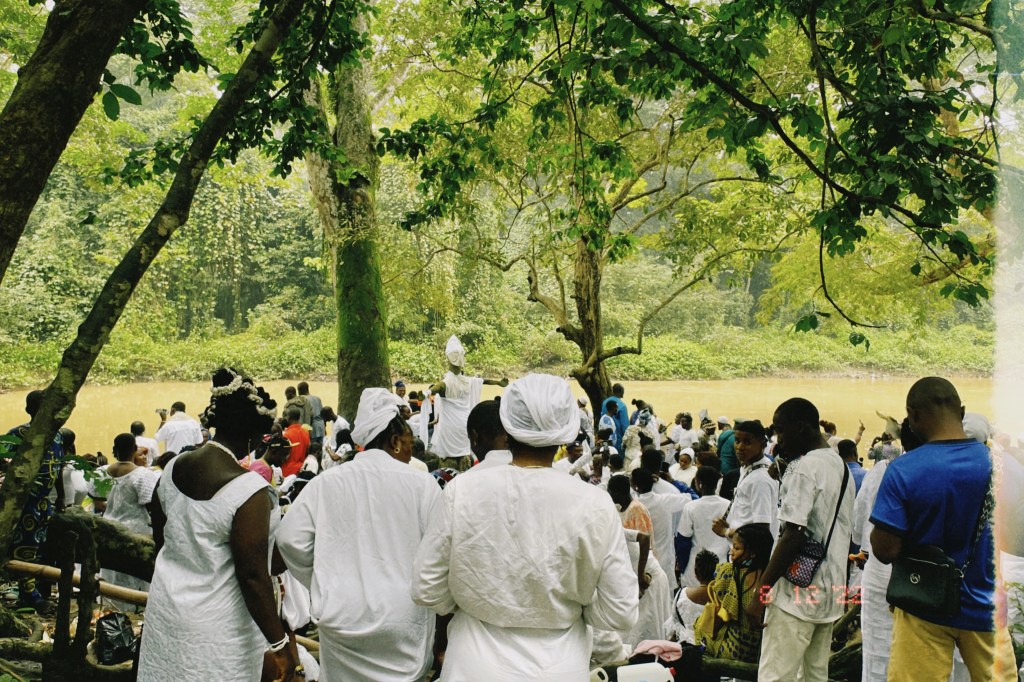
In Nigeria, the Osun-Osogbo Sacred Grove holds profound importance for the Yoruba people as a site dedicated to the river goddess Osun, who is revered for bestowing fertility, healing, and protection. Annually, the Osun-Osogbo festival draws thousands of Ifa practitioners from around the globe. This multi-day celebration features singing, dancing, prayers, and offerings, honoring a centuries-old covenant between the community and the river. Similarly, rainmaking rituals are prevalent among the Shona people of Zimbabwe. During periods of drought, the Shona convene at sacred hills and riverbanks to invoke ancestral spirits for rain. These ceremonies include millet beer, livestock offerings, and ritual songs, reflecting the belief that rainfall is not guaranteed but is a blessing contingent upon maintaining a harmonious relationship with the land and Spirit.

Even before the spread of Christianity across Europe, indigenous European societies had honored nature through various rituals. The Celts, for example, regarded oak groves and wells as sacred spaces where Druids mediated between humans and the unseen world. Offerings—such as jewelry or weapons—were placed in rivers and lakes as gifts to the deities and spirits believed to inhabit those waters. In Northern Europe, Norse communities revered Yggdrasil, the cosmic tree linking heaven, Earth, and the underworld. At sacred groves and springs, sacrifices were performed to ensure fertility, protection, and balance.

Indigenous cultures across Africa, Europe, and beyond demonstrate deep respect for nature through both personal and communal rituals. These practices extend beyond mere symbolism; they represent continuous, intentional engagement with the natural world and reflect a foundational belief in the interconnectedness and interdependence of all existence. Whether in the groves of Osogbo, the sacred wells of the Celts, or the rain shrines of Zimbabwe, indigenous societies have historically honored nature through ritual. As Mbiti (1969) states, “The physical and the spiritual are but two dimensions of the same universe; ritual ensures they remain in harmony.”

Reclaiming Animism in Contemporary Society

The renewed interest in animism among modern scientists and within Western academic discourse parallels a global revival of animistic practices. In the West, there is a notable resurgence among members of the African diaspora seeking to reconnect with their ancestral heritage, which is inherently animistic and grounded in the recognition of, and respect for, the Spirit that unites humanity and nature. These movements are instrumental in healing the wounds of colonial disruption by fostering spiritual kinship, which, in turn, informs more sustainable ecological practices (Gumo et al., 2012). Similarly, eco-activist Wangari Maathai, founder of the Green Belt Movement, drew profoundly on ancestral reverence for trees as she mobilized women to plant millions across Kenya. Maathai described planting “seeds of peace and hope,” grounded in the belief that humanity cannot achieve peace on an endangered planet.

Animism, as expressed through diverse indigenous cultures worldwide, offers a compelling alternative to Western ecological paradigms. Animistic beliefs approach the Earth as kin rather than as a resource to be exploited. From this vantage point, the crises currently facing our planet—including environmental and climate challenges—are not merely surface-level issues, but manifestations of a profoundly fractured relationship between humanity and Spirit, the essential thread binding us to nature and all living beings.

In conclusion, reengaging with animistic worldviews invites us to reconsider our relationship with the natural world—not as detached observers or exploiters, but as participants in the dynamic and interconnected web of life. By acknowledging the wisdom embedded in indigenous traditions and embracing a sense of reciprocity, respect, and spiritual kinship with nature, we can foster more sustainable and harmonious ways of living. As global challenges intensify, adopting these perspectives offers a hopeful path toward spiritual and, ultimately, ecological restoration for a more balanced and compassionate future for both humanity and the planet.

References

  • Chirikure, S., Nyamushosho, R., Chimhundu, H., Dandara, C., Pamburai, H., & Manyanga, M. (2017). Concept and knowledge revision in the post-colony: Mukwerera, the practice of asking for rain amongst the Shona of southern Africa.
  • Feiler, B. (2014) Sacred Journeys With Bruce Feiler | Osun-Osogbo, PBS.org. Available at: https://www.pbs.org/wgbh/sacredjourneys/content/osun-osogbo/ (Accessed: September 10, 2025).
  • Gumo, S., Gisege, S. O., Raballah, E., & Ouma, C. (2012). Communicating African Spirituality through Ecology: Challenges and Prospects for the 21st Century. Religions, 3(2), 523–543. https://doi.org/10.3390/rel3020523
  • O’Driscoll, D. 2022. “Introduction To Animism: Definitions And Core Practices For Nature Spirituality – The Druids Garden.” The Druids Garden – Spiritual Journeys In Tending The Living Earth, Permaculture, And Nature-Inspired Arts. July 14, 2022. https://thedruidsgarden.com/2022/07/14/introduction-to-animism-definitions-and-core-practices-for-nature-spirituality/.
  • Scott, C. 2014. Ontology and Ethics in Cree Hunting: Animism, Totemism and Practical Knowledge. Edited by Graham Harvey. London: Routledge.
  • Sogolo, G. (1993). Foundations of African Philosophy: A Definitive Analysis of Conceptual Issues in African Thought. Ibadan, Nigeria: Ibadan University Press
  • Somé, M. P. (1997). Ritual: Power, healing, and community. Penguin.
  • Taylor, B. (2013) ‘Kenya’s Green Belt Movement Contributions, Conflict, Contradictions, And Complications In A Prominent Environmental Non-Governmental Organization (Engo)’, in Trägårdh, L., Witoszek, N., and Taylor, B. (eds) Civil Society in the Age of Monitory Democracy. New York: Berghahn Books, pp. 181–207. Available at: https://doi.org/10.1515/9780857457578 (Accessed: September 10, 2025).

Decolonizing God (Re-Indigenizing Spirit)

“In order to perpetuate itself, every oppression must corrupt or distort those various sources of power within the culture of the oppressed that can provide energy for change.” — Audre Lorde

In a recent conversation, I found myself defending the spiritual traditions of the Akan against one of its descendants, who, now spiritualized in and by the West, harbors that familiar yet loathsome contempt many Africans still feel towards the spiritual traditions of their people.

I am a Nigerian woman who has lived with and embraced alternative spiritual beliefs in a country that is almost evenly split between Christianity and Islam. The casual disdain many Nigerians show towards African spiritual traditions, due to their upbringing in either the Church or the Mosque, is not new. Until proven otherwise, I have come to expect this disdain and, consequently, the dismissal of African spirituality from Nigerians and other Africans.

Yet, even though this disdain no longer shocks me, it still manages to surprise. Like when a Nigerian global superstar dismissed the spiritual culture of her ancestors and clung firmly, and rather ironically, to the spiritual beliefs of another people. Or when my Akan counterpart, a rather queer individual, casually demonized the water spirits of her ancestral land.

These dismissals are surprising and reflect a self-denial that was externally imposed by the colonial machine and is now perpetuated by the colonized. What are the consequences of this ongoing self-denial? Who benefits when Africans and other colonized peoples worldwide continue to self-abnegate?

Since the pandemic shattered our collective illusion about the world we live in, it has become even clearer and easier to see how the hetero-patriarchal-capitalistic world we have created is unsustainable for our survival now, let alone for future generations. Movements have sprung up across all corners of the globe demanding a shift from these oppressive and anti-life ways of being. Over the last year, nearly two years, we have witnessed a concerted global effort to draw attention to the atrocities in Palestine, a movement that has rippled through and is bringing awareness to injustices in other places like the Congo, Sudan, West Papua, and so on.

The world is awakening to the lies that the West has told for eons, and humans are demanding external change. This is positive; it signifies progress for the species. However, our push for change should not begin and end with external ways of survival. The emphasis on the external and material aspects of existence is part of the deception we have been sold. It has necessitated a focus on material gains and excessive consumption at the expense of the individual and collective human spirit.

The word ‘spirit’ comes from the mid-13th century, meaning: “life, the animating or vital principle in man and animals.” 

Spirit also has the following derivatives, “spirit, soul” (12c., Modern French esprit) and derives directly from Latin spiritus “a breathing (of respiration, also of the wind), breath;” also “breath of a god,” hence “inspiration; breath of life,” hence life itself.”

A disconnection from the spirit means a disconnection from life itself, and we wonder why we live in an anti-life world. No person or people disconnected from their spirit can make sense of life or find any true joy or meaning because they are essentially separated from the spring (Spirit), which is the source of all things. Thus, it becomes easier for such people to become agents of destruction or be easily destroyed.

The myths and Spirits of indigenous cultures nourished life in the people and imparted a sense of meaning that has since been lost and, in many cases, replaced by the spiritual beliefs of a more dominant culture. Many Nigerians who are now Christian or Muslim have embraced these spiritual traditions at the expense of their ancestral beliefs. Even though history is visible to all, we often pretend that many of these conversions did not occur violently.

Perhaps denying the violence that led to the loss of our spirits is necessary for our survival, but I find that the question remains: who benefits from our self-abnegation? What systems—spiritual, economic, agricultural, etc.—thrive when we continue to either willingly, passively, or unknowingly reject ourselves?

This brings us to the opening quote: To perpetuate itself, every oppression must corrupt or distort those various sources of power within the culture of the oppressed that can provide energy for change.

For the colonial machine to establish itself, it had to strip indigenous people of their sources of power. For the colonized, this meant the destruction and distortion of all systems and practices that connected them to an idea of God or the Great Spirit, as many traditions called it, who is the source of life and, therefore, power.

In a world where injustices are apparent and the fight against them shapes how many of us live our lives, it is crucial to make a connection between the state of the world and the separation from Spirit//God. As stated earlier, this separation necessitates our fixation with the physical and everything that concerns it.

Yet, Spirit can only be ignored for so long before it demands a reckoning.

To emphasize this point, let’s recall the beliefs of the Mawri in Niger, who explained this essential connection to the spirit through the belief that each human is born a twin. One twin is bound to the human world of existence, while the other is bound to the spirit world. It is the responsibility, then, of humans to nurture the connection with their spirit sibling; otherwise, they would have a difficult life.

The story captures the current state of human existence. We have, for so long, lived as if separate from our individual and collective spirits, and now we are all feeling the pain of that separation. The degree of the pain felt is proportional to how far a person, group, or society has strayed away from their Spirits, but there is no mistaking it: we are living in difficult times, a situation only worsened by the fact that many of us refuse to recognize that our true source of power is not anything that can be seen, touched, or felt in the material.

We are now doing the colonizers’ work for them by refusing to see that we were a complete people with cosmologies, ontologies, and views of the world that shaped our lives and thus gave them meaning before the trauma of colonization fractured our identities. The work of decolonization, which I argue should be termed ‘reindigenization,’ can never be complete without addressing and tackling this crucial separation between the colonized and their Spirits.

If our Spirits animate life, give it meaning, and are the breath of God within us, and thus life itself, then the separation between the colonized and their spirits has created zombie-like people who are alive and animated but lack the crucial vital energy that infuses life and gives it any meaning. As such, our efforts to ‘decolonize,’ perhaps also lacking the true essence of Spirit, will only bring us so far.

We will never know true freedom until we remember who we are, and we will never remember who we are if we continue to reject our Spirits because we learned long ago that only the spirits of our oppressors are good, even when they tortured us to drive the point home.

Much Ado About Decolonization

Female Nok Head from the ancient Nok Civilization in Modern Day Kaduna State, Northwestern Nigeria

I have lived in Europe for a little over a year now. The experience has felt like a personal social experiment to find a place in the world I belong outside of my ‘natural habitat’ and the lands of my ancestors in the far northwestern state of Kaduna, Nigeria. 

As I settle into these Western worlds and attempt to create for myself a place in it, I am continually jarred by what I can only describe as a prevailing disconnection between the human and their soul. This is not necessarily a new phenomenon that I have observed. The case is also largely true for many people in the country I come from. In Nigeria, I met, loved, cared for, and even worked with people whose detachment from their spirits was glaring in how they treated themselves and responded to the world around them. 

Having lived here now for a over year, I am observing that the major difference between the human-soul separation in the West and my ancestral lands is the fact that this separation from spirit has gone on for much longer and has thus happened so extensively that it feels almost hopeless that there may be redemption for the populations in these parts of the world. 

In my home country, I see that this separation is happening quite gradually and it makes me fear for the future of my country, and the people I love who are still there. It makes me wonder if there will ever be a safe way back home, to the heart and soul of what it originally meant to know ourselves and perceive each other as powerful spirits who have incarnated here on Earth for a collective human experience. 

A buzzword I have come to have a love-hate relationship with is “decolonization.” Everybody and their grandmama wants to decolonize something. I am not even going to play innocent, I have been on the decolonization bandwagon for years now and this is evident in at least three well-funded projects I have been a part of. What has however remained a jarring experience is that many people I have come across who are on this decolonization train, that is headed only god knows where, are still very much colonized in their thinking and how they relate to the world around them. 

Now, I will be the first to make excuses for people because most of us alive today have been socialized in a colonized world. Many of us know nothing of a world before colonization and that is not necessarily of our own making. However, after being a part of the conversation now for some time, and having questioned my intentions, beliefs, and actions, I have come to see that decolonization is nothing more than a buzzword that gets people and institutions a certain kind of attention and access when they need it. Worse, the actions of many agents and institutions that seem to center this idea of decolonization are, in fact, a sort of neo-colonization of already colonized populations and cultures. 

This is dangerous territory because these people and institutions are only interested in specific aspects of the culture and lives of already subjugated people that fit a certain narrative and agenda. These folks are not interested in the sovereignty of previously colonized cultures or even restoring colonized peoples and cultures to their former glory. For them, ‘decolonization’ is a cool word to throw around to show that they are aware of the evils of colonialism, and possibly that they also believe in the autonomy of the colonized. However, when one attempts to engage deeper in the discourse on decolonization, beyond the niche area that has been chosen as the main lens through which we can engage in the discourse, one begins to find various gaps in the knowledge, understanding, and even interest of what it truly means to decolonize.

As a spiritual practitioner and a person who leads and lives spirit-first, quite like my pre-colonial ancestors did, I have come to find the discourse on decolonization to be shallow, lacking in spirit and thus substance. Furthermore, this emphasis on decolonizing still centers the ‘colonial’, and that simply rubs me the wrong way. 

I love a good inquiry, questions have led me down the path of many a life-changing realization and revelation. So, my question to everyone, and no one at all, is this: 

When you use the word ‘decolonize’ what are you attempting to say or do? 

Do your ‘decolonization’ efforts only begin and end when a project is proposed, planned, and implemented, or are you working also on decolonizing your mind, beliefs, and the structural systems that prevail?

I simply am unable to see beyond the fact that this word continues to center a system of oppression many of us claim we do not want. I wonder what alternative words and nomenclature exist for our collective and individual efforts to return to a place before the horrors of colonialism separated us from our individual and collective human spirits.

Speaking of spirits, people want to talk about decolonization and yet are deathly afraid of admitting that they are spirit beings having a human experience. There is no Indigenous culture on Earth that does not allude to humans having a spirit or the fact that we are, by existing, in a relationship with a higher realm beyond this physical and material existence. Yet, I continue to meet people who want to decolonize the world and cannot even fathom this crucial aspect of Indigenous life. 

It makes me wonder, if we cannot understand and reconcile this crucial separation that has happened between spirit and matter, what exactly are we then trying to decolonize? If these so-called decolonial efforts are not leading back to a union between spirit and matter, what exactly are we fighting for?

It is laughable at best, and at worst, we are witnessing the coopting of Indigenous knowledge and wisdom in a similar way that colonizers took land, resources, and anything else of value they could lay their hands on after they encountered Indigenous folks. The people and institutions pushing for decolonization without first doing an internal soul-search of how their actions and systems maintain a colonized structure are simply paying lip service and are thus not different from the colonizers who pillaged Indigenous cultures.

The way I see it, this is what it comes down to: are we truly interested in restoring Indigenous systems where people lived in communion with the Great Spirit, the Earth, and each other, or are we simply interested in surviving and getting by in these post and neo-colonial worlds?

What’s in a Name: religion or spirituality

When I started this blog in 2020, I was preoccupied with academia. It was a world to which I had desperately sought belonging for years. In fact, at that point, I would have argued that my frustrations from being repeatedly shut out led to the creation of the blog. True as that might have been, it was only half the truth.

The other, and very relevant, half of the truth is that I am interested in spirituality beyond academia. It also bears to wonder how I, a person who had learned more about faith and God outside of organized religion, believed that the only way to apply and use that knowledge was within the structures of academia. My scope of thinking was quite limited indeed, though my Chi was ardent in steering me right.  

African Religions was created to streamline my thoughts on the spiritual beliefs and practices of the various peoples of Africa. The decision to name the blog African Religions was, in fact, a misnomer because Africans did not recognize religion as separate from any other aspect of existence. Across the Continent, the various peoples of Africa were guided by customs and traditions that were informed and guided by spiritual reasoning and understanding. 

There was no separation between the spirit and matter, all informed each other, and thus, all affected each other. All was one. Then entered division, followed by conflict and stoked by the need to be superior so as to wield the most power, etc., etc. ‘Religion,’ rather than a vehicle to the spiritual and thus the divine, quickly became a social tool for amassing and controlling power. The more power a group had, the more their spiritual beliefs, or simply religions, spread. This can be seen with the three largest organized religions in the world and the bloody conflicts that have trailed their paths through the corners of the world where they currently thrive.

There is nothing wrong with religion as a term that encapsulates the spiritual beliefs and practices of various people. For example, in naming this blog African Religions, in just two words I have been able, hopefully, to indicate that the discourse here will center on the spiritual dimensions of various African peoples. But, I am learning to be a better writer and have since learned that it is best to say exactly what you mean and as succinctly as possible.

So, in the spirit of saying what I mean, the blog is now named African Spiritualities or Afrospiritualities.com

There is tremendous power in language, and using the word ‘religion’ to refer to the beliefs and practices of Indigenous Africans alludes to a power many of them did not have. Otherwise, they would still be largely present and there might have not been the need for this blog to be created as an attempt to document as much information on them as possible. 

Anyway, a short musing to say we are back. Thank you for being here.

Martha Laraba Sambe

Channeling Goddess: the Divine Feminine as a Necessary Balancing Force

The increasing awareness of the feminine’s powerful and necessary balancing force to the masculine has necessitated a reacquaintance with the concept of divine feminine energy. The embodiment of these energies is an ongoing endeavor to restore balance in a world almost entirely overrun by exploitative masculine energies.

This article provides an overview of six feminine deities from the Continent, highlighting their attributes, the energies they symbolize, and their associated meanings.

The Divine Feminine in African Culture

The Yoruba pantheon includes the primordial goddess of the ocean, Yemoja, who embodies motherhood and fertility. Yemoja is associated with childbirth, nurturing, and protection. She is often depicted as a nurturing mother figure known for her compassion and care.

Yemoja is a deity of great significance in the Yoruba cultural tradition. Her dominion over the ocean represents her vastness and depth, symbolizing water’s nurturing and life-giving aspects. Yemoja is also associated with the moon, which is known to influence ocean tides and women’s fertility cycles. As a mother goddess, Yemoja embodies fertility, compassion, and protection and is revered as a maternal figure who guides and nurtures her children.

The Yoruba deity Oshun is commonly associated with love, beauty, fertility, and rivers. She is also the goddess of sensuality, creativity, and abundance. Her association with rivers symbolizes her sovereignty over emotions, creativity, and the life force. Oshun’s reputation for healing powers precedes her, and she is frequently called upon for matters of love and fertility. Also, the goddess of love and fertility, Oshun embodies feminine beauty, sensuality, and fertility and is often revered as a protector of women and children.

Mami Wata is a water spirit that pervades many West and Central African cultures and the African diaspora. This spirit is strongly associated with water, fertility, wealth, and beauty, much like Oshun and Yemoja. Mami Wata is depicted as a mermaid or a water serpent, symbolizing a connection to the underworld. The spirit embodies both positive and negative aspects of femininity, representing beauty, allure, and danger.

Mami Wata, a deity revered for its mysterious and superior powers, embodies the traits of fertility, abundance, and feminine allure, much like Yemoja and Oshun. This spirit is often invoked to seek blessings of wealth, fertility, and protection.

Isis was a widely revered goddess in ancient Egyptian mythology, notable for her associations with motherhood, magic, fertility, and wisdom. Frequently depicted as a protective mother and a powerful magician, Isis was highly regarded for her role as a devoted wife and mother. One of her most well-known accomplishments was her ability to use her magical abilities to resurrect her husband, Osiris, and safeguard her son, Horus. Often depicted with a throne-shaped headdress, Isis was known as the queen of the gods.

Isis shares similarities with Yemoja and other mother goddesses regarding her nurturing, protective, and maternal qualities. She is revered as a symbol of feminine strength and is often associated with magic and wisdom. Her representation of feminine power and intuition is further reinforced by her role as a protector of the dead, her ability to heal the sick, and her status as a fertility goddess. 

Within the Dahomey tradition, the deity Mawu-Lisa is perceived as a twin godhead characterized by a dual-gendered entity. Mawu, the female aspect, represents the moon, whereas the male element, Lisa, embodies the sun. Mawu-Lisa is primarily associated with creation, fertility, balance, and harmony. This dual-gendered being symbolizes the complementary aspects of both masculine and feminine energies. As such, Mawu represents the nurturing, receptive qualities associated with the moon, while Lisa embodies the active, creative forces of the sun.

Mawu-Lisa particularly represents the delicate balance between opposing forces, emphasizing the harmonious coexistence of masculine and feminine energies and underscoring the importance of balance in African spiritual traditions. This theme of equilibrium is a recurring motif throughout many African cultures, reflecting a deep-seated belief in the interdependence of all things.

In the Baganda Tradition of Uganda, Nambi is regarded as a deity who embodies the attributes of the moon, love, fertility, and the cycle of life. Nambi holds a central position in the creation myth of the Baganda people, where she descends from the heavens to be with Kintu, the first man. The journey of Nambi symbolizes the interconnectedness between the divine and the earthly realm. Further, Nambi is associated with fertility rituals and ceremonies, integral to the Baganda tradition.

Recurring Characteristics of the Divine Feminine

Role in Creation and Fertility: The goddesses mentioned in this discourse and many others not cited are well-noted for their prominent roles in the myths and rituals surrounding creation and fertility. For instance, Yemoja, Oshun, and Mami Wata are revered as the principal deities of fertility in the ocean, rivers, and other water bodies vital for agriculture and sustenance. Similarly, Nambi occupies an essential position in the creation myth of the Baganda people, where she embodies the life-giving aspects of the moon and fertility. Although male deities can also be affiliated with creation and fertility, goddesses are often associated with nurturing and generative qualities more directly and, as such, are frequently invoked in ceremonies related to childbirth, agriculture, and abundance.

Association with Emotional and Intuitive Aspects: Deities and divine figures often hold significant cultural and symbolic value, and their representations can vary greatly depending on the culture and context. In many traditions, goddesses and feminine energies are revered for their emotional and intuitive qualities that resonate with devotees seeking nurturing and empathy. For instance, Isis is renowned for her wisdom, compassion, and magical abilities, while Oshun embodies love, sensuality, and creativity. These qualities make them essential figures for matters of the heart, emotional healing, and spiritual guidance. In contrast, male deities may emphasize different aspects such as strength, leadership, or wisdom. However, the goddesses tend to embody emotional depth and intuition in a way that speaks to the human experience.

Protectors of Women and Children: The goddesses under discussion are highly esteemed as protectors of women, children, and families. Yemoja, for instance, is renowned for her compassionate and protective nature, especially towards mothers and children. Similarly, Mami Wata is believed to bestow protection and blessings upon her devotees, particularly women and children who seek her guidance. While many male deities also offer protection, goddesses are often regarded as nurturing and guardians of vulnerable members of society, reflecting their more maternal and compassionate traits.

Representation in Rituals and Ceremonies: Goddesses have been a significant part of rituals and ceremonies that celebrate various life events, including childbirth, marriage, and harvest festivals. The devotees often present prayers and sacrifices to the goddesses, such as Yemoja and Oshun, seeking safe childbirth and blessings of love and fertility. Moreover, since the goddess is typically associated with the earth, many goddesses are invoked before planting season and during harvests.

Goddesses are often associated with an embodiment of feminine energy and play a pivotal role in various domains such as creation, fertility, emotional and intuitive realms, and protection of women and children. They are also represented in rituals and ceremonies that emphasize nurturing and empathy. These attributes reflect a diversity of roles and qualities within their respective cultural contexts, which enrich the spiritual landscape and provide a balance to the divine masculine energy that often asserts dominance and control in the physical material world. This balance, therefore, is necessary to promote harmony and a sense of equilibrium.

Further Reading:

Featured Image:

Animism: Exploring the Ancient Belief System Connecting Humans and Nature

Devotees at the Osun-Osogbo Festival, Osun State, Credit: Oyefeso, Folu

Animism, among humanity’s oldest philosophical and spiritual belief systems, continues to play a vital role in the cultural and spiritual lives of numerous indigenous communities worldwide. Central to animism is the conviction that all elements of the natural world—trees, mountains, rivers, and more—possess a distinct spiritual essence. Far from being confined to a specific region or era, animism has influenced a wide array of civilizations across different geographies and historical periods.

This article explores the multifaceted nature of animism, tracing its origins, foundational principles, and ongoing relevance in contemporary society. By examining animism’s historical and cultural context, we aim to present a concise yet comprehensive overview of this enduring worldview. Our analysis highlights animism’s contemporary importance, including its influence on spiritual practices, environmental ethics, and evolving cultural traditions worldwide.

Historical Roots of Animism

The etymology of the term “animism” can be traced back to the Latin word “anima,” which translates to “soul” or “life force.” However, the underlying idea predates the term and has its roots in the ancient cultures of prehistoric societies. Animism emerged as a means for early societies to comprehend the world and forge a relationship with the natural environment. The Paleolithic era offers evidence of animistic practices, as seen in cave paintings and artifacts, which suggest a profound reverence for animals, plants, and celestial bodies.

At the core of animistic philosophy lies the belief that all entities, regardless of form, possess a spiritual essence. This essence is not limited to humans, but also animates animals, plants, rivers, mountains, and even inanimate objects such as rocks and tools. Moreover, animists perceive the natural world as intrinsically interconnected and interdependent, underscoring a complex web of relationships among all beings. This worldview inspires reverence, respect, and a profound sense of responsibility toward nature. Animistic traditions frequently incorporate elaborate rituals and ceremonies intended to sustain this delicate balance and promote harmony between humans and the natural environment.

Notably, animism has served as a significant cultural force throughout human history and continues to inform the worldview of many indigenous societies. Its emphasis on the spiritual dimension of existence and the interconnectedness of all things resonates with those seeking a deeper and more meaningful relationship with the world.

Illustrative Cases of Animism

Although animism does not adhere to a single cultural tradition, its presence can be identified wherever indigenous peoples have lived. In northern Nigeria, for instance, the indigenous pre-Islamic inhabitants of what is now Kano practiced animism. They worshipped a supreme being, venerated spirits, and offered sacrifices beneath a sacred tree known as Shamuz (or Shamus in some records). Only the high priest, Barbushe, was permitted to approach the Shamuz shrine and conduct sacrifices on behalf of the community. Similarly, the Mawri of Dogondoutchi in Niger believe that humans were separated by the creator from their spirit siblings and are required to appease these spirit siblings to maintain a balanced life.

The presence of elemental deities and spirits associated with various facets of nature attests to the extensive reach of animistic beliefs among prehistoric cultures. The Earth was frequently regarded as the domain of fertility goddesses, such as Uwargona in Hausa tradition, Ala in the Igbo pantheon, and Assase Ya among the Akan. Likewise, the reverence for water spirits—for instance, the goddess Osun in Yoruba tradition—underscores the enduring and profound connection to elemental forces within animistic societies.

Contemporary Relevance of Animism

Anthropologists have observed a renewed interest in animism, often termed “new animism.” This contemporary movement centers on fostering respectful relationships with all beings, both human and non-human—including spirits and entities believed to exist beyond ordinary perception. New animism encourages environmental awareness and draws attention to the widening disconnect between humanity and the natural world. As ecological crises become more acute, this perspective is poised to exert significant influence, promoting stewardship, sustainability, and holistic approaches to planetary well-being.

It is crucial to recognize that, despite the term “new animism,” these beliefs are anything but new. Animistic worldviews and relationships with nature have been foundational for indigenous peoples across history—though they were often denigrated and suppressed by colonial, missionary, and jihadist forces, especially in Africa. Across cultures, animists have cultivated a profound respect for the natural world, recognizing the intrinsic value and agency of all living beings.

Embracing animist principles offers a compelling framework for confronting ecological challenges. It is essential, however, to recognize that animism is a holistic worldview grounded in the spiritual interconnectedness of all beings, and should not be viewed merely as a tool for utilitarian or extractive purposes. Adopting animistic perspectives enables individuals to deepen their awareness of the interdependence of all life forms, thereby fostering more sustainable and harmonious relationships with the environment. Meaningful engagement with animism requires respect, cultural sensitivity, and an informed appreciation of its significance and its potential to advance environmental stewardship.

Image Credit: Oyefeso, F. (2022, September 11). The Osun-Osogbo Festival, Osun State. https://www.foluoyefeso.com/post/the-osun-osogbo-festival-osun-state

Spirits and Deities: Exploring the Distinctions in Supernatural Beings

The belief in supernatural beings is a common thread that ties diverse cultures and spiritual traditions among indigenous people. Spirits and deities are two distinct categories of supernatural beings, each with various characteristics and roles within belief systems. This article will explore the differences between spirits and deities, examining their nature, attributes, and the various cultural contexts in which they are revered.

Spirits are often considered less powerful than deities and may be associated with specific places, objects, or events. Deities are often considered more powerful and may be associated with wider aspects of the natural world or human experience. The nature of spirits and deities can vary greatly from culture to culture. In some cultures, spirits may be considered benevolent, while in others, they may be malevolent. Deities may also be considered benevolent, malevolent, or a mix of both.

Deities: Divine Beings of Power and Worship

Spirits are ethereal beings that occupy an intermediary position between the human and divine realms. In indigenous belief systems, spirits are often associated with specific locations, natural elements, or ancestors. They possess individual identities, consciousness, and agency, yet many spirits lack the grandeur and worship typically accorded to deities, which are a different kind of spirit.

John Mbiti has famously categorized spirits into two groups: those created as spirits and those once human beings. Among those created as spirits are divinities or deities, also known as “those who are associates of God”. Divinities—deities from here—often refer to spirits who are personifications of a supreme being’s activities and manifestations of natural phenomena and objects. Examples of these beings include nature (elemental) spirits, deified heroes, and mythological figures.

Deities are supernatural entities regarded as powerful and transcendent beings embodying various divine aspects. They typically possess elevated status and supreme powers and are revered through worship, rituals, and other religious practices. The Yoruba belief system, for example, recognizes over a thousand deities, Orisa—the most extensively recorded of any African belief system. The Orisa are associated with various aspects of nature, human life and experiences. They are revered as direct messengers who are also often described as an aspect of the supreme itself governing specific domains or spheres, such as love, fertility, war, iron, and wisdom.

Deities are often depicted in human form, but they may also be represented by animals, plants, or other objects. They may be benevolent or malevolent, and they may be invoked for help or protection. Deities play an important role in many cultures and religions, and they continue to be a source of fascination and inspiration for people worldwide.

Non-Deific Spirits

In addition to deities, there are also ordinary spirits, or “spiritual beings who are beneath the status of divinities and above the status of men” (Mbiti, 1970). The origin of spirits varies by spiritual belief system. For example, the Mawri in Dogondoutchi, Niger, believe that spirits are the invisible siblings of humans who were condemned to remain unseen as punishment by the supreme being for the sins of their parents, the first man and woman. In this narrative, and others similar to it, spirits are considered contemporaries of humans because they exist in the same plane as humans, with the most obvious difference being that humans cannot perceive them with their sense of sight.

Perhaps the most commonly recognized spirits are those of deceased humans whom their living relatives often venerate. Beliefs about what happens to our spirits after they depart the human body vary from culture to culture. However, formerly embodied spirits are widely recognized within African spiritual systems. A previous post discussing what happens when we die established that the supernatural plane, where formerly embodied spirits reside, is regarded as an integral part of the material world. As such, in every aspect of our human existence, transitioned spirits “are not merely invoked and observed; their participation and benediction are also requested” (Okwu, 1979). Invoking formerly embodied spirits for their participation and benediction constitutes ancestral veneration.

One key distinction of spirits is their accessibility to human interactions. They are considered approachable, often mediating between humans and higher supernatural powers. Spirits can be invoked, propitiated, and engaged through various rituals, offerings, or acts of reverence.

Key Differences between Spirits and Deities:

The main differences between deities and non-deific spirits can be seen in their power, status, modes of veneration, domains of influence, and transcendence. Deities are often considered more powerful and hold higher status than non-deific spirits. They are worshipped on a grander scale and are associated with broader cosmic functions and mythologies. Deities often receive “formal” veneration through organized practices, such as rituals and ceremonies. 

On the other hand, non-deific spirits may be venerated through more informal means, such as offerings or prayers. Deities are typically associated with specific domains and spheres of influence, such as nature, love, war, or wisdom. Non-deific spirits often have a narrower focus and are connected to ancestral lineages within familial clans and groups.

Deities are often perceived as being transcendent, transcending beyond the human realm. Non-deific spirits are more immanent, tied to specific locations or natural phenomena.

The distinctions between spirits and deities can vary in cultural and religious contexts. For instance, in some belief systems, certain spirits may be elevated to the status of deities over time through communal recognition, while in other cultures, deities may have originated as spirits before gaining prominence and broader worship. Moreover, the line between spirits and deities can blur in certain traditions, with beings possessing both qualities. In these cases, the categorization may depend on the cultural lens and individual interpretations within the belief system.

Summing Up Supernatural Beings: Key Takeaways

Deities and non-deific spirits represent two distinct categories of supernatural beings that hold significant roles within various cultural and religious frameworks. While spirits are intermediary beings with accessible and localized presence, deities are powerful and transcendent entities, often venerated on a larger scale. Understanding the differences between spirits and deities enhances our comprehension of diverse belief systems, providing insight into the complex relationships between humans and the supernatural world.

It is important to recognize that the nuances of these distinctions can vary greatly across cultures, emphasizing the diversity of human spiritual experiences and the multifaceted nature of supernatural beliefs. By exploring these differences, we can better appreciate the rich tapestry of human spirituality and the myriad ways individuals and communities connect with the unseen realms.

Citation

  • Mbiti, J. S. (1970). African religions & philosophy. Heinemann.
  • Okwu, A. S. O. (1979). Life, Death, Reincarnation, and Traditional Healing in Africa. Issue: A Journal of Opinion, 9(3), 19. 10.2307/1166258

Image credit: Heywood, Paolo. (2017) 2023. “Ontological turn, the”. In The Open Encyclopedia of Anthropology, edited by Felix Stein. Facsimile of the first edition in The Cambridge Encyclopedia of Anthropology. Online: http://doi.org/10.29164/17ontology

Hausa & Queer; the origins and existence of Yan Daudu in Northern Nigeria

This article does not set out to “prove” that queerness was inherent among the Hausas. Rather, it offers a brief exploration into the origins of Yan Daudu, perhaps the earliest queer people among the Hausas of northern Nigeria. 

To understand the origins of Yan Daudu,  we have to go back to the early post-Islamic northern Nigeria, when Islam began to thrive in major Hausa cities. Hausa animists, also known as Maguzawa, who resided within those cities, were expelled to the fringes of society because their cultural and religious beliefs greatly contrasted with Islam. It is among this group that Yan Daudu would come to find some level of acceptance that allowed them to take root at the fringes of major Hausa cities.

Origins

Yan Daudu are named after a flamboyant male spirit in the Hausa pantheon of spirits. He is often described as a loose, gambling, and well-dressed male spirit (Voice, 1999; Sinikangas, 2004), and the name yan Daudu translates to “sons of Daudu”. 

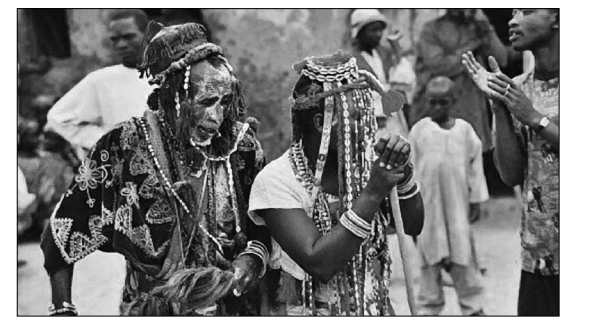
Yan Daudu have always existed within the Hausa community; the fact that their name derives from an old spirit in Hausa animism is a testament to that. They are often feminine-presenting men who sometimes engage in sex work even though they do not necessarily identify as homosexuals. They are also known to occupy socially ambiguous spaces about their faith as either Muslims or adherents of Hausa animism  (Gaudio, 2005). 

Salamone expands on this ambiguity in Hausa concepts of masculinity and the ‘Yan Daudu  (2005). 

He writes: “In this system, men who are more or less exclusively homosexual (not always, but often trans […] or at least effeminate males) have sexual relationships with men not culturally distinguished from other men. These “men who talk like women” form a link between the old non-Muslim Hausa and the Muslim Hausa, indicating where stress lines still exist between the old and new Hausa identities for the coming of Islam to West African societies necessitated a rethinking of numerous cultural and social arrangements, not least of which were the relationship between men and women and the organization of family life.”

Even though they were perceived as an ‘other’, many Yan Daudu married women and kept families. However, as Salamone (2005)  adds, this did not mean they stopped engaging in “homosexual behavior.” 

In his words, “The sexual experiences of many ‘Yan Daudu and other gay Hausa men, however, indicate that heterosexual marriage and homosexual behavior are in no way mutually exclusive in Hausaland. Like other Hausa men (gay and straight), married Yan Daudu take seriously their responsibilities as husbands and fathers, and expect their wives, children and other dependent kinfolk to show them due respect.”

Gidan Mata

Yan Daudu are often placed as co-habitants with Karuwai (female sex workers) at Gidan Mata. Loosley translated to “house of women”, Gidan Mata is typically a living quarters for Hausa women who have left their husbands or parents to fend for themselves. Many of these women eventually resorted to sex work, Karuwanci, to make ends meet. 

In Houses of Women: a Focus on Alternative Life-Styles in Katsina City, Renee Pittin (1983) describes Gidan Mata as follows: “​​‘Houses of women’, as the term is used in Hausa (gidajen mata; sing. gidan mata), do not necessarily house only women…Rather, the term is a euphemism for the houses which accommodate women on their own, who support themselves completely or in part by selling their sexual services, and which accommodate also other independent women, and the men [Yan Daudu] who are, economically and socially, an integral part of what may be treated as the sexual demi-monde of Hausa society.

Yan Daudu favored living among women and mainly desired to associate with women. Consequently, they often assumed roles predominantly carried out by women. However, perhaps the most important reason Yan Daudu became inhabitants of Gidan Mata was that they felt a kinship with Karuwai because their sexual identities were considered inappropriate and ‘uncontrolled’ within the male-dominated Islamic society.

Both men and women who lived at Gidan Mata often became adherents of Hausa animism and participated in spirit possession ceremonies known as Bori. Sometimes to meet ends which were otherwise not attainable to them. However, for women, becoming an adherent was appealing because the Maguzawa did not practice the seclusion of women. On the contrary, women held high positions within the Bori belief system, owned farms, and played significant roles during religious rituals and spirit possession ceremonies. In addition, the leader (Magajiya) of the Gidan Mata was often an influential Bori practitioner and/or priestess who performed sacred rites and rituals. 

Where are they now?

Yan Daudu continue to exist within the fringes of the now predominantly Islamic northern Nigeria. However, in the recent past, they have been persecuted by their kinsmen because their lifestyle is considered an abomination under Islam, even though their presence preceded Islam within the existing region where they once freely thrived. 

Furthermore, being a sexual minority in Nigeria means that the issues that affect Yan Daudu are not typically mainstreamed in development interventions and programming. As a result, the population has been adversely affected by HIV/AIDS. Insufficient institutional action has meant they have not been adequately reached with the necessary health interventions (Tocco, 2014) needed to live safer and healthier lives.

Notwithstanding, the Yan Daudu are a resilient group whose presence remains within the fringes of major Hausa cities in northern Nigeria.

Sources:

Gaudio, R. P. (2005). Male Lesbians and Other Queen Notions in Hausa. In A. Cornwall (Ed.), Readings in gender in Africa. James Currey Publishers.

Immigration And Refugee Board Of Canada. (2019, February). The Situation Of Sexual And Gender Minorities In Nigeria (2014-2018). Research Directorate Immigration and Refugee Board of Canada. https://irb.gc.ca/en/country-information/research/Pages/situation-gender-minorities-nigeria.aspx

Sinikangas, M. (2004). Yan Daudu A Study of Transgendering Men in Hausaland West Africa.

Stephen Murray & Will Roscoe (eds) (1998), Boy Wives & Female Husbands: Studies of African Homosexualities, London: Macmillan

Sullivan, J. (2005). Exploring Bori as a Site of Myth in Hausa Culture. Journal of African Cultural Studies, 17(2), 271–282. https://doi.org/10.1080/13696850500448378

Tocco, J. U. (2014). The Mode of Transmission That Dare Not Speak Its Name: Islam, AIDS and the Public Secret of Homosexuality in Northern Nigeria (N. Beckmann, A. Gusman, & C. Shroff, Eds.). British Academy. https://academic.oup.com/british-academy-scholarship-online/book/292/chapter-abstract/134878543?redirectedFrom=fulltext

Voice, V. (1999, June 22). ‘Yan Daudu’ And Proud – The Village Voice. The Village Voice. https://www.villagevoice.com/1999/06/22/yan-daudu-and-proud/

African Time: cyclical or linear?

Mmere Dane, the Adrinkan symbol and phrase meaning “time changes.”

This is a brief synopsis of three articles discussing how societies across the African continent understand and perceive time. As usual, these answer some personal questions and open up a range of so many other questions. I hope you find them useful!

Time in traditional African thought by John Parratt

This critique of John Mbiti’s work on how African societies perceive time. Mbiti has asserted that in the African conception of time, the future is non-existent since it looks toward things and events that are yet to happen, thereby nullifying the concept of time as a linear concept composing of a past, present, and future. 

Mbiti asserts that time for the African is composed of a past and a present now being experienced, and a present which has yet to occur but the occurrence of which is certain because it is on the rhythm of nature. Mbiti’s claims are backed by the fact that certain African languages have no words to describe the concept of a future time.

Pratt argues against Mbiti’s assertions claiming that linguistics alone cannot be the basis of Mbiti’s claims about time. He cites another scholar who shows that Niangoran-Bouah in the Ivory Coast used a calendrical system to tell time, largely based on seasonal rituals. This gives rise to the claim that time in many African cultures is regulated based on certain festivals known to be held after certain intervals, for example, the New Yam Festival by the Igbos held in August.

Similarly, the Kaguru and Tiv people are observed to record time-based on events experienced by the collective groups.

This leads to the assertion of time either as oecological – relating to the cycles and rhythms of nature – or structural, relating to a person’s relationship with their society at different phases of life.

For all of his arguments against Mbiti, Parratt concludes that three overlapping circles represent time in the African perspective. He says: “Time in Africa…could perhaps be better illustrated in terms of three successive and partially intersecting circles, representing respectively the mythical past, the remembered past, and the present…a straightforward linear time scale is not involved.”

Parratt, J. (1977). Time in traditional African thought. Religion, 7(2), 117–126. https://doi.org/10.1016/0048-721x(77)90019-7

African Concept of Time, a Socio-Cultural Reality in the Process of Change 

In this paper, the authors explain that African view time as a socio-cultural phenomenon collectively experienced. Furthermore, they argue that time is a phenomenon which stretches beyond the physical realm into an ontological dimension, making it both secular and sacred. 

The authors argue that the significance of time is drawn from daily events – such as milking cattle at sunrise –  or social events – such as planting and harvest seasons.

The authors raise a point about idleness – the gap between the time for planting, harvests, and other communal events. Although, according to Europeans, Africans were often found idle and “wasting time”, the authors argue that idleness was, in fact, “preparation for time”, adding that “the economic circumstance of the day would dictate the pace of activities.”

They argue against Mbiti’s notion of no future in the African conception of time, highlighting the system of checks and balances in the old Oyo Empire, dating back to 1754. The Empire had a plan to prevent any ruling monarch from becoming either despotic or autocratic, thus making it mandatory for the Alaafin to consult the Oyomesi council of chiefs before taking decisions on the affairs of the state. According to the authors, the checks and balances in the Oyo Emirate were in place to ensure a good future and a peaceful one for the Oyo kingdom. 

According to these authors, checks and balances indicate that Africans are conscious of a distant future, contrary to what Mbiti has argued. 

Fumilola Babalola, S., & Ayodeji Alokan, O. (2013). African Concept of Time, a Socio-Cultural Reality in the Process of Change. Journal of Education and Practice, 4(7). https://www.iiste.org/Journals/index.php/JEP/article/viewFile/5290/5293

Africa’s understanding of time and history: The line over against the cycle Jan AB Jongeneel

The author argues for linear time over cyclical time while recognizing that many Africans still regard the former over the latter. According to the author, “the power of the cycle in African traditional religions and the power of the symbiosis of the cycle and the line in various circles of African Christianity, African Islam, and African secularism is much bigger than the investigated publications of Mbiti, and Bosch suggests.”

The author attests that many African societies had a cyclical approach to time, however, Judaism, and eventually, Christianity, and Islam, brought the concept of linear time to the continent. It’s worth noting here that Jongeneel asserts that the Jews were bound by “divine historical events”, which places them as forward-looking people who believe in a God that reveals his purpose for humanity over time and who will eventually bring his will to fulfilment in the “eschaton”, or at the end of time.  

This belief is in contrast with the cyclical notion of time which is referred to in the text as “reversed teleology”, where “the final purpose [of human life] is in the past rather than in the future.”

While the author references Mbiti, he introduces new scholars such as John A.A. Ayoade, who is said to have distinguished between various types of time cycles based on the traditions of Yoruba peoples in West Africa. Ayoade differentiates between the celestial/cosmic cycle, primarily concerned with the sun, moon and stars, and the terrestrial/ecological cycle, concerned with the changing seasons.

Jongeneel discusses the presence of Abrahamic religions (Judaism, Christianity, and Islam) and secularism (humanism and secularism) and how they have shaped the modern perception of time in Africa. The paper also briefly discusses the work of Asian theologians and their views of cyclical time, which is also prevalent in Hinduism, Buddhism, Taoism, and Shinto.

Jongeneel, J. A. B. (2009). Africa’s understanding of time and history: the line over against the cycle. Missionalia: The South African Missiological Society, 37(3), 37–50.

Menstrual Traditions in West Africa

In Menstruation as a Verbal Taboo among the Akan of Ghana, K. Agyekum (2002) breaks down how language, mainly euphemisms, are used to talk about Menstruation among the Akan in Ghana. Agyekum describes Menstruation as an ammodin, or an “unmentionable”, and gives a comprehensive list of the words and phrases used when discussing Menstruation.

According to Agyekum, “the use of euphemisms that portray the negative aspects of menstruation makes Akan women feel bad and suppressed and somewhat elevates the status of men. In contrast, the “positive” euphemisms reflect the role and value of women in the society. The effect of language and utterances may be determined by the power, status, rank, age, and gender of the participants in the communicative encounter and by the distance and differences between them.

Agyekum K. (2002). Menstruation as a Verbal Taboo among the Akan of Ghana. Journal of Anthropological Research, 58(3), 367–387. https://doi.org/10.1086/jar.58.3.3631182

In Sex, fertility and Menstruation among the Beng of the Ivory Coast, Alma Gottlieb (1982) focuses on notions of Menstruation that do not place women in a lower status due to the perception of being unclean because they are bleeding. Rather, Gottlieb shows how menstrual pollution among the Beng occurs when “human fertility when is removed from its proper place- and how, rather than debasing women, menstruation serves to give added value to a major aspect of women’s labour – that of cooking.

Gottlieb’s work shows that Menstruation is not viewed as predominantly negative. There are only three outlined activities that menstruating women cannot participate in. These include not setting foot in the forest for any reason other than to defaecate, not touching a corpse, and lastly, a man may not eat food cooked by his wife while she is menstruating. Except for these three taboos, menstruating women among the Beng of Ivory Coast are free to participate in all other activities during their periods, including sexual activities.

Gottlieb, A. (1982). Sex, fertility and menstruation among the Beng of the Ivory Coast: a symbolic analysis. Africa, 52(04), 34–47. https://doi.org/10.2307/1160093

In Heavenly Bodies: Menses, Moon, and Rituals of License among the Temne of Sierra Leone, Frederick Lamp (1988) links the lunar cycle and the menstrual cycle of  Temne women. Lamp highlights how important rituals, like the initiation of girls into womanhood, deliberately occur with specific moon phases. This is also true for ceremonies where boys are initiated into manhood. Both ceremonies for boys and girls were observed by Lamp to occur during different yet specific phases of the moon.

Lamp’s work only briefly focuses on the taboos that affect menstruating women.

Lamp, F. (1988). Heavenly Bodies: Menses, Moon, and Rituals of License among the Temne of Sierra Leone. In A. Gottlieb & T. Buckley (Eds.), Blood Magic. Univ of California Press.

Compliment Lamp (1988), Gottlieb (1982), and Agyekum (2002), with this essay from NPR, about societies where Menstruation is not treated with disgust.

Brink, S. (2015, August 11). Some Cultures Treat Menstruation With Respect. NPR.Org. https://www.npr.org/sections/goatsandsoda/2015/08/11/431605131/attention-trump-some-cultures-treat-menstruation-with-respect

Spirit Possession: a return to wholeness?

Sarkin Rafi during a Bori performance in Zaria. Source: (Okagbue, 2008)

This article continues the exploration of spirits in Hausa Animism which was shared in a previous article titled ‘Spirits (Bori/Iskoki) in Hausa Animism‘. In the previous article, we learned that the Hausas believe that spirits were at one point humans who were then condemned to live as spirits, in the unseen world, by god.

The god-made division between the spirit and human siblings had consequences, especially for the human siblings who have to spend much of their lives appeasing their spirit-siblings. The spirit-siblings, according to Sullivan (2005), have had to rely on two main mediums of expressions, “the language of malady, which expresses their displeasure at being ignored or defiled” and “the language of the adept’s body, in which [the] spirits can manifest their otherwise ethereal presence in corporeal form.” Sullivan (2005) argues that spirit possession, or Bori, is a reintegration between the long-separated siblings, which brings about a balance (wholeness) in the wellbeing of the humans who would otherwise be doomed to suffer afflictions.

This piece is an attempt to uncover if and how other belief systems across the continent are similar to Hausa Animism in the belief that humans need to foster relationships with spirits for the sake of their wellbeing and wholeness.

Ngoma: Swahili ( Tanzania)

In Tanzania, spirit possession ceremonies are called Ngoma but, beyond possession rites, they are avenues for the veneration and propitiation of spirits to obtain healing, protection and help to ward off the influence of evil spirits and witchcraft (Giles, 2018). The term Ngoma also refers to various “performance(s), drumming, dancing, celebration, and ritual therapy” (Janzen, 1992). A simple search of the term Ngoma will bring up many results, most of which fail to state that Ngoma is, in fact, first a healing/possession ceremony (Ngoma za kutibu) out of which emerged the now better known and purely entertaining form of the ceremony (Janzen, 1992).

As Janzen (1992) shows in great detail, Ngomas are often an avenue for healing. The typical scenario is this: an individual suffers an ailment of unknown causes, and after a series of consultations with traditional medicine people, it is determined that a specific spirit is responsible for the sickness. At this point, a ceremony holds to appease the spirit. In many cases, the individual becomes an initiate into the cult of the spirit responsible for their ailment.

Ngoma cults have been referred to as “cults of affliction” (Janzen, 1992), perhaps because most new adherents join after being healed from their afflictions. It is worth noting that not all members of these cults suffered ailments before they joined. Both Janzen (1992) and Giles (2018) go into detail about the differences in Ngoma cults across Tanzania. Each region has various spirits they recognize, and in many cases, these spirits are often categorized based on their location (e.g. land and water spirits), their origins (e.g. Kiarabu or spirits of Arab origins, and Kipemba spirits or native Swahili spirits), e.t.c.

So while Ngoma might, in the modern-day, be a form of entertainment, its origins emphasized the role of spirits who are responsible for afflictions from which humans sought healing.

Holle Hori: Songhay (Niger)

The belief in spirits is a central feature in the religious system of the Songhay in Niger. Similar to Swahili, they also have characterizations of spirits based on their origins and some times, race. The more contact they had with foreigners, the more their pantheon of spirits expanded. For instance, the Genji Kwari, or white spirits, were included as they interacted with the Tuareg, who at the time were Islamic dispute arbitrators. Similarly, Hausa spirits (of sickness and death), were included in the Songhay pantheon in the nineteenth century (Stoller, 2010).

The existence of these spirits necessitated a cult of worshippers and possession troupes which often included priests, mediums, singers, and instrumentalists who launched spirit possession ceremonies or Holle Hori and staged rites that allowed the interaction between spirits and humans (Stoller, 2010).

Like in Tanzania, initiates of a particular spirit cult are typically those who have suffered ailments believed to be caused and healed by the spirit a cult is dedicated to. Similarly, and in many cases, it is only after being initiated that the spirit grants reprieve from the afflictions and the new devotee can live in harmony with the spirit. New members into spirit cults are said to “devote a large part of their lives to their spirits; they wear clothes associated with them, make sacrifices to them, and attend possession ceremonies” dedicated to these spirits (Berliner, 2009).

Two Halves of a Whole

Across the spiritual traditions discussed here, we see that humans and spirits seem to have a symbiotic relationship—where the existence of one depends on the other. A thread that connects Bori, Ngoma, and Halle Hori is the belief that humans are each born with an accompanying spirit, who might inflict an affliction on individuals if and when neglected. Any form of healing or respite comes after the spirit has been sought out and appeased. In many cases, these offerings are also initiation rites for the afflicted individual who then becomes a part of the cult dedicated to the spirit that had caused their ailment.

Belief in spirits, as observed in these traditions, have broad implications including. One implication is the conviction that there are forces beyond what human senses can perceive, and that these forces have a locus of influence spanning across every aspect of existence on Earth. As expressed by the fact that most aspects of the natural world have governing spirits, from rain, ailments, trees, animals, rocks and mountains, etc.

In Bori, for instance, we see that totem animals and certain sites (rivers, mountains, hills, trees) are venerated and protected because of their spiritual significance to adherents. As a result of the value placed on these animals and sites, they are often not allowed to be hunted or killed, and the sites are protected because they are holy (Danfulani, 1999).

Another implication of the belief in spirits would be the need to preserve the natural environment while being mindful that the existence of other living things enriches human existence. As seen with Bori, certain animals were sacred because they were totemic spirits, while parts of nature were holy sites because spirits resided there (Danfulani, 1999). Likewise, in Tanzania, we see distinctions between land and water spirits (Janzen, 1992). As a result, it is safe to assume that the behaviour of any people who hold such beliefs would aim at maintaining a balanced relationship with their immediate natural environment because they believe that spirits can and often do, lash out when not propitiated.

Naturally, these implications lead to more questions like, what explanations can be we find in African belief systems for the current state of the world? How would they explain global warming, or the COVID-19 outbreak, or mental health crises, for that matter? Should we be looking to these systems for redemption?

Refrences

Dale, G. (1920). The Peoples of Zanzibar: Their Customs and Religious Beliefs. Universities’ Mission to Central Africa.

Danfulani, U. H. D. (1999). Factors Contributing to the Survival of The Bori Cult in Northern Nigeria. Numen, 46(4), 412–447. https://doi.org/10.1163/1568527991201437

Giles, L. L. (1999). Spirit Possession & the Symbolic Construction of Swahili Society. In H. Heike & U. Luig (Eds.),   Spirit Possession, Modernity, and Power in Africa  . The University of Wisconsin Press.

Giles, L. L. (2018). Translocal Interconnections within the Swahili Spirit World. In F. Declich (Ed.), Translocal Connections across the Indian Ocean Swahili Speaking Networks on the Move. Brill.

Janzen, J. M. (1992). Ngoma Discourses of Healing in Central and Southern Africa. University of California Press. https://publishing.cdlib.org/ucpressebooks/view?docId=ft3779n8vf&chunk.id=d0e440&toc.depth=100&toc.id=d0e440&brand=ucpress

Luig, U. (1999). Constructing Local Worlds: Spirit Possession in the Gwembe Valley, Zambia. In H. Behrend & U. Luig (Eds.), Spirit Possession, Modernity, and Power in Africa. The University of Wisconsin Press.

Okagbue, O. (2008). Deviants and Outcasts: Power and Politics in Hausa Bori Performances. New Theatre Quarterly, 24(3), 270–280. https://doi.org/10.1017/s0266464x08000328

Stoller, P. (2010). Fusion of the Worlds. University of Chicago Press.

Sullivan, J. (2005). Exploring Bori as a Site of Myth in Hausa Culture. Journal of African Cultural Studies, 17(2), 271–282. https://doi.org/10.1080/13696850500448378

Skin as Canvas; the cultural relevance of scarification

Sudanese Toposa tribe woman refugee with scarifications on her body, Omo Valley, Kangate, Ethiopia

Finding traces of the earliest humans who modified their skins is tough. The reason being that human flesh, unlike bones and teeth, erodes when buried. Still, pieces of evidence of body modifications have been discovered in parts of the African Continent. An example is the traces of plain-ink tattoos found on mummified corpses of women dating back to about 2000 BCE in Egypt (Winters, 2021). Further south of the Continent, a shred of similar evidence – dating about 12,000 years – of a man with modifications to his lips and cheeks were found and thus revealing one of the earliest pieces of evidence of facial piercings on the Continent (Osborne, 2020).

The practice of body modifications is as perhaps as old as humankind itself. The word tattoo comes from the name for the ancient practice of body modification that prevailed in Polynesia, known as tatu or tatau (Oxford University Press, 2008). While tattoos, piercings, and other lesser-known forms of body modifications, such as scarring, are now practised in modern settings for aesthetics, this has not always been the rationale for them.

Social Skin

Besides the general confusion that once prevailed about the differences between tattooing and scarring (Keefer, 2013), there was a misconception that body modification among indigenous societies was merely a matter of aesthetics and beautification. In his seminal work titled Social Skin, anthropologist Terrence Turner posited that the skin, “as the common frontier of society, the social self, and the psycho-biological individual,” is the “symbolic stage upon which the drama of socialization is enacted” and thus all forms of body modifications are the languages through which this drama [aka, socialization] is expressed (Turner, 1980).

Through Turner’s work, it became clearer that body modification practices held deep cultural and spiritual significance across most societies where they prevailed. It is worth stressing that body modification practices as carried out across various African cultures, and indeed other aboriginal cultures across the world did not necessarily reflect a preoccupation with beauty.

Scarification

Scarring, rather than tattoos, was a more common form of body modification in Africa, particularly in the sub-Saharan region. Anthropologists have rationalized that this was the case because the pigments in tattoos were not as visible on darker skin as they were on lighter skin. Additionally, the formation of keloids on the surface of darker skin after being cut made scarring the preferred method of body modification, even though other forms, such as tattoos, were still being practised in sub-Saharan Africa (Garve et al., 2017).

Across Africa, cultures often have similar practices, yet the beliefs that give these practices meaning tend to differ from each other. Tattoos in southern Mozambique, for instance, were used to define clan and ethnic identity. They later became an act of resistance against colonialists and missionaries (Vaughan, 2007). In northern Nigeria, and specifically among the Ga’anda people of modern-day Adamawa State, women were often the most scarred members of the community. Scars were a rite of passage into womanhood which often began when a girl was about five years old and continued through puberty, eventually culminating when the young woman wedded. The Ga’anda also used scars to communicate with and preserve the spirits of dead relatives (Lathrop, 2018).

Among the Tiv in modern-day Benue State, the practice of scarring is explained using the “non-adaptive sexually selected character” theory. This theory explains that scars were “intended to stimulate and attract potential sexual partners” (Garve et al., 2017). So far, there seems to be a dearth of resources that provide an alternative explanation to the extensive scarring practices observed in Benue. It is worth considering that Tiv scars might have served other mythic and spiritual purposes because the objects inscribed on the skin were often animals (scorpions, birds, chameleons etc.) revered for specific characteristics (Bohannan, 1956).  

An Endangered Language

Like languages spoken and written across the Continent, the practice of scarring, and other forms of modification were a means of communication that required symbols to be etched to the surface of the skin. Of course, only the members of an ethnic group could understand the symbolism behind the marks they placed on their bodies. As Schildkrout puts it, “to understand it [body art], one needs to know the vocabulary, including the shared symbols, myths, and social values that are written on the body.”

Among the Ga’anda, it was easy to tell, without necessarily being told, the phase of development girls had reached based on the extent of their scars. In the Democratic Republic of Congo (DRC), Luba women were revered as spirit mediums and those among them who had had children were considered strong enough to be possessed. For this reason, many Luba women received scars so that they could be identified as mediums or potential mediums waiting to be possessed (Pitt Rivers Museum Body Arts, 2011). Scars were thus symbols that communicated to spirits that a woman was willing and ready to be possessed. Similarly, the Luluwa people of the DRC used scars to communicate their desire to be bound to this world. For the Luluwa, scars beautified the body and beautifying the body was a person’s signal to their soul that they were willing to remain bound to earth and their physical body (Lathrop, 2018).

While scarring practices were important aspects of culture in various parts of the Continent, they have gradually declined. This can largely be attributed to Western influence across African societies. The pressure to modernize, which is connected to colonization and missionary expeditions across the Continent, has largely influenced the decline in body modification practices (Vaughan, 2007). Early European observers and those who took part in the transatlantic slave trade were also responsible for modifying the meanings of the scars and their perception as primitive (Vaughan, 2007).  

Subsequently, the emergence of governments that tended to replicate those in imperialist states further urged the decline in scarring practices and body modifications. In Nigeria, for instance, the Child’s Rights Act (2003), which prohibits the permanent marking and tattooing of children, is the justification for the refusal to scar children (United Nations Commissioner for Refugees (UNHCR), 2013). Furthermore, arguments that body modification practices were unsafe and often resulted in infectious diseases, such as hepatitis and HIV, were also made and used to discourage the practice (Garve et al., 2017).

A Glimpse of Hope

Although scarification is no longer as widely practised as it was, it persists among some groups on the Continent. In Nigeria, for instance, scarring and other body modification practices are still prevalent among communities in rural and remote areas of the country where it is hard to enforce government laws (United Nations Commissioner for Refugees (UNHCR), 2013). Similarly, across the border from Nigeria, in the Benin Republic, to be precise, the practice of scarification persists among a small group in Ouidah who are keen on preserving their cultural heritage (BBC, 2014).

Further east of the Continent, between Sudan and Ethiopia, parts of Tanzania, and Uganda, there are groups of peoples (Surma, Bodi, Afar, Nuer, Karrayyu, Menit, Datoga, etc.) who continue to practice scarification extensively. The scars and process of scarification of some of these groups have been recently documented by the French photographer Eric Lafforgue, whose work can be found here.


Work Cited

BBC. (2014, June 16). Why Some People Want Facial Scars. BBC News. https://www.bbc.com/news/magazine-27412311

Bohannan, P. (1956). Beauty and Scarification Amongst the Tiv. Man, 56, 117–121. 10.2307/2794969

Garve, R., Garve, M., Türp, J. C., Fobil, J. N., & Meyer, C. G. (2017). Scarification in sub-Saharan Africa: social skin, remedy and medical import. Trop Med Int Health, 22(6), 708–715. 10.1111/tmi.12878

Keefer, K. H. B. (2013). Scarification and identity in the liberated Africans department register, 1814–1815. Canadian Journal of African Studies / Revue Canadienne Des Études Africaines, 47(3), 537–553. 10.1080/00083968.2013.832337

Lafforgue, E. (n.d.). Scary Scars. Eric Lafforgue. Retrieved August 28, 2021, from http://www.ericlafforgue.com/storage/files/pages/Scarifications.pdf

Lathrop, C. (2018, November). Scarification, Femininity, and the Decline of the Mark of Civilizations. https://afrospiritualities.com/wp-content/uploads/2021/08/c0a69-scarification2cfemininity2candthedeclineofthemarkofcivilizations.pdf

Osborne, H. (2020, January 29). Earliest Evidence Of Facial Piercing In Africa Discovered In 12,000-year-old Skeleton. Newsweek ; Newsweek. https://www.newsweek.com/earliest-facial-piercing-africa-ancient-skeleton-1484600

Oxford University Press. (2008, March 19). Traditional Polynesian Tattooing | OUPblog. OUPblog. https://blog.oup.com/2008/03/polynesian_tattoo/

Pitt Rivers Museum Body Arts. (2011). Scarification In The Congo Region. http://web.prm.ox.ac.uk/bodyarts/index.php/permanent-body-arts/scarification/178-scarification-in-the-congo-region.html

Turner, T. S. (1980). The Social Skin. In R. Lewin (Ed.), Not Work Alone: A Cross-cultural View of Activities Superfluous to Survival (pp. 112–140). Temple Smith. https://www.journals.uchicago.edu/doi/full/10.14318/hau2.2.026

United Nations Commissioner for Refugees (UNHCR). (2013, December 30). Refworld | Nigeria: The Practice Of Tribal Markings On Male Children, Including Groups That Engage In The Practice; Whether The Parents Of A Child Can Refuse To Have The Practice Carried Out, Including Consequences Of Such A Refusal; State Protection Available (2012-2013). Refworld. https://www.refworld.org/docid/546dc28a4.html

Vaughan, M. (2007). Scarification in Africa. Cultural and Social History, 4(3), 385–400. 10.2752/147800407×219269

Winters, J. (2021, February 8). A Brief History Of African Body Markings. Amplify Africa. https://www.amplifyafrica.org/post/a-brief-history-of-african-body-markings

Moon as Mother

Symbol of Nyame Amowia

Many well-known myths across the world attest that the creation of the universe was undertaken by a singular supreme being who often is male or has been largely characterized as having male attributes. In many of these creation stories, the sun is often considered the physical representation of the genitor god and creator of the universe (Diop, 2019). However, in some lesser-known origin stories, the creator of the Universe is believed to be feminine and her physical representation is in the world is the moon.

A few traditional African belief systems fall under this lesser-known group that attribute the creation of the Universe to a feminine deity. This article shares some these creation stories from West Africa where the creation of the universe is attributed to a genitrix deity.

Nyame Amowia (Akan, Ghana)

The story of Nyame Amowia was introduced in a previous article where her role as the giver of life (souls) was emphasized. However, Nyame Amowia is also the creator of the entire Universe and everything in it. This genitrix deity is also known by different names, most of which indicate some of her attributes, including Amosu, “Giver of Rain”; Amowia, “Giver of the Sun”, and Amaomee “Giver of Plenitude” (Atlanta University Center, 2020). Nyame has been referred to as “the great deity of the Akan; a self-begotten, self-produced, and self-born, [who is] at once both male and female, the Supreme Being” (Danquah, 1952).

According to Danquah (1952), Nyame Amowia separated her masculine and feminine aspects and “crystallized” her spiritual power in her soul which bears her masculine side and is represented by the sun, also known to the Akan as the deity Nyankopon. Nyame herself is personified by the moon and represented on earth by the queen-mother (Danquah, 1952). While there are accounts that stress that Nyame is in fact a male deity, it was worth noting that the belief that Nyame is female gives credence to the fact that the Akan is a matrilineal society.

Nana Bukulu (Fon, Benin)

Nana Buluku is the deity and Supreme Being of the Fon people in who from the modern-day Benin Republic. However, Nana Buluku is not directly involved with the affairs of human beings. She is believed to have created the Universe and put it under the charge of her two progenitors, Mawu and Lisa both of whom are said to have absorbed the nature of the Nana Buluku. Often referred to as “MawuLisa,” these two children of Nana Bukulu lead a pantheon of sky deities with Mawu, embodied as the moon and possessing female attributes, and Lisa, embodied as the sun with male attributes. (Ikenga-Metuh, 1982).

Mawu, the female counterpart of the sky deities, is believed to embody other attributes including fertility, motherhood, gentleness, forgiveness, rest, and joy. It is also this deity who the Fon believe was tasked with creating the world, a task Mawu seems to have carried out singlehandedly. In the narration of the creation myth as described by Ikenga-Metuh (1982), it was Mawu who formed the first human beings from clay and water, however, after creation humans were blind and helpless so Mawu sent Lisa (the sun) to give light to the earth (Ikenga-Metuh, 1982).

Across borders in Ghana, Mawu was once worshipped as the supreme deity among the Ewe people. Mawu was known by herself in this region without her accompanying sibling, Lisa, as was known to the Fon. According to Greene (2002), Mawu’s significance as the supreme being had waned significantly by the 19th century largely because the economic activity shifted from the Ewe region where Mawu reigned as supreme being to other regions of the Gold Coast (Greene, 2002).

Woyengi (Ijaw, Nigeria)

The Ijaw people of modern-day southern Nigeria believe that Woyengi – a name that translates to “great mother” – is the sole creator of the earth. While she is the only deity presented here who has not been associated with the moon,  Woyengi is believed to have descended on earth through a bolt of lightning. It is said that she stood on the edge of the universe and observed Earth filled with animals and vegetation but without humans. Using the mud from the earth, Woyengi is said to have created human dolls who were neither male nor female and afterwards, she filled their lungs with the breath of life (Asante & Mazama, 2009).

The Ijaw believe that each doll Wonyegi created was given a chance to choose their gender (male or female), the kind of blessings they wished to receive, and their occupations. Woyengi did not give a chance for the humans she created to change their minds after they chose genders, professions, and material blessings. For this reason, she came to be known as the goddess of destiny (Asante & Mazama, 2009).

Moon as a Symbol of Femininity

The analogy between women (femininity) and the moon is a feature of many cultures across the world. This connection is perhaps prevalent because of how the menstrual cycle often imitates the lunar cycle (Diop, 2019). There is another school of thought that connects the feminization of the moon to various gods of water who are often described as passive and continuous (Diop, 2019). While the latter assessment of feminine gods as passive may hold in some cultures, it is worth noting that there is nothing passive about the feminine deities whose stories have been narrated here. These deities are quite non-passive such that their adherents attribute the creation of the entire world to them.

It is also worth noting that across cultures, some feminine deities have been usurped by masculine gods. This has often led to inaccuracies in the documentation of their stories (Diop, 2019). An example is the story of Nyame Amowia, some accounts this deity (see: Edsman, 1955) ascribe masculine attributes to her, however, the fact that the Akan is a matrilineal group might be what gives credibility to the feminine attributes of this deity.

The gender attributes of deities in African Traditional Religions might seem to be trivial when taken at face value, however, gender, as many of us can attest, often determines status in society, among other profound effects. Now, imagine what assigning gender, or even misattributing it, can do for a god its believers.

Sources:

  • Asante, M. K., & Mazama, A. (Eds.). (2009). Encyclopedia of African religion. Thousand Oaks, Calif: SAGE.
  • Atlanta University Center. (2020, July 16). Traditional African Religions: Akan. Atlanta University. Retrieved May 29, 2021, from https://research.auctr.edu/c.php?g=404402&p=2752856
  • Danquah, J. B. (1952). The Culture of Akan. Africa: Journal of the International African Institute, 22(4), 360–366. Retrieved May 29, 2021, from http://www.jstor.org/stable/1156919
  • Diop, I. S. (2019). African Mythology, Femininity, and Maternity. Springer Nature.
  • Edsman, C.-M. (1955). The Sacral Kingship / La Regalità Sacra. Rome, Italy: BRILL.
  • Greene, S. E. (2002). Sacred Sites and the Colonial Encounter. Indiana University Press.
  • Ikenga-Metuh, E. (1982). Religious Concepts in West African Cosmogonies: A Problem of Interpretation. Journal of Religion in Africa, Vol. 13 (1982)(1), 11–24. Retrieved May 29, 2021, from http://www.jstor.org/stable/1581115

The Yoruba Religion Reader

The Yoruba traditional religion is one of few African religious systems that are known worldwide and have adherents outside of the African Continent. Perhaps, as a result of its popularity outside of the Continent, this African religious system has been the subject of many scholarly articles and books. So much has been written about the traditional belief system of the Yorubas that it almost borders on redundancy to attempt to write something new. For this reason, rather than attempt to create something where so much has been said and done, I have chosen instead to share a list of some articles and books which might be useful to anyone who is curious about the Yoruba belief system.

This list will be updated with new material on the subject periodically. Additionally, if there are any books and scholars you would like to see listed here, please send an email to atreligions@gmail.com.

List of Resources

Abimbola, Wande. Ifá: An Exposition of Ifá Literary Corpus. Oxford University Press, 1976.

Beier, Ulli. Yoruba Myths. CUP Archive, 1980.

Epega, David Onadele. The Mystery of Yoruba Gods. Imọlẹ Oluwa Institute, 1931.

Falola, Toyin, and Ann Genova, editors. Orisa: Yoruba Gods and Spiritual Identity in Africa and the Diaspora. Africa World Press, 2005.

Idowu, E. Bolaji. Olódùmarè: God in Yoruba Belief. Longmans, 1962.

Karade, Ifa. The Handbook of Yoruba Religious Concepts. Weiser Books, 1994.

Olupona, Jacob K. “The Study of Yoruba Religious Tradition in Historical Perspective.” Numen, vol. 40, no. 3, 1993, pp. 240–73. Brill, doi:10.1163/156852793×00176.

Olupona, Jacob K., and Rowland O. Abiodun, Editors. Ifa Divination, Knowledge, Power, and Performance. Indiana University Press, 2016.

Olupona, Jacob K., and Terry Rey, editors. Orisa Devotion as World Religion: The Globalization of Yoruba Religious Culture. University of Wisconsin Press, 2007.

Omosade Awolalu, J. “Yoruba Sacrificial Practice.” J Religion Afr, vol. 5, no. 2, 1973, pp. 81–93. Brill, doi:10.1163/157006673×00069.

Oyèláràn, Ọlásopé O. “Èṣù and Ethics in the Yorùbá World View.” Africa, vol. 90, no. 2, Cambridge University Press (CUP, pp. 377–407, doi:doi: 10.1017/s0001972019001098.

Pemberton, John. “Eshu-Elegba: The Yoruba Trickster God.African Arts, vol. 9, no. 1, Oct. 1975, p. 20. JSTOR, doi:10.2307/3334976.

Staewen, Christoph. Ifa–African Gods Speak: The Oracle of the Yoruba in Nigeria. Edited by Friderun Schönberg, Lit Verlag, 1996.

Of Cycles, and What Happens When We Die

Owuo Atwedee, the Adrinka symbol known as “ladder of death”, representing man’s mortality

Those of us in the Northern Hemisphere just marked the Vernal Equinox. This is the day the Sun crosses the equator and begins traveling towards the Southern part of the globe. Having spent the last six months in darkness (think shorter days, winter), the Vernal Equinox marks the beginning of Spring in the Northern Hemisphere. The keenly observant will notice more hours of sunlight, aka, longer days. 

As one part of the world embraced more light, another part begins to experience its absence. The Southern Hemisphere also just marked the beginning of Autumn, a period which is largely characterized by long nights and shorter days. 

In African traditional thought, it is believed that our lives, and indeed death, are continuous events not unlike the cycles we observe in nature such as the beginning of Spring and Autumn which both occur at the same time but mean and look different depending on which side of the equator one finds themselves. 

Death is perceived not as an ending, rather, as a continuation of a cycle that began before we materialized in this realm and will continue long after our souls have taken flight from it. The beliefs of the Akan, a group now predominantly in modern-day Ghana, put this in perspective. 

From Nyame We Came… 

According to the Akan, our lifeforce (soul) comes from the genitrix deity and creator of the universe, Nyame Amowia, whose physical manifestation is the moon. It is believed that a child is born after it receives the life force, known as Kra, given by the Sun deity, Nyankopon, who acts on behalf of Nyame Amowia. Sometimes a child might receive the Kra of an ancestor who failed in a previous life to be a good human. Nyankopon condemns such a person’s soul to perpetual reincarnation until a descendant reincarnated on earth attains good spiritual standing. It is only then that the soul can once again become one with Nyame’s eternal Kra (Meyerowitz, 1951).

The Kra is often mistaken with a closely related concept known as the Honhom which translates to “breath.” The Akan are known to say “ne honhom ko,” when a person passes away. This translates to, “his breath is gone.” Alternatively, they say “nekra afi ne ho,” translating to “his soul has withdrawn from his body” (Frimpong, 2011). 

…To Nyame We Shall Return

While the statements above are similar, Kra and Honhom are two distinguishable concepts. Honhom, breath, inadvertently symbolizes the presence of Kra in any living human being. Consequently, when a person dies (stops breathing), it is said that the Honhom leaves, and, logically, the Kra is also believed to have departed from the body (Danquah, 1952).

After death, it is said that the Honhom flies back, in the shape of a bird, to the mother and creator of the universe, Nyame. The soul, however, is left to labor up a steep hill until it reaches Nyankopon who will then judge and determine if the soul has to return (reincarnate) to earth, or if it can proceed to become one with the Nyame. 

The Dead are Never Dead

According to Okwu (1979), in African traditional thought, the physical plane of existence where humans inhabit and the spiritual plane are essentially two sides of the same coin. As such, life on earth can be explained as the side of the coin where the soul, “the seed of the creator” is seen to exist in a conscious, physical, and integrated union with the material body. Consequently, across various African belief systems, death is not regarded as the end of existence, rather as the ultimate rite of passage each human being has to go through (Okwu, 1979).

The belief in a spiritual plane of existence – unseen, untouched, and inaccessible to us humans – fuels ancestral veneration, or what many Western scholars have inaccurately referred to as “ancestral worship.” Okwu (1979) states: “the members of the supernatural world are regarded as an integral part of the material world. This implies that in important human social functions, such as marriages, birth and naming ceremonies, initiation, and healing, the opinions and/or approval of the members of the spirit plane are not merely invoked and observed; their participation and benediction are also requested.” (Okwu, 1979). 

John Mbiti, a foremost scholar of African religions, asserts that even the language used when talking about death and dying across various parts of the Continent often implies a sort of home-going for the departed. This is also indicated by various customs and rituals which can be observed during funerals. For example, various groups across the Continent are known for burying their dead with various paraphernalia and household items such as food, stools, tobacco, clothing, etc. These items are believed to be needed on the journey to the next world (Mbiti, 1970).

So What?

Across the Continent, many beliefs are cyclical rather than linear in nature. This means that many cultures hold the belief that life has no end; like the sun, our souls continue to move in a cyclical motion. We are a part of the divine before we are born and when our breath and soul leave our physical bodies, they continue to journey on a path that ultimately leads back to the creator. As Mbiti (1970) says: “death is death and the beginning of a permanent ontological departure of the individual from mankind to spirithood.”

Sources

Danquah, J. B. (1952). The Culture of Akan. Africa22(4), 360–366. 10.2307/1156919

Frimpong, A. D. (2011, December 1). Purity And Impurity: Menstruation And Its Impact On The Role Of Akan Women In The Church. Vrije Universiteit Amsterdam. https://research.vu.nl/en/publications/purity-and-impurity-menstruation-and-its-impact-on-the-role-of-ak

Mbiti, John. S. (1970). African religions & philosophy. Heinemann.

Meyerowitz, E. L. R. (1951). Concepts of the Soul among the Akan of the Gold Coast. Africa21(1), 24–31. 10.2307/1156155

Okwu, A. S. O. (1979). Life, Death, Reincarnation, and Traditional Healing in Africa. Issue: A Journal of Opinion9(3), 19. 10.2307/1166258

Fang Fire Beliefs, Customs, and Rituals

African fire rituals and customs can be traced as far back as the oldest human ancestors known to man. The San people in South Africa trace their ancestry to at least 20,000 years ago, and their fire rituals can possibly be traced as far back as their ancestors. The San have two main fire rituals: the “great ‘medicine or healing dance” and the “rain dance.” During both ceremonies, dancers would move clockwise around a fire with the men dancing first and the women following after. As the intensity of the dance increased, dancers were believed to transcend into the spirit world where they either interceded for the sick or asked the spirits to send rain. It wasn’t uncommon to see San fire dancers walk through fire without feeling pain or getting burned in their transcended state.

Similarly, elsewhere on the continent, in West Africa precisely, fire dancers are also able to achieve similar feats. In certain Togolese fire ceremonies, participants can be seen placing hot embers in their mouths while others attempt to put out flaming torches with theirs. Very much like the San in the southern African region, the Tem people of Togo mark their fire ceremonies with music and dancing often culminating in a state of trance during which they are also able to achieve unusual feats with fire.

As with all of the elements in our natural environment, fire served and continues to serve, various functions in the customs and practices of many African religions. This piece focuses on the beliefs, customs, and rituals, of fire as it expressed and lived by the Fang people of Western Africa.

Origin of the Fang

The Fang (aka Fãn) are said to have migrated from north-west Africa during the 18th and 19th centuries. They currently inhabit regions in southern Cameroon; mainland Equatorial Guinea, and Gabon. As a result of their movement across wide distances and locations, the traditional practices and beliefs of the Fang evolved from what was largely a single belief and cultural system to diverse cultural systems and languages. There are at least five different languages that have been identified as belonging to the Fang group of languages. As a result, many people could identify as being Fang, however, the languages they speak would differ. 

Fang Fire Symbolisms 

In the Fang belief system, the Sun is regarded as the father (tata) of all heat and thus from whom humans receive fire (Bennett, 1899). Perhaps as a result of this, fire is one of four elements (including the moon, sun, and water) that are venerated among the Fang. These four elements were believed to be represented by specific animals and the animals themselves later became objects of worship alongside the elements in their cults. For instance, the black-backed horned antelope stood for the moon (horned creatures, in any case, were associated with the equatorial crescent moon); the elephant stood for water; the gorilla stood for fire; the cock stood for the sun (Fernandez, 1982). 

Among the Fang, fire is known and used for its cleansing power. Once a year all fires in Fang villages are put out and during that time, the entire village is swept and all the trash is dumped in the forest. Once this is done, the fires are then lit in an act that signals a new beginning for the entire village. 

Another ritual observed among the Fang involves the wives of recently deceased men. After their period of mourning is complete, Fang widows are required to cross burning flames while being flogged. This act is believed to serve two purposes: first, as a method of purifying women after a period of grieving; and secondly,  as an initiation process into a supposedly new path which these women would have to now walk (Bennett, 1899). 

Fang Religious Societies

Religious cults and groups were also a prominent feature in Fang societies and fire played a prominent role in two of them. 

Bwiti

Bwiti has been referred to as a politico-religious society that emerged from Fang religious customs and traditions. It is an animistic religious system based on a belief in spirits and ancestral veneration. The belief system has since syncretized with Christianity and there are now Bwiti churches in Gabon where Christian and traditional Bwiti rituals are performed side-by-side. For example, the use of a spiritual herb and hallucinogenic (known as Iboga) during Catholic Masses (BBC, 2014). 

Being an offshoot of Fang traditional beliefs, Bwiti has certain fire rituals that are similar and might seem to imitate Fang fire rituals. Among Bwiti practitioners, for instance, the practice of cleansing the village with fire, as previously described, happens once a week rather than once a year. However, in the Bwiti belief system, the cleanse is a celebration that lasts all night long and is often marked in remembrance of the creation of the world and the creation of mankind. 

Bwiti practitioners also equate stars to fire and one of the common beliefs is that falling (shooting) stars represent a birth that has just taken place or a soul (fire) that has taken up residence of life in a being here on earth. Similarly, it is believed that when a person dies, the fire that is their soul returns to the place it came from. 

Ngi Cult

Ngi is Fang for gorilla and as earlier stated, gorillas are the animal representation of fire. The Ngi Cult was popular across Fang societies was often referred to as the Gorilla Cult or the Cult of Fire (Fernandez, 1982). The cult was largely male-based and was tasked with maintaining law and order within Fang communities. It was also a powerful ‘anti-witchcraft cult’ that mainly thrived during the late pre-colonial and early colonial periods. The leader of the cult had the power to navigate both the physical and spirit worlds and was thus able to strike sorcerers (Cinnamon, 2012).

The symbolism of the gorilla as the totem animal of the Ngi Cult ties back to it being the representation of fire which, as we have seen so far, is an element that cleanses and infuses beings with life. It is thus plausible that the Ngi Cult was responsible for cleansing Fang societies off sorcerers who used their powers for evil, as well as maintaining law and order while protecting lives and property. 

Post Script

Beyond its typical domestic uses, fire lights up our lives, and according to Bwiti practitioners, it is the very stuff that gives us life. Many modern African countries do not have room for the rituals and beliefs of fire as described here, yet, fire is still a potent element that we continue to go back to. Whether during uprisings as a way to express our anger at the state of things, or in customary bush burning to prepare the ground for yet another period of farming, fire continues to retain its power as an element that not only keeps us alive but also purifies us, collectively and individually. 

Traditional African Religion and Social Resistance Movements

October 2020 will be remembered for a long time as a pivotal moment of change in the history of Nigeria. The fact that the country marked the 60th anniversary of its independence in the same month is perhaps a mere coincidence with the uprising that occurred days later. Though an intimation with the nature of colonial trauma, the inherited vestiges of disdain and disregard for African lives that police brutality and other malaise signify, instruct us that perhaps the 60th independence of Nigeria was in fact a catalyst for the uprising.

Whichever way you look at it though, no one could have anticipated that it was at this important point in the history of Nigeria that Nigerian youths would rise in unprecedented numbers to demand an end to years of police brutality, as well as accountability from leaders, and a truer and more creatively imagined independence from a colonial hierarchy of being.

The resistance in Nigeria is one of many that have occurred across the continent in the year 2020, even though the world had been brought to its knees by a pandemic. In South Africa alone, a total of 511 protests were recorded from 27 March to 31 July 2020. Namibians, particularly women, were also out on the streets in the same period as the Nigerian protests demanding an end to widespread gender-based violence. Meanwhile, in Mali, we saw thousands march in the street to demand an end to poor leadership.

The year 1960 is referred to as The Year of Africa because, in that year, at least 17 African nations became independent from their colonial rulers. These countries all have interesting stories about the movements, and in many cases, the resistances, that led to their independence and the fact that a wave of movements and resistances are being witnessed exactly 60 years later can seem to be more than a coincidence.  Social resistance is nothing new in Africa, however, the fact that we have better tools to organize, report, fundraise and support each other across borders and physical barriers, is perhaps what has made some of these movements as monumental as they have ever been.

In keeping with the theme of resistance, this piece takes a look at how elements of two African belief systems influenced two major social resistance movements in colonial Africa.

The Chimurenga Resistance (Zimbabwe, 1896-1897)

In any social movement, religion can either be a catalyst or an inhibitor. These roles are represented by Max Weber’s notion of a “proactive religion” which can lead to socio-economic transformation; and Karl Marx’s notion of a passive religion, where he famously describes it as the “opium of the people” and consequently incapable of bringing about any kind of social change within oppressive systems.

The story of the Chimurenga Resistance exemplifies how religion and religious elements can serve as catalysts for social change. Chimurenga is attributed to the Shona people and can be translated as “revolutionary struggle” or “uprising”.

Like many colonized countries on the continent, the colonization of Zimbabwe happened through a web of deceit and violence perpetrated by the British South African Company in the early 1890s. The British South African Company employed a specific method of divide and conquer, or indirect rule,  which has been attributed to Fredrick Lugard.

The indirect rule sought to outlaw spirit mediums and rely solely on traditional rulers to help establish colonial authority within colonies. The system employed local chiefs to serve as ‘mouthpieces’ and ‘right hands’ (Fields, 1985), on behalf of colonizers who sought to control the chiefs for the ultimate aim of controlling the people. However, the colonizers failed to consider the fact that across many African societies, there isn’t typically a separation between the political, social and religious aspects of life and this meant that spirit mediums, known as n’angas, were just as powerful and influential as traditional chiefs (Kaoma, 2016).

To establish the dominion of chiefs over their localities, the colonizers outlawed n’angas and this set the stage for the influential roles spirit mediums played during what is now known as the First Chimurenga. According to Kaoma (2016), the attempt to outlaw spirit mediums and to denounce witchcraft and superstitions also created a social crisis which resulted in an undermining of the authority of chiefs whom themselves depended on spirit mediums for their authority.

Expulsion from their ancestral lands and imposed taxes further compounded the grievances that the Shona and Ndebele had against their colonizers. So, between 1896 and 1897, the Shona and the Ndebele communities, through the help of n’angas, violently rebelled against the British South African Company.

The rebellion was led by spirit mediums who were adherents of the Mwari Deity or ancestral cult. The mediums who communicated with Mawri and channelled the deity’s messages to the community were mainly women and Kaoma (2016) emphasized the fact that Mwari’s voice was a woman to highlight the important role women played within the belief system as well as the resistance movement.

The deity Mawri is quoted as attributing various misfortunes including severe drought, a locust invasion, disease in cattle and violent deaths to the arrival of colonizers. The deity thus called for the Shona and Ndebele people to “go and kill these white people and drive them out of our father’s land and I Mwari will take away the cattle disease and the locusts and send you rain.” (Daneel 1970, as cited in Kaoma, 2016).

With that, the spiritual leader, known as Mlimo, led nearly 2,000 warriors to fight against the British. It is said that the power of the Ndebele warriors peaked during the full moon and with that knowledge, their first attack was carried out on the night of March 29, 1896, beneath a full moon.

Eventually, the leaders of the rebellion were conquered and sentenced to death by the British, however, they were evoked by nationalist leaders and adherents of the Mawri deity to mobilize support for the Second Chimurenga which eventually led to the independence of Zimbabwe in 1980 (Kamao, 2016).

The Majimaji War (Tanzania, 1904-1908)

The Majimaji War saw Tanzanians rise in resistance against colonization by Germany. Leaving an estimated 100 to 300,000 southern Tanzanians dead, it has been described as one of the most catastrophic wars of colonial Africa (Rushohora, 2019). Like in Zimbabwe a decade earlier, the Majimaji resistance was initiated by a spirit medium named Kinjekitile Ngwale. The resistance was a result of frustration with years of German colonization which featured forced labor, torture, and unfair tax systems. 

Ngwale, described as being possessed by a snake spirit called Hongo, was able to mobilize various groups to take part in the uprising. He was a powerful medicine man who gained popularity in the years leading up to the war. As word spread about him, people began traveling to see him as it was widely believed that his medicine provided several benefits including good health and harvest. However, most notably, Nwgale was popular for claiming to have found a way to repel German bullets. His secret was healing water which he referred to as Majimaji, and could “give invulnerability, acting in such a way that enemy bullets would fall from their targets like raindrops from a greased body.”

A study analyzing the coordination of the Majimaji resistance emphasizes the role of “witchcraft” in coalescing various groups of people to struggle against a common enemy (Iliffe, 1967). According to John Iliffe (1967), the group of mediums led by Ngwale were most likely the religious counterparts of the mediums responsible for the Chimerunga Resistance years earlier. However, the mediums in Tanzania were adherents of a serpent deity and were referred to as the Kolelo cult and believed to have possessed supernatural elements including mediumship, possession, and command over death  (Iliffe, 1967).

Tanzanian warriors, armed only with arrows, spears, and Majimaji water, thus launched an offensive against the Germans, first attacking small outposts, before spreading throughout the colony. Eventually, the Majimaji War involved 20 different ethnic groups all fighting towards dispelling German colonizers.

The Role of Religion in Modern Resistance Movements

In a modern, increasingly globalized and multicultural world, what role can religion play in resistance movements such as the #EndSARS or #BlackLivesMatter movements?

Nepstad & Williams (2007) argue that religion provides important organizational resources including networks of members, meeting spaces, fund-raising capacities, leadership, and free spaces to promote the development of organizing skills, etc. However, beyond these, religious institutions can also offer theological and ideological critiques of existing social issues such as the wanton killings and brutalization of people by agents of the state. Even within multicultural societies where there might be an absence of a unifying ‘Cultural Religion’ (the overlap between cultural and religious elements (Nepstad & Williams, 2007), extant religious institutions can still render themselves useful to modern resistance movements.

However, whether or not existing religious institutions are willing to lend their voices to resistance movements is another area of inquiry entirely. If the response of religious institutions in Nigeria to the  #EndSARS movement is any indication, then it can safely be concluded that religious institutions, or at least those in Nigeria, cannot be expected to fully and outrightly support resistance movements. This conclusion is largely drawn from the loud silence that has emanated out of the pulpits of some of the world’s largest megachurches based in Nigeria.

Asides from mega-pastors and churches, other religious entities have also been largely mute during the #EndSARS movement. The Association of Nigerian Witches and Wizards, known to have declared its support in 2014 during the fight against Boko Haram, has largely been quiet. So has the Muslim religious body in Nigeria.

So What?

As seen with the Chimurenga and Majimaji movements, a shared cultural religion was pivotal in bringing together different groups which collectively participated in both movements. However, and perhaps, largely due to the suppression of African religions, we are likely never to see a similar uprising as either the Chimurenga or the Majimaji which were both entirely inspired and dependent on various aspects of the prevailing African belief systems.

Still, there are various concepts from African religions that can inspire modern resistance movements, after all, as John Mbiti has asserted, Africans’ belief in God has always engendered a moral response which has directed moral life and interaction long before the first European settlers came with their religions and philosophies.

Sources

  1. Beverton, A. (2009, June 21). Maji Maji Uprising (1905-1907). https://www.blackpast.org/global-african-history/maji-maji-uprising-1905-1907/#:~:text=A%20prophet%E2%80%94Kinjikitile%20Ngwale%E2%80%94emerged,against%20the%20Germans%2C%20attacking%20atBritish
  2. Broadcasting Corporation. (n.d.). The Story Of Africa| BBC World Service. Retrieved October 28, 2020, from  http://www.bbc.co.uk/worldservice/africa/features/storyofafrica/11chapter7.shtml
  3. Emory University. (2016). The Maji Maji Rebellion | Violence In Twentieth Century Africahttps://scholarblogs.emory.edu/violenceinafrica/sample-page/the-maji-maji-rebellion-2/
  4. Hay, M. (2014, October 28). The Association Of Nigerian Witches And Wizards Is Helping To Fight Boko Haram. VICE. https://www.vice.com/en/article/5gkqnn/the-association-of-nigerian-witches-and-wizards-is-a-thing-and-they-are-helping-fight-boko-haram
  5. Ikechukwu, P. (2019, February 21). The Essence Of African Traditional Religion. Church Life Journal. https://churchlifejournal.nd.edu/articles/the-essence-of-african-traditional-religion/
  6. Iliffe, J. (1967). The Organization of the Maji Maji Rebellion. J. Afr. Hist.8(3), 495–512. https://doi.org/10.1017/s0021853700007982
  7. Nepstad, S. E., & Williams, R. H. (2007). Religion in Rebellion, Resistance, and Social Movements. In J. A. Beckford & N. J. Demerath III (Eds.), The SAGE Handbook of the Sociology of Religion. SAGE. https://sk.sagepub.com/reference/hdbk_socreligion
  8. Rushohora, N. A. (2019). Facts and Fictions of the Majimaji War Graves in Southern Tanzania. Afr Archaeol Rev36(1), 145–159. https://doi.org/10.1007/s10437-019-09324-2

Spirits (Bori/Iskoki) in Hausa Animism

In the Beginning God Created Iskoki

According to the Mawri people of Dogondoutchi in The Niger Republic, in the beginning, God created a man and woman who procreated and bore fifty sets of twin babies. God was pleased and wanted to marvel at children and so asked the man and woman to see them up close, however, doubting God’s motive, the woman told her husband to hide the better-looking twin from each set in a cave. Knowing what they had done and displeased by it, God decided to punish the man and woman by cursing the children who were hidden in the cave. These children were cursed to disappear (become spirits) and remain in the unseen world, forever invisible to their parents and siblings, yet, dependent on them for sustenance. The children who remained on the human plane of existence were, on the other hand, bound to their invisible siblings to seek protection and guidance and placate them with offerings (the origin of sacrifice) or risk being haunted (Masquelier, 2001)1

This story establishes the presence and importance of spirits by centering them in the creation story of the Mawri people. Indeed, spirits are an essential aspect of belief in Hausa Animism as can be seen in the story of the Maguzawa from Kano who, even though they believed in Ubangiji, the supreme being, were never known to worship nor seek his help (Danfulani, 1999)2. Rather, they interfaced strictly with spirits, known as iskoki or Bori, through various ways and particularly through spirit possession, a practice that has endured over the centuries and is perhaps the most notable spiritual practice in Hausa Animism. It is also worth noting that the Mawri people in Dogondoutchi do not worship a supreme being, however, like the Maguzawa, they believe that each person comes into the world with an Iska (singular of iskoki) or multiple attached to them. The Mawri also believe that certain iskoki can be inherited from the family one is born into and these familial spirits often have physical influence over the family, like the line of work a family might be known for (Masquelier, 2001). 

The Maguzawa and Mawri people also believed that spirits inhabited the physical natural environment and as a result, they had a deep reverence for the natural environment which influenced the manner both peoples interacted with the land, trees, and rivers they encountered in their daily lives. The Maguzawa, for instance, centered their religious activities around Dalla Hill in Kano where their first leader performed religious rites and ceremonies to Tsomburburai, a pantheon of spirits who inhabited a sacred tree known as Shamuz. Likewise, the Mawri believe their ancestors were led by Sauraniya, a woman possessed by a spirit of the same name, who led them from the Hausa State of Daura to their current location in Niger. The Sauraniya (Hausa for queen), was also a spiritual leader who was said to be devoted to land spirits and thus helped her people connect to these spirits. The Mawri also used stones as anchorage for their spirits. These often doubled as altars to the spirits and it is believed that each spirit chose the stone to be used on its behalf.

Things Change but Spirit Remains the Same

Even though Hausa Animism experienced a tidal wave of change with both the arrival of Islam and colonization, like many resilient cultures across the African continent, adherents found ways to incorporate these changes into their belief systems. It has been argued that for both the Mawri and Maguzwa, syncretizing with Islam is one of the main reasons both people have not completely lost their indigenous beliefs (Danfulani, 1999; Masquelier, 2001). Both the Mawri and Maguzawa peoples indeed adapted elements of Islam into their beliefs and localized practices, however, one thing remained the same, the existence of iskoki/bori. 

The Maguzawa, for instance, introduced Muslim bori into the pantheon of spirits that already existed. The Maguzawa even went so far as to differentiate Muslim bori from pagan bori who were believed to be village dwellers, in contrast to the Muslim Bori who were city dwellers (Danfulani, 1999). This contrast is believed to have represented the emergence of cities and urban living among the Hausa and its association with trade and commerce, and subsequently with Islam (Danfulani, 1999). Consequently, the Muslim bori were perceived to be light-complexioned (farfaru), indicating the divine, holy and pure nature of the light and truth of Islam, while the so-called pagan Boris were dark-complexioned, malevolent and relegated to the world of pagans and infidels (Danfulani, 1999). 

Elsewhere in Mawri, Masquelier (2001) claims that the interaction between Islam and Bori was extensive and complex such that it was nearly impossible to tell where one ended and the other began. Masquelier (2001) cites the example of known Bori practitioners who travelled on pilgrimage to Mecca, as well as those who were present at and participated in bori possession ceremonies. The influence of Islam can also be seen in the initial story of the first man and woman narrated earlier. Versions of the story told among the Mawri claim that the name of the first woman was Hawa (or Adama) and her husband, Adamu. It is not a coincidence that these are the names of the first man and woman in the Islamic version of the creation story.

A Double-Edged Sword

According to Danfulani (1999), one of the reasons the Maguzwa belief system (simply referred to as Bori) has survived so long is because it converted spirits into Islam and Bori practitioners accepted that iskoki were also creations of Allah. This notion was somewhat easily accepted because iskoki were then categorized alongside jinns, the supernatural beings that predated Islam but were co-opted by it. Whereas the Maguzawa simply categorized spirits based on whether they were malevolent or benevolent, the categorization into fairer and darker spirits was representative of the Islamic notions of dar-al-harb and dar-al-Islam, meaning the abode of war (the world of pagans and infidels) and the abode of Islam, respectively (Danfulani, 1999). This simple yet profound misrepresentation of iskoki would become one of the reasons why more Bori practitioners would forsake the belief system.

While the syncretization of Islam and Hausa Animism might have influenced its survival so far, it is also worth noting that Islam has also significantly contributed to the suppression of Hausa Animism most notably through the jihad led by Sheikh Usman Dan Fodio which resulted in a predominantly Islamic empire around the region that is now northern Nigeria. The consequence of this crusade is still seen today in the marginalization and almost complete disappearance of Bori practitioners across northern Nigeria where they initially thrived. Still, there are pockets of practitioners to be found in Nigeria, and indeed across the continent. As Masquelier (2001) puts it, Bori has continued to reassert itself through its capacity to become a multifaceted belief system that addresses a variety of needs and expectations, even when that means containing contradictions paradoxes. 

Sources:

  1. Masquelier, A. (2001). Prayer Has Spoiled Everything. Duke University Press.
  2. Danfulani, U. H. D. (1999). Factors Contributing to the Survival of the Bori Cult in Northern Nigeria. Numen, 46(4), 412–447. http://www.jstor.org/stable/3270434

About African Religions

Our ancestors prayed, believed, worshipped, and called on God in various ways before the first mosques and churches were ever established on the continent. Just as there are currently diverse people and cultures on the continent, with over 3000 ethnic groups, so were the beliefs and spiritual practices of pre-colonial Africans diverse, such that we could spend lifetimes studying them and we would never exhaust them all. 

Because of the diversity of religious and spiritual beliefs on the Continent, many researchers who have previously studied them have done so by observing a few, making comparisons between them, and then making broad conclusions and generalizations about the basic tenets and characteristics of what they collectively refer to as “Traditional African Religions”. 

While the generalizations perhaps allowed for easier access to and analysis of  African religions, they have also inadvertently allowed for the reduction of African religions to a monolithic set of beliefs and practices. This reductionism is exemplified in the attempt to use the name “traditional African religion” to imply a single religion, much like Christianity and Islam, which is expected to encompass all the beliefs and practices of non-Christian and non-Muslim religions on the continent1. This reductionism is problematic because — perhaps without intending to — it erases certain unique aspects of African religions on the continent by focusing simply on the similarities between them.

Jacob Olupona, a leading scholar of African religions, asserted that a truly indigenous understanding of African religions has to begin with understanding the history of Africa before colonization because our current knowledge of African religions and their accompanying practices are deeply rooted in non-African paradigms and Eurocentric ideas2

So then, the question becomes, how do we begin to seek this understanding of pre-colonial Africa which is not rooted in Eurocentric views? And how do we dislodge African religions from the Eurocentric point of view which has so far demonized, reduced and attempted to erase them? 

These are some of the foundational questions that have led to the creation of this platform. This site is intended in to be a space that fosters an understanding of African Religions which, as much as possible, is not centred in Eurocentric views. This attempt to dislodge African beliefs from the Eurocentric view is depicted in the chosen name for the site; African Religions, rather than ‘African Traditional Religions,’ because when we talk about Christianity or Islam, for instance, we do not refer to them as Hebrew or Arabic  Traditional Religions, or perhaps even collectively as Middle Eastern Religions. If we are specific when we talk about those religions, we ought to begin to adopt a similar approach when we speak about and study African religions. And although the term ‘African Religions’ still refers to the diverse spiritual beliefs and customs as a collective, it is not done in an attempt to categorize them all as a single religious entity. Additionally, erasing the word ‘traditional’ is an attempt to centre these beliefs and make them less of an ‘other’ in our discourse. 

As scholars continue to emphasize globalization and the emergence of “new African religions” — which include African beliefs syncretized with either Islam or Christianity and those that made it to the Americas as a result of the trans-Atlantic slave trade — it is imperative to understand how these ‘older’ beliefs have influenced the so-called new religions.  An ancient principle which this work is based on is Sankofa, from the Akan people of Ghana. The concept reminds us that “it is not taboo to fetch what is at risk of being left behind.” 

One might wonder why it is necessary to preserve these spiritual beliefs, or at least what is left of them, and a response to that is culled from the work of Kofi Asare Opoku (2006) who has asserted that African religion is inextricably linked to all aspects of African life3. Opoku highlights that the word ‘religion’ is missing from many African languages because these African cultures do not make a distinction between their spiritual beliefs and other key aspects of life including ways of organizing society, governance, etiquettes and customs, etc. And so, by abandoning these spiritual beliefs, many African societies are at risk of losing their identities; the very principles and tenets which give meaning to their existence. 

The goal, therefore, is to help those already on the path to remembering by providing various resources about the different beliefs and practices that existed, and still do, across the Continent. The information available here is also aimed at people who are not yet on the path to remembering but wish to be. It is hoped that the resources here will fuel your curiosity about your Ancestors and spark within you a desire to know more about how they lived and what they believed for the ultimate purpose of enriching your life and freeing your mind. The overarching goal is for the site to be a digital catalogue of resources and information for scholars and researchers whose works are centred on African religions. 

The site will be updated monthly with new resources and articles and I invite you to subscribe to receive them directly in your inbox. Also, send me questions about the ideas, concepts, myths and misconceptions you are curious about. I am making it my mission to dig deep into as many topics on African Religions as possible.

Sources

1. MacGaffey, W. (2012, October 25). African Traditional Religion. Retrieved July 18, 2020, from https://www.oxfordbibliographies.com/view/document/obo-9780199846733/obo-9780199846733-0064.xml

2. Olupona, J. (2006). Thinking Globally about African Religion. In M. Juergensmeyer (Ed.), . Oxford University Press. Retrieved July 18, 2020, from https://www.oxfordhandbooks.com/view/10.1093/oxfordhb/9780195137989.001.0001/oxfordhb-9780195137989

3. Opoku, K. A. (2006). Traditional African Religious Society. In M. Juergensmeyer (Ed.), . Oxford University Press. Retrieved July 23, 2020, from https://www.oxfordhandbooks.com/view/10.1093/oxfordhb/9780195137989.001.0001/oxfordhb-9780195137989