Traditional African Religion and Social Resistance Movements

October 2020 will be remembered for a long time as a pivotal moment of change in the history of Nigeria. The fact that the country marked the 60th anniversary of its independence in the same month is perhaps a mere coincidence with the uprising that occurred days later. Though an intimation with the nature of colonial trauma, the inherited vestiges of disdain and disregard for African lives that police brutality and other malaise signify, instruct us that perhaps the 60th independence of Nigeria was in fact a catalyst for the uprising.

Whichever way you look at it though, no one could have anticipated that it was at this important point in the history of Nigeria that Nigerian youths would rise in unprecedented numbers to demand an end to years of police brutality, as well as accountability from leaders, and a truer and more creatively imagined independence from a colonial hierarchy of being.

The resistance in Nigeria is one of many that have occurred across the continent in the year 2020, even though the world had been brought to its knees by a pandemic. In South Africa alone, a total of 511 protests were recorded from 27 March to 31 July 2020. Namibians, particularly women, were also out on the streets in the same period as the Nigerian protests demanding an end to widespread gender-based violence. Meanwhile, in Mali, we saw thousands march in the street to demand an end to poor leadership.

The year 1960 is referred to as The Year of Africa because, in that year, at least 17 African nations became independent from their colonial rulers. These countries all have interesting stories about the movements, and in many cases, the resistances, that led to their independence and the fact that a wave of movements and resistances are being witnessed exactly 60 years later can seem to be more than a coincidence.  Social resistance is nothing new in Africa, however, the fact that we have better tools to organize, report, fundraise and support each other across borders and physical barriers, is perhaps what has made some of these movements as monumental as they have ever been.

In keeping with the theme of resistance, this piece takes a look at how elements of two African belief systems influenced two major social resistance movements in colonial Africa.

The Chimurenga Resistance (Zimbabwe, 1896-1897)

In any social movement, religion can either be a catalyst or an inhibitor. These roles are represented by Max Weber’s notion of a “proactive religion” which can lead to socio-economic transformation; and Karl Marx’s notion of a passive religion, where he famously describes it as the “opium of the people” and consequently incapable of bringing about any kind of social change within oppressive systems.

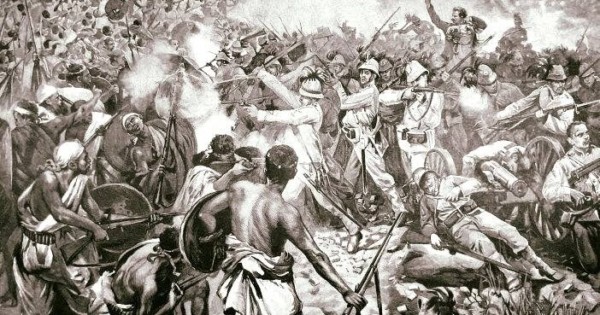
The story of the Chimurenga Resistance exemplifies how religion and religious elements can serve as catalysts for social change. Chimurenga is attributed to the Shona people and can be translated as “revolutionary struggle” or “uprising”.

Like many colonized countries on the continent, the colonization of Zimbabwe happened through a web of deceit and violence perpetrated by the British South African Company in the early 1890s. The British South African Company employed a specific method of divide and conquer, or indirect rule,  which has been attributed to Fredrick Lugard.

The indirect rule sought to outlaw spirit mediums and rely solely on traditional rulers to help establish colonial authority within colonies. The system employed local chiefs to serve as ‘mouthpieces’ and ‘right hands’ (Fields, 1985), on behalf of colonizers who sought to control the chiefs for the ultimate aim of controlling the people. However, the colonizers failed to consider the fact that across many African societies, there isn’t typically a separation between the political, social and religious aspects of life and this meant that spirit mediums, known as n’angas, were just as powerful and influential as traditional chiefs (Kaoma, 2016).

To establish the dominion of chiefs over their localities, the colonizers outlawed n’angas and this set the stage for the influential roles spirit mediums played during what is now known as the First Chimurenga. According to Kaoma (2016), the attempt to outlaw spirit mediums and to denounce witchcraft and superstitions also created a social crisis which resulted in an undermining of the authority of chiefs whom themselves depended on spirit mediums for their authority.

Expulsion from their ancestral lands and imposed taxes further compounded the grievances that the Shona and Ndebele had against their colonizers. So, between 1896 and 1897, the Shona and the Ndebele communities, through the help of n’angas, violently rebelled against the British South African Company.

The rebellion was led by spirit mediums who were adherents of the Mwari Deity or ancestral cult. The mediums who communicated with Mawri and channelled the deity’s messages to the community were mainly women and Kaoma (2016) emphasized the fact that Mwari’s voice was a woman to highlight the important role women played within the belief system as well as the resistance movement.

The deity Mawri is quoted as attributing various misfortunes including severe drought, a locust invasion, disease in cattle and violent deaths to the arrival of colonizers. The deity thus called for the Shona and Ndebele people to “go and kill these white people and drive them out of our father’s land and I Mwari will take away the cattle disease and the locusts and send you rain.” (Daneel 1970, as cited in Kaoma, 2016).

With that, the spiritual leader, known as Mlimo, led nearly 2,000 warriors to fight against the British. It is said that the power of the Ndebele warriors peaked during the full moon and with that knowledge, their first attack was carried out on the night of March 29, 1896, beneath a full moon.

Eventually, the leaders of the rebellion were conquered and sentenced to death by the British, however, they were evoked by nationalist leaders and adherents of the Mawri deity to mobilize support for the Second Chimurenga which eventually led to the independence of Zimbabwe in 1980 (Kamao, 2016).

The Majimaji War (Tanzania, 1904-1908)

The Majimaji War saw Tanzanians rise in resistance against colonization by Germany. Leaving an estimated 100 to 300,000 southern Tanzanians dead, it has been described as one of the most catastrophic wars of colonial Africa (Rushohora, 2019). Like in Zimbabwe a decade earlier, the Majimaji resistance was initiated by a spirit medium named Kinjekitile Ngwale. The resistance was a result of frustration with years of German colonization which featured forced labor, torture, and unfair tax systems. 

Ngwale, described as being possessed by a snake spirit called Hongo, was able to mobilize various groups to take part in the uprising. He was a powerful medicine man who gained popularity in the years leading up to the war. As word spread about him, people began traveling to see him as it was widely believed that his medicine provided several benefits including good health and harvest. However, most notably, Nwgale was popular for claiming to have found a way to repel German bullets. His secret was healing water which he referred to as Majimaji, and could “give invulnerability, acting in such a way that enemy bullets would fall from their targets like raindrops from a greased body.”

A study analyzing the coordination of the Majimaji resistance emphasizes the role of “witchcraft” in coalescing various groups of people to struggle against a common enemy (Iliffe, 1967). According to John Iliffe (1967), the group of mediums led by Ngwale were most likely the religious counterparts of the mediums responsible for the Chimerunga Resistance years earlier. However, the mediums in Tanzania were adherents of a serpent deity and were referred to as the Kolelo cult and believed to have possessed supernatural elements including mediumship, possession, and command over death  (Iliffe, 1967).

Tanzanian warriors, armed only with arrows, spears, and Majimaji water, thus launched an offensive against the Germans, first attacking small outposts, before spreading throughout the colony. Eventually, the Majimaji War involved 20 different ethnic groups all fighting towards dispelling German colonizers.

The Role of Religion in Modern Resistance Movements

In a modern, increasingly globalized and multicultural world, what role can religion play in resistance movements such as the #EndSARS or #BlackLivesMatter movements?

Nepstad & Williams (2007) argue that religion provides important organizational resources including networks of members, meeting spaces, fund-raising capacities, leadership, and free spaces to promote the development of organizing skills, etc. However, beyond these, religious institutions can also offer theological and ideological critiques of existing social issues such as the wanton killings and brutalization of people by agents of the state. Even within multicultural societies where there might be an absence of a unifying ‘Cultural Religion’ (the overlap between cultural and religious elements (Nepstad & Williams, 2007), extant religious institutions can still render themselves useful to modern resistance movements.

However, whether or not existing religious institutions are willing to lend their voices to resistance movements is another area of inquiry entirely. If the response of religious institutions in Nigeria to the  #EndSARS movement is any indication, then it can safely be concluded that religious institutions, or at least those in Nigeria, cannot be expected to fully and outrightly support resistance movements. This conclusion is largely drawn from the loud silence that has emanated out of the pulpits of some of the world’s largest megachurches based in Nigeria.

Asides from mega-pastors and churches, other religious entities have also been largely mute during the #EndSARS movement. The Association of Nigerian Witches and Wizards, known to have declared its support in 2014 during the fight against Boko Haram, has largely been quiet. So has the Muslim religious body in Nigeria.

So What?

As seen with the Chimurenga and Majimaji movements, a shared cultural religion was pivotal in bringing together different groups which collectively participated in both movements. However, and perhaps, largely due to the suppression of African religions, we are likely never to see a similar uprising as either the Chimurenga or the Majimaji which were both entirely inspired and dependent on various aspects of the prevailing African belief systems.

Still, there are various concepts from African religions that can inspire modern resistance movements, after all, as John Mbiti has asserted, Africans’ belief in God has always engendered a moral response which has directed moral life and interaction long before the first European settlers came with their religions and philosophies.

Sources

  1. Beverton, A. (2009, June 21). Maji Maji Uprising (1905-1907). https://www.blackpast.org/global-african-history/maji-maji-uprising-1905-1907/#:~:text=A%20prophet%E2%80%94Kinjikitile%20Ngwale%E2%80%94emerged,against%20the%20Germans%2C%20attacking%20atBritish
  2. Broadcasting Corporation. (n.d.). The Story Of Africa| BBC World Service. Retrieved October 28, 2020, from  http://www.bbc.co.uk/worldservice/africa/features/storyofafrica/11chapter7.shtml
  3. Emory University. (2016). The Maji Maji Rebellion | Violence In Twentieth Century Africahttps://scholarblogs.emory.edu/violenceinafrica/sample-page/the-maji-maji-rebellion-2/
  4. Hay, M. (2014, October 28). The Association Of Nigerian Witches And Wizards Is Helping To Fight Boko Haram. VICE. https://www.vice.com/en/article/5gkqnn/the-association-of-nigerian-witches-and-wizards-is-a-thing-and-they-are-helping-fight-boko-haram
  5. Ikechukwu, P. (2019, February 21). The Essence Of African Traditional Religion. Church Life Journal. https://churchlifejournal.nd.edu/articles/the-essence-of-african-traditional-religion/
  6. Iliffe, J. (1967). The Organization of the Maji Maji Rebellion. J. Afr. Hist.8(3), 495–512. https://doi.org/10.1017/s0021853700007982
  7. Nepstad, S. E., & Williams, R. H. (2007). Religion in Rebellion, Resistance, and Social Movements. In J. A. Beckford & N. J. Demerath III (Eds.), The SAGE Handbook of the Sociology of Religion. SAGE. https://sk.sagepub.com/reference/hdbk_socreligion
  8. Rushohora, N. A. (2019). Facts and Fictions of the Majimaji War Graves in Southern Tanzania. Afr Archaeol Rev36(1), 145–159. https://doi.org/10.1007/s10437-019-09324-2

Spirits (Bori/Iskoki) in Hausa Animism

In the Beginning God Created Iskoki

According to the Mawri people of Dogondoutchi in The Niger Republic, in the beginning, God created a man and woman who procreated and bore fifty sets of twin babies. God was pleased and wanted to marvel at children and so asked the man and woman to see them up close, however, doubting God’s motive, the woman told her husband to hide the better-looking twin from each set in a cave. Knowing what they had done and displeased by it, God decided to punish the man and woman by cursing the children who were hidden in the cave. These children were cursed to disappear (become spirits) and remain in the unseen world, forever invisible to their parents and siblings, yet, dependent on them for sustenance. The children who remained on the human plane of existence were, on the other hand, bound to their invisible siblings to seek protection and guidance and placate them with offerings (the origin of sacrifice) or risk being haunted (Masquelier, 2001)1

This story establishes the presence and importance of spirits by centering them in the creation story of the Mawri people. Indeed, spirits are an essential aspect of belief in Hausa Animism as can be seen in the story of the Maguzawa from Kano who, even though they believed in Ubangiji, the supreme being, were never known to worship nor seek his help (Danfulani, 1999)2. Rather, they interfaced strictly with spirits, known as iskoki or Bori, through various ways and particularly through spirit possession, a practice that has endured over the centuries and is perhaps the most notable spiritual practice in Hausa Animism. It is also worth noting that the Mawri people in Dogondoutchi do not worship a supreme being, however, like the Maguzawa, they believe that each person comes into the world with an Iska (singular of iskoki) or multiple attached to them. The Mawri also believe that certain iskoki can be inherited from the family one is born into and these familial spirits often have physical influence over the family, like the line of work a family might be known for (Masquelier, 2001). 

The Maguzawa and Mawri people also believed that spirits inhabited the physical natural environment and as a result, they had a deep reverence for the natural environment which influenced the manner both peoples interacted with the land, trees, and rivers they encountered in their daily lives. The Maguzawa, for instance, centered their religious activities around Dalla Hill in Kano where their first leader performed religious rites and ceremonies to Tsomburburai, a pantheon of spirits who inhabited a sacred tree known as Shamuz. Likewise, the Mawri believe their ancestors were led by Sauraniya, a woman possessed by a spirit of the same name, who led them from the Hausa State of Daura to their current location in Niger. The Sauraniya (Hausa for queen), was also a spiritual leader who was said to be devoted to land spirits and thus helped her people connect to these spirits. The Mawri also used stones as anchorage for their spirits. These often doubled as altars to the spirits and it is believed that each spirit chose the stone to be used on its behalf.

Things Change but Spirit Remains the Same

Even though Hausa Animism experienced a tidal wave of change with both the arrival of Islam and colonization, like many resilient cultures across the African continent, adherents found ways to incorporate these changes into their belief systems. It has been argued that for both the Mawri and Maguzwa, syncretizing with Islam is one of the main reasons both people have not completely lost their indigenous beliefs (Danfulani, 1999; Masquelier, 2001). Both the Mawri and Maguzawa peoples indeed adapted elements of Islam into their beliefs and localized practices, however, one thing remained the same, the existence of iskoki/bori. 

The Maguzawa, for instance, introduced Muslim bori into the pantheon of spirits that already existed. The Maguzawa even went so far as to differentiate Muslim bori from pagan bori who were believed to be village dwellers, in contrast to the Muslim Bori who were city dwellers (Danfulani, 1999). This contrast is believed to have represented the emergence of cities and urban living among the Hausa and its association with trade and commerce, and subsequently with Islam (Danfulani, 1999). Consequently, the Muslim bori were perceived to be light-complexioned (farfaru), indicating the divine, holy and pure nature of the light and truth of Islam, while the so-called pagan Boris were dark-complexioned, malevolent and relegated to the world of pagans and infidels (Danfulani, 1999). 

Elsewhere in Mawri, Masquelier (2001) claims that the interaction between Islam and Bori was extensive and complex such that it was nearly impossible to tell where one ended and the other began. Masquelier (2001) cites the example of known Bori practitioners who travelled on pilgrimage to Mecca, as well as those who were present at and participated in bori possession ceremonies. The influence of Islam can also be seen in the initial story of the first man and woman narrated earlier. Versions of the story told among the Mawri claim that the name of the first woman was Hawa (or Adama) and her husband, Adamu. It is not a coincidence that these are the names of the first man and woman in the Islamic version of the creation story.

A Double-Edged Sword

According to Danfulani (1999), one of the reasons the Maguzwa belief system (simply referred to as Bori) has survived so long is because it converted spirits into Islam and Bori practitioners accepted that iskoki were also creations of Allah. This notion was somewhat easily accepted because iskoki were then categorized alongside jinns, the supernatural beings that predated Islam but were co-opted by it. Whereas the Maguzawa simply categorized spirits based on whether they were malevolent or benevolent, the categorization into fairer and darker spirits was representative of the Islamic notions of dar-al-harb and dar-al-Islam, meaning the abode of war (the world of pagans and infidels) and the abode of Islam, respectively (Danfulani, 1999). This simple yet profound misrepresentation of iskoki would become one of the reasons why more Bori practitioners would forsake the belief system.

While the syncretization of Islam and Hausa Animism might have influenced its survival so far, it is also worth noting that Islam has also significantly contributed to the suppression of Hausa Animism most notably through the jihad led by Sheikh Usman Dan Fodio which resulted in a predominantly Islamic empire around the region that is now northern Nigeria. The consequence of this crusade is still seen today in the marginalization and almost complete disappearance of Bori practitioners across northern Nigeria where they initially thrived. Still, there are pockets of practitioners to be found in Nigeria, and indeed across the continent. As Masquelier (2001) puts it, Bori has continued to reassert itself through its capacity to become a multifaceted belief system that addresses a variety of needs and expectations, even when that means containing contradictions paradoxes. 

Sources:

  1. Masquelier, A. (2001). Prayer Has Spoiled Everything. Duke University Press.
  2. Danfulani, U. H. D. (1999). Factors Contributing to the Survival of the Bori Cult in Northern Nigeria. Numen, 46(4), 412–447. http://www.jstor.org/stable/3270434

About African Religions

Our ancestors prayed, believed, worshipped, and called on God in various ways before the first mosques and churches were ever established on the continent. Just as there are currently diverse people and cultures on the continent, with over 3000 ethnic groups, so were the beliefs and spiritual practices of pre-colonial Africans diverse, such that we could spend lifetimes studying them and we would never exhaust them all. 

Because of the diversity of religious and spiritual beliefs on the Continent, many researchers who have previously studied them have done so by observing a few, making comparisons between them, and then making broad conclusions and generalizations about the basic tenets and characteristics of what they collectively refer to as “Traditional African Religions”. 

While the generalizations perhaps allowed for easier access to and analysis of  African religions, they have also inadvertently allowed for the reduction of African religions to a monolithic set of beliefs and practices. This reductionism is exemplified in the attempt to use the name “traditional African religion” to imply a single religion, much like Christianity and Islam, which is expected to encompass all the beliefs and practices of non-Christian and non-Muslim religions on the continent1. This reductionism is problematic because — perhaps without intending to — it erases certain unique aspects of African religions on the continent by focusing simply on the similarities between them.

Jacob Olupona, a leading scholar of African religions, asserted that a truly indigenous understanding of African religions has to begin with understanding the history of Africa before colonization because our current knowledge of African religions and their accompanying practices are deeply rooted in non-African paradigms and Eurocentric ideas2

So then, the question becomes, how do we begin to seek this understanding of pre-colonial Africa which is not rooted in Eurocentric views? And how do we dislodge African religions from the Eurocentric point of view which has so far demonized, reduced and attempted to erase them? 

These are some of the foundational questions that have led to the creation of this platform. This site is intended in to be a space that fosters an understanding of African Religions which, as much as possible, is not centred in Eurocentric views. This attempt to dislodge African beliefs from the Eurocentric view is depicted in the chosen name for the site; African Religions, rather than ‘African Traditional Religions,’ because when we talk about Christianity or Islam, for instance, we do not refer to them as Hebrew or Arabic  Traditional Religions, or perhaps even collectively as Middle Eastern Religions. If we are specific when we talk about those religions, we ought to begin to adopt a similar approach when we speak about and study African religions. And although the term ‘African Religions’ still refers to the diverse spiritual beliefs and customs as a collective, it is not done in an attempt to categorize them all as a single religious entity. Additionally, erasing the word ‘traditional’ is an attempt to centre these beliefs and make them less of an ‘other’ in our discourse. 

As scholars continue to emphasize globalization and the emergence of “new African religions” — which include African beliefs syncretized with either Islam or Christianity and those that made it to the Americas as a result of the trans-Atlantic slave trade — it is imperative to understand how these ‘older’ beliefs have influenced the so-called new religions.  An ancient principle which this work is based on is Sankofa, from the Akan people of Ghana. The concept reminds us that “it is not taboo to fetch what is at risk of being left behind.” 

One might wonder why it is necessary to preserve these spiritual beliefs, or at least what is left of them, and a response to that is culled from the work of Kofi Asare Opoku (2006) who has asserted that African religion is inextricably linked to all aspects of African life3. Opoku highlights that the word ‘religion’ is missing from many African languages because these African cultures do not make a distinction between their spiritual beliefs and other key aspects of life including ways of organizing society, governance, etiquettes and customs, etc. And so, by abandoning these spiritual beliefs, many African societies are at risk of losing their identities; the very principles and tenets which give meaning to their existence. 

The goal, therefore, is to help those already on the path to remembering by providing various resources about the different beliefs and practices that existed, and still do, across the Continent. The information available here is also aimed at people who are not yet on the path to remembering but wish to be. It is hoped that the resources here will fuel your curiosity about your Ancestors and spark within you a desire to know more about how they lived and what they believed for the ultimate purpose of enriching your life and freeing your mind. The overarching goal is for the site to be a digital catalogue of resources and information for scholars and researchers whose works are centred on African religions. 

The site will be updated monthly with new resources and articles and I invite you to subscribe to receive them directly in your inbox. Also, send me questions about the ideas, concepts, myths and misconceptions you are curious about. I am making it my mission to dig deep into as many topics on African Religions as possible.

Sources

1. MacGaffey, W. (2012, October 25). African Traditional Religion. Retrieved July 18, 2020, from https://www.oxfordbibliographies.com/view/document/obo-9780199846733/obo-9780199846733-0064.xml

2. Olupona, J. (2006). Thinking Globally about African Religion. In M. Juergensmeyer (Ed.), . Oxford University Press. Retrieved July 18, 2020, from https://www.oxfordhandbooks.com/view/10.1093/oxfordhb/9780195137989.001.0001/oxfordhb-9780195137989

3. Opoku, K. A. (2006). Traditional African Religious Society. In M. Juergensmeyer (Ed.), . Oxford University Press. Retrieved July 23, 2020, from https://www.oxfordhandbooks.com/view/10.1093/oxfordhb/9780195137989.001.0001/oxfordhb-9780195137989