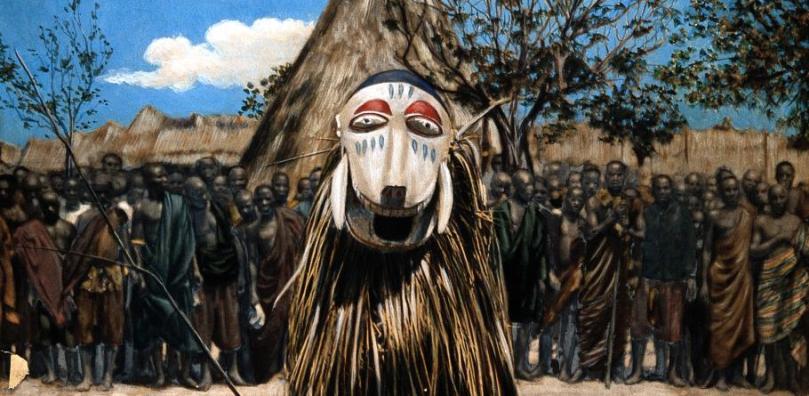
The belief in supernatural beings is a common thread that ties diverse cultures and spiritual traditions among indigenous people. Spirits and deities are two distinct categories of supernatural beings, each with various characteristics and roles within belief systems. This article will explore the differences between spirits and deities, examining their nature, attributes, and the various cultural contexts in which they are revered.
Spirits are often considered less powerful than deities and may be associated with specific places, objects, or events. Deities are often considered more powerful and may be associated with wider aspects of the natural world or human experience. The nature of spirits and deities can vary greatly from culture to culture. In some cultures, spirits may be considered benevolent, while in others, they may be malevolent. Deities may also be considered benevolent, malevolent, or a mix of both.
Deities: Divine Beings of Power and Worship
Spirits are ethereal beings that occupy an intermediary position between the human and divine realms. In indigenous belief systems, spirits are often associated with specific locations, natural elements, or ancestors. They possess individual identities, consciousness, and agency, yet many spirits lack the grandeur and worship typically accorded to deities, which are a different kind of spirit.
John Mbiti has famously categorized spirits into two groups: those created as spirits and those once human beings. Among those created as spirits are divinities or deities, also known as “those who are associates of God”. Divinities—deities from here—often refer to spirits who are personifications of a supreme being’s activities and manifestations of natural phenomena and objects. Examples of these beings include nature (elemental) spirits, deified heroes, and mythological figures.
Deities are supernatural entities regarded as powerful and transcendent beings embodying various divine aspects. They typically possess elevated status and supreme powers and are revered through worship, rituals, and other religious practices. The Yoruba belief system, for example, recognizes over a thousand deities, Orisa—the most extensively recorded of any African belief system. The Orisa are associated with various aspects of nature, human life and experiences. They are revered as direct messengers who are also often described as an aspect of the supreme itself governing specific domains or spheres, such as love, fertility, war, iron, and wisdom.
Deities are often depicted in human form, but they may also be represented by animals, plants, or other objects. They may be benevolent or malevolent, and they may be invoked for help or protection. Deities play an important role in many cultures and religions, and they continue to be a source of fascination and inspiration for people worldwide.
Non-Deific Spirits
In addition to deities, there are also ordinary spirits, or “spiritual beings who are beneath the status of divinities and above the status of men” (Mbiti, 1970). The origin of spirits varies by spiritual belief system. For example, the Mawri in Dogondoutchi, Niger, believe that spirits are the invisible siblings of humans who were condemned to remain unseen as punishment by the supreme being for the sins of their parents, the first man and woman. In this narrative, and others similar to it, spirits are considered contemporaries of humans because they exist in the same plane as humans, with the most obvious difference being that humans cannot perceive them with their sense of sight.
Perhaps the most commonly recognized spirits are those of deceased humans whom their living relatives often venerate. Beliefs about what happens to our spirits after they depart the human body vary from culture to culture. However, formerly embodied spirits are widely recognized within African spiritual systems. A previous post discussing what happens when we die established that the supernatural plane, where formerly embodied spirits reside, is regarded as an integral part of the material world. As such, in every aspect of our human existence, transitioned spirits “are not merely invoked and observed; their participation and benediction are also requested” (Okwu, 1979). Invoking formerly embodied spirits for their participation and benediction constitutes ancestral veneration.
One key distinction of spirits is their accessibility to human interactions. They are considered approachable, often mediating between humans and higher supernatural powers. Spirits can be invoked, propitiated, and engaged through various rituals, offerings, or acts of reverence.
Key Differences between Spirits and Deities:
The main differences between deities and non-deific spirits can be seen in their power, status, modes of veneration, domains of influence, and transcendence. Deities are often considered more powerful and hold higher status than non-deific spirits. They are worshipped on a grander scale and are associated with broader cosmic functions and mythologies. Deities often receive “formal” veneration through organized practices, such as rituals and ceremonies.
On the other hand, non-deific spirits may be venerated through more informal means, such as offerings or prayers. Deities are typically associated with specific domains and spheres of influence, such as nature, love, war, or wisdom. Non-deific spirits often have a narrower focus and are connected to ancestral lineages within familial clans and groups.
Deities are often perceived as being transcendent, transcending beyond the human realm. Non-deific spirits are more immanent, tied to specific locations or natural phenomena.
The distinctions between spirits and deities can vary in cultural and religious contexts. For instance, in some belief systems, certain spirits may be elevated to the status of deities over time through communal recognition, while in other cultures, deities may have originated as spirits before gaining prominence and broader worship. Moreover, the line between spirits and deities can blur in certain traditions, with beings possessing both qualities. In these cases, the categorization may depend on the cultural lens and individual interpretations within the belief system.
Summing Up Supernatural Beings: Key Takeaways
Deities and non-deific spirits represent two distinct categories of supernatural beings that hold significant roles within various cultural and religious frameworks. While spirits are intermediary beings with accessible and localized presence, deities are powerful and transcendent entities, often venerated on a larger scale. Understanding the differences between spirits and deities enhances our comprehension of diverse belief systems, providing insight into the complex relationships between humans and the supernatural world.
It is important to recognize that the nuances of these distinctions can vary greatly across cultures, emphasizing the diversity of human spiritual experiences and the multifaceted nature of supernatural beliefs. By exploring these differences, we can better appreciate the rich tapestry of human spirituality and the myriad ways individuals and communities connect with the unseen realms.
Citation
- Mbiti, J. S. (1970). African religions & philosophy. Heinemann.
- Okwu, A. S. O. (1979). Life, Death, Reincarnation, and Traditional Healing in Africa. Issue: A Journal of Opinion, 9(3), 19. 10.2307/1166258
Image credit: Heywood, Paolo. (2017) 2023. “Ontological turn, the”. In The Open Encyclopedia of Anthropology, edited by Felix Stein. Facsimile of the first edition in The Cambridge Encyclopedia of Anthropology. Online: http://doi.org/10.29164/17ontology
 African Spiritualities