Spirit and Nature: An Exploration

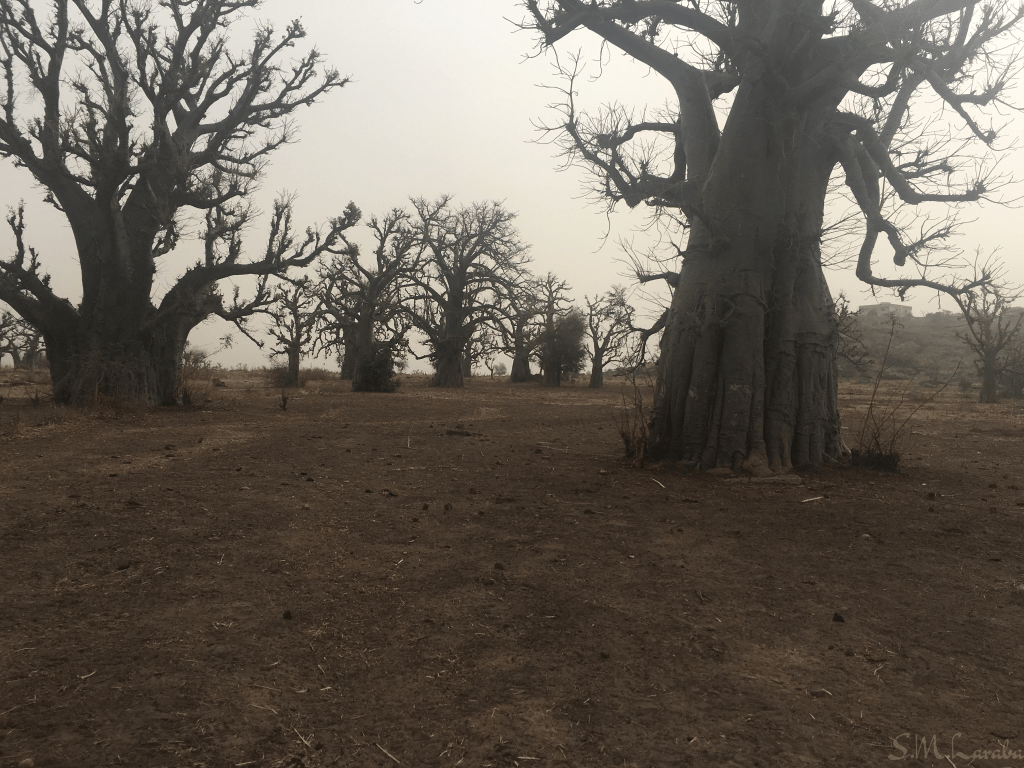
Photo: ‘Baobab Yola’ by Laraba Sambe © 2019

Previously, we discussed animism as a worldview that regards every aspect of nature as imbued with, and therefore an extension of, Spirit. This perspective fosters a profound respect for and connection with nature, as seen across diverse animistic traditions worldwide. Building upon that foundation, this piece elaborates on the central belief that nature, as an extension of Spirit, is sacred. It also examines the resulting sense of ecological responsibility—expressed through reciprocity and ritual—that enabled indigenous cultures to thrive in harmony with nature prior to Western imperialism.

The Separation Myth: Nature as Commodity

Life in 2025 is characterized by ongoing confrontations with a range of crises that, although distinct in time and place, collectively signal a profound disconnection between humanity and its spiritual essence. Western imperialism, as a systemic force, has permeated virtually every facet of global society. Today, numerous genocides—widely covered by the media but insufficiently challenged by the international community—serve as stark illustrations of a system that devalues the sanctity of life. Within this paradigm, all life is commodified for profit, and the loss of innocent lives is regarded as an acceptable cost in the relentless pursuit of resources.

Recent mass killings in regions such as Gaza, Sudan, and the Congo are often linked to the exploitation of natural resources by imperialist forces. To facilitate resource extraction, these entities frequently seek to suppress resistance from local populations, who are often indigenous to these areas. As a result, the environment itself becomes central to the broader context of violence and conflict. The large-scale attacks witnessed today reflect a continuation of historical tactics employed by imperial powers against indigenous populations that resisted their operations.

Over time, Western imperialism has continually refined its justifications for dominance. Initially, expansion was framed as the divine right of monarchs. Before that, Christian missionaries felt compelled to spread their faith worldwide. Unfortunately, colonial expansion frequently followed missionary activity, converting colonies into sites for resource extraction by European powers. Consequently, contemporary global power structures are a reflection of the disparities established during the colonial era. While former colonies may no longer be directly exploited for their land and resources, they still experience significant indirect consequences. Today’s global politics constitute a competitive arena in which powerful nations vie for control over land, resources, and markets. Within Western economic frameworks, these resources are considered scarce, and the ongoing struggle for them has perpetuated and intensified imperialistic practices.

Sankofa: Reconnecting with the Spiritual Essence of Nature

Long before the concept of the divine right of kings emerged and before missionaries arrived in indigenous lands, animistic cultures around the world—despite differences in belief—shared a central principle: profound reverence for nature. In these traditions, the Cartesian distinction between Spirit and matter does not exist. Indigenous peoples view themselves as integral to nature, not separate from it. For them, every aspect of life that is not human-made is regarded as an extension of God or Spirit. As Godwin Sogolo (1993) notes, “To the African [Indigenous] mind, reality is one unified whole. What happens to one part of creation reverberates through the entire system.”

The concept of interconnectedness is central to animistic beliefs and, over centuries, has fostered a sense of duty and stewardship for nature within indigenous cultures. Trees, forests, rivers, animals, and soils are not merely resources to be exploited; instead, they are recognized as essential components of the cosmos, imbued with Spirit, and thus regarded as sacred. Unfortunately, colonial missionaries—often agents of imperial expansion—dismissed these beliefs as superstition or, at times, labeled them as witchcraft. As a result, animism and its sophisticated ecological philosophy have largely faded from collective human consciousness (Kimmerle, 2006; Gumo et al., 2012). Now, at a pivotal moment in history, when the consequences of this loss are increasingly apparent, humanity must confront its past and reclaim the sacred knowledge that once enabled harmonious coexistence with the natural world.

The wisdom embedded in animistic practices is extensive. In recent years, modern science and Western academic thought have begun to incorporate animistic principles, particularly in fields such as spiritual ecology, ecofeminism, and environmental conservation. Scholars, theologians, and conservationists increasingly turn to animism as both a philosophical framework and a relational approach to engaging with the natural world—an orientation that may prove vital to humanity’s survival. Distinct aspects of animistic thought and humanity’s relationship with nature have generated significant interest among Western thinkers.

Reciprocity as an Animistic Principle

Reciprocity stands as a fundamental principle in animistic traditions. In “Ontology and Ethics in Cree Hunting,” Colin Scott (2014) explains that, among the Cree—especially hunters who engage with wild animals—reciprocity is rooted in respect. Although the meaning of respect may shift depending on the context and entities involved, it consistently serves as the ethical foundation for all relationships. Scott frames “respectful reciprocity” as the approved way of relating not only between hunters and animals but also between humans and the natural world as a whole.

The importance of reciprocity is deeply embedded in animistic cultures and is manifested in various forms. In Cree mythology, for instance, this idea is woven through cosmological narratives, illustrating how humans received culture, fire, language, and tools from animals who originally possessed them. Scott’s observations of the relationship between Cree hunters and the animals they pursue exemplify how animistic cultures perceive their connection to non-human nature as one of gift exchange (Adloff, 2025). Indigenous animistic traditions emphasize drawing resources from nature while simultaneously giving back, fostering a balanced and enduring exchange between humans and the natural world. These societies demonstrate profound respect for nature and honor the sacred partnerships formed through reciprocal exchanges in hunting and sustenance.

Adloff (2025) asserts that in cultures maintaining reciprocal relationships with nature, the notion of human superiority is inconceivable. Instead, these societies emphasize gratitude for nature’s gifts, recognizing that both humans and nature are components of a unified whole. As Sogolo (1993) notes, ‘what happens to one part of creation reverberates through the entire system.’ The resources offered by nature and the stewardship provided by humans circulate in a continuous cycle that sustains all life. Ultimately, indigenous societies flourish by acknowledging nature’s abundance and reciprocating through responsible care and stewardship of the environment.

The Role of Rituals in Honoring Nature

Within indigenous cultures, rituals are essential for nurturing, preserving, and honoring the connection to the divine and the spirit world. In “Ritual: Power, Healing and Community,” Elder Somé (1993) underscores the significance of rituals, observing that “the abandonment of ritual can be devastating.” He further asserts, “from a spiritual standpoint, ritual is inevitable and necessary if one is to live.” Recognizing this sacred imperative, indigenous societies have formalized their commitment to the Earth through diverse rituals and celebrations that honor the natural world.

In Nigeria, the Osun-Osogbo Sacred Grove holds profound importance for the Yoruba people as a site dedicated to the river goddess Osun, who is revered for bestowing fertility, healing, and protection. Annually, the Osun-Osogbo festival draws thousands of Ifa practitioners from around the globe. This multi-day celebration features singing, dancing, prayers, and offerings, honoring a centuries-old covenant between the community and the river. Similarly, rainmaking rituals are prevalent among the Shona people of Zimbabwe. During periods of drought, the Shona convene at sacred hills and riverbanks to invoke ancestral spirits for rain. These ceremonies include millet beer, livestock offerings, and ritual songs, reflecting the belief that rainfall is not guaranteed but is a blessing contingent upon maintaining a harmonious relationship with the land and Spirit.

Even before the spread of Christianity across Europe, indigenous European societies had honored nature through various rituals. The Celts, for example, regarded oak groves and wells as sacred spaces where Druids mediated between humans and the unseen world. Offerings—such as jewelry or weapons—were placed in rivers and lakes as gifts to the deities and spirits believed to inhabit those waters. In Northern Europe, Norse communities revered Yggdrasil, the cosmic tree linking heaven, Earth, and the underworld. At sacred groves and springs, sacrifices were performed to ensure fertility, protection, and balance.

Indigenous cultures across Africa, Europe, and beyond demonstrate deep respect for nature through both personal and communal rituals. These practices extend beyond mere symbolism; they represent continuous, intentional engagement with the natural world and reflect a foundational belief in the interconnectedness and interdependence of all existence. Whether in the groves of Osogbo, the sacred wells of the Celts, or the rain shrines of Zimbabwe, indigenous societies have historically honored nature through ritual. As Mbiti (1969) states, “The physical and the spiritual are but two dimensions of the same universe; ritual ensures they remain in harmony.”

Reclaiming Animism in Contemporary Society

The renewed interest in animism among modern scientists and within Western academic discourse parallels a global revival of animistic practices. In the West, there is a notable resurgence among members of the African diaspora seeking to reconnect with their ancestral heritage, which is inherently animistic and grounded in the recognition of, and respect for, the Spirit that unites humanity and nature. These movements are instrumental in healing the wounds of colonial disruption by fostering spiritual kinship, which, in turn, informs more sustainable ecological practices (Gumo et al., 2012). Similarly, eco-activist Wangari Maathai, founder of the Green Belt Movement, drew profoundly on ancestral reverence for trees as she mobilized women to plant millions across Kenya. Maathai described planting “seeds of peace and hope,” grounded in the belief that humanity cannot achieve peace on an endangered planet.

Animism, as expressed through diverse indigenous cultures worldwide, offers a compelling alternative to Western ecological paradigms. Animistic beliefs approach the Earth as kin rather than as a resource to be exploited. From this vantage point, the crises currently facing our planet—including environmental and climate challenges—are not merely surface-level issues, but manifestations of a profoundly fractured relationship between humanity and Spirit, the essential thread binding us to nature and all living beings.

In conclusion, reengaging with animistic worldviews invites us to reconsider our relationship with the natural world—not as detached observers or exploiters, but as participants in the dynamic and interconnected web of life. By acknowledging the wisdom embedded in indigenous traditions and embracing a sense of reciprocity, respect, and spiritual kinship with nature, we can foster more sustainable and harmonious ways of living. As global challenges intensify, adopting these perspectives offers a hopeful path toward spiritual and, ultimately, ecological restoration for a more balanced and compassionate future for both humanity and the planet.

References

  • Chirikure, S., Nyamushosho, R., Chimhundu, H., Dandara, C., Pamburai, H., & Manyanga, M. (2017). Concept and knowledge revision in the post-colony: Mukwerera, the practice of asking for rain amongst the Shona of southern Africa.
  • Feiler, B. (2014) Sacred Journeys With Bruce Feiler | Osun-Osogbo, PBS.org. Available at: https://www.pbs.org/wgbh/sacredjourneys/content/osun-osogbo/ (Accessed: September 10, 2025).
  • Gumo, S., Gisege, S. O., Raballah, E., & Ouma, C. (2012). Communicating African Spirituality through Ecology: Challenges and Prospects for the 21st Century. Religions, 3(2), 523–543. https://doi.org/10.3390/rel3020523
  • O’Driscoll, D. 2022. “Introduction To Animism: Definitions And Core Practices For Nature Spirituality – The Druids Garden.” The Druids Garden – Spiritual Journeys In Tending The Living Earth, Permaculture, And Nature-Inspired Arts. July 14, 2022. https://thedruidsgarden.com/2022/07/14/introduction-to-animism-definitions-and-core-practices-for-nature-spirituality/.
  • Scott, C. 2014. Ontology and Ethics in Cree Hunting: Animism, Totemism and Practical Knowledge. Edited by Graham Harvey. London: Routledge.
  • Sogolo, G. (1993). Foundations of African Philosophy: A Definitive Analysis of Conceptual Issues in African Thought. Ibadan, Nigeria: Ibadan University Press
  • Somé, M. P. (1997). Ritual: Power, healing, and community. Penguin.
  • Taylor, B. (2013) ‘Kenya’s Green Belt Movement Contributions, Conflict, Contradictions, And Complications In A Prominent Environmental Non-Governmental Organization (Engo)’, in Trägårdh, L., Witoszek, N., and Taylor, B. (eds) Civil Society in the Age of Monitory Democracy. New York: Berghahn Books, pp. 181–207. Available at: https://doi.org/10.1515/9780857457578 (Accessed: September 10, 2025).
Spirits and Deities: Exploring the Distinctions in Supernatural Beings

The belief in supernatural beings is a common thread that ties diverse cultures and spiritual traditions among indigenous people. Spirits and deities are two distinct categories of supernatural beings, each with various characteristics and roles within belief systems. This article will explore the differences between spirits and deities, examining their nature, attributes, and the various cultural contexts in which they are revered.

Spirits are often considered less powerful than deities and may be associated with specific places, objects, or events. Deities are often considered more powerful and may be associated with wider aspects of the natural world or human experience. The nature of spirits and deities can vary greatly from culture to culture. In some cultures, spirits may be considered benevolent, while in others, they may be malevolent. Deities may also be considered benevolent, malevolent, or a mix of both.

Deities: Divine Beings of Power and Worship

Spirits are ethereal beings that occupy an intermediary position between the human and divine realms. In indigenous belief systems, spirits are often associated with specific locations, natural elements, or ancestors. They possess individual identities, consciousness, and agency, yet many spirits lack the grandeur and worship typically accorded to deities, which are a different kind of spirit.

John Mbiti has famously categorized spirits into two groups: those created as spirits and those once human beings. Among those created as spirits are divinities or deities, also known as “those who are associates of God”. Divinities—deities from here—often refer to spirits who are personifications of a supreme being’s activities and manifestations of natural phenomena and objects. Examples of these beings include nature (elemental) spirits, deified heroes, and mythological figures.

Deities are supernatural entities regarded as powerful and transcendent beings embodying various divine aspects. They typically possess elevated status and supreme powers and are revered through worship, rituals, and other religious practices. The Yoruba belief system, for example, recognizes over a thousand deities, Orisa—the most extensively recorded of any African belief system. The Orisa are associated with various aspects of nature, human life and experiences. They are revered as direct messengers who are also often described as an aspect of the supreme itself governing specific domains or spheres, such as love, fertility, war, iron, and wisdom.

Deities are often depicted in human form, but they may also be represented by animals, plants, or other objects. They may be benevolent or malevolent, and they may be invoked for help or protection. Deities play an important role in many cultures and religions, and they continue to be a source of fascination and inspiration for people worldwide.

Non-Deific Spirits

In addition to deities, there are also ordinary spirits, or “spiritual beings who are beneath the status of divinities and above the status of men” (Mbiti, 1970). The origin of spirits varies by spiritual belief system. For example, the Mawri in Dogondoutchi, Niger, believe that spirits are the invisible siblings of humans who were condemned to remain unseen as punishment by the supreme being for the sins of their parents, the first man and woman. In this narrative, and others similar to it, spirits are considered contemporaries of humans because they exist in the same plane as humans, with the most obvious difference being that humans cannot perceive them with their sense of sight.

Perhaps the most commonly recognized spirits are those of deceased humans whom their living relatives often venerate. Beliefs about what happens to our spirits after they depart the human body vary from culture to culture. However, formerly embodied spirits are widely recognized within African spiritual systems. A previous post discussing what happens when we die established that the supernatural plane, where formerly embodied spirits reside, is regarded as an integral part of the material world. As such, in every aspect of our human existence, transitioned spirits “are not merely invoked and observed; their participation and benediction are also requested” (Okwu, 1979). Invoking formerly embodied spirits for their participation and benediction constitutes ancestral veneration.

One key distinction of spirits is their accessibility to human interactions. They are considered approachable, often mediating between humans and higher supernatural powers. Spirits can be invoked, propitiated, and engaged through various rituals, offerings, or acts of reverence.

Key Differences between Spirits and Deities:

The main differences between deities and non-deific spirits can be seen in their power, status, modes of veneration, domains of influence, and transcendence. Deities are often considered more powerful and hold higher status than non-deific spirits. They are worshipped on a grander scale and are associated with broader cosmic functions and mythologies. Deities often receive “formal” veneration through organized practices, such as rituals and ceremonies. 

On the other hand, non-deific spirits may be venerated through more informal means, such as offerings or prayers. Deities are typically associated with specific domains and spheres of influence, such as nature, love, war, or wisdom. Non-deific spirits often have a narrower focus and are connected to ancestral lineages within familial clans and groups.

Deities are often perceived as being transcendent, transcending beyond the human realm. Non-deific spirits are more immanent, tied to specific locations or natural phenomena.

The distinctions between spirits and deities can vary in cultural and religious contexts. For instance, in some belief systems, certain spirits may be elevated to the status of deities over time through communal recognition, while in other cultures, deities may have originated as spirits before gaining prominence and broader worship. Moreover, the line between spirits and deities can blur in certain traditions, with beings possessing both qualities. In these cases, the categorization may depend on the cultural lens and individual interpretations within the belief system.

Summing Up Supernatural Beings: Key Takeaways

Deities and non-deific spirits represent two distinct categories of supernatural beings that hold significant roles within various cultural and religious frameworks. While spirits are intermediary beings with accessible and localized presence, deities are powerful and transcendent entities, often venerated on a larger scale. Understanding the differences between spirits and deities enhances our comprehension of diverse belief systems, providing insight into the complex relationships between humans and the supernatural world.

It is important to recognize that the nuances of these distinctions can vary greatly across cultures, emphasizing the diversity of human spiritual experiences and the multifaceted nature of supernatural beliefs. By exploring these differences, we can better appreciate the rich tapestry of human spirituality and the myriad ways individuals and communities connect with the unseen realms.

Citation

  • Mbiti, J. S. (1970). African religions & philosophy. Heinemann.
  • Okwu, A. S. O. (1979). Life, Death, Reincarnation, and Traditional Healing in Africa. Issue: A Journal of Opinion, 9(3), 19. 10.2307/1166258

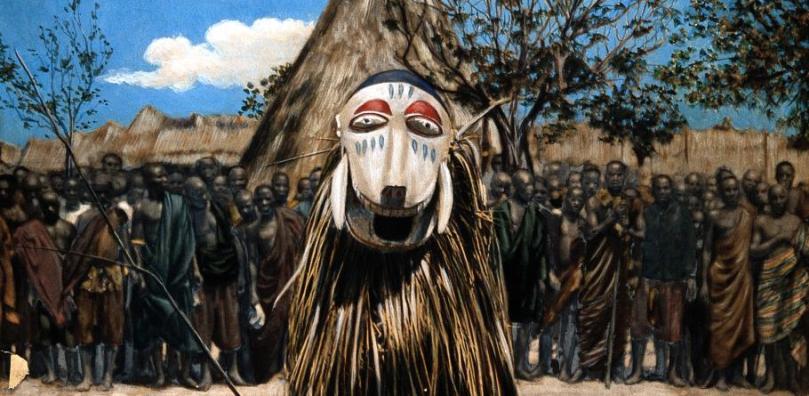
Image credit: Heywood, Paolo. (2017) 2023. “Ontological turn, the”. In The Open Encyclopedia of Anthropology, edited by Felix Stein. Facsimile of the first edition in The Cambridge Encyclopedia of Anthropology. Online: http://doi.org/10.29164/17ontology

African Time: cyclical or linear?

Mmere Dane, the Adrinkan symbol and phrase meaning “time changes.”

This is a brief synopsis of three articles discussing how societies across the African continent understand and perceive time. As usual, these answer some personal questions and open up a range of so many other questions. I hope you find them useful!

Time in traditional African thought by John Parratt

This critique of John Mbiti’s work on how African societies perceive time. Mbiti has asserted that in the African conception of time, the future is non-existent since it looks toward things and events that are yet to happen, thereby nullifying the concept of time as a linear concept composing of a past, present, and future. 

Mbiti asserts that time for the African is composed of a past and a present now being experienced, and a present which has yet to occur but the occurrence of which is certain because it is on the rhythm of nature. Mbiti’s claims are backed by the fact that certain African languages have no words to describe the concept of a future time.

Pratt argues against Mbiti’s assertions claiming that linguistics alone cannot be the basis of Mbiti’s claims about time. He cites another scholar who shows that Niangoran-Bouah in the Ivory Coast used a calendrical system to tell time, largely based on seasonal rituals. This gives rise to the claim that time in many African cultures is regulated based on certain festivals known to be held after certain intervals, for example, the New Yam Festival by the Igbos held in August.

Similarly, the Kaguru and Tiv people are observed to record time-based on events experienced by the collective groups.

This leads to the assertion of time either as oecological – relating to the cycles and rhythms of nature – or structural, relating to a person’s relationship with their society at different phases of life.

For all of his arguments against Mbiti, Parratt concludes that three overlapping circles represent time in the African perspective. He says: “Time in Africa…could perhaps be better illustrated in terms of three successive and partially intersecting circles, representing respectively the mythical past, the remembered past, and the present…a straightforward linear time scale is not involved.”

Parratt, J. (1977). Time in traditional African thought. Religion, 7(2), 117–126. https://doi.org/10.1016/0048-721x(77)90019-7

African Concept of Time, a Socio-Cultural Reality in the Process of Change 

In this paper, the authors explain that African view time as a socio-cultural phenomenon collectively experienced. Furthermore, they argue that time is a phenomenon which stretches beyond the physical realm into an ontological dimension, making it both secular and sacred. 

The authors argue that the significance of time is drawn from daily events – such as milking cattle at sunrise –  or social events – such as planting and harvest seasons.

The authors raise a point about idleness – the gap between the time for planting, harvests, and other communal events. Although, according to Europeans, Africans were often found idle and “wasting time”, the authors argue that idleness was, in fact, “preparation for time”, adding that “the economic circumstance of the day would dictate the pace of activities.”

They argue against Mbiti’s notion of no future in the African conception of time, highlighting the system of checks and balances in the old Oyo Empire, dating back to 1754. The Empire had a plan to prevent any ruling monarch from becoming either despotic or autocratic, thus making it mandatory for the Alaafin to consult the Oyomesi council of chiefs before taking decisions on the affairs of the state. According to the authors, the checks and balances in the Oyo Emirate were in place to ensure a good future and a peaceful one for the Oyo kingdom. 

According to these authors, checks and balances indicate that Africans are conscious of a distant future, contrary to what Mbiti has argued. 

Fumilola Babalola, S., & Ayodeji Alokan, O. (2013). African Concept of Time, a Socio-Cultural Reality in the Process of Change. Journal of Education and Practice, 4(7). https://www.iiste.org/Journals/index.php/JEP/article/viewFile/5290/5293

Africa’s understanding of time and history: The line over against the cycle Jan AB Jongeneel

The author argues for linear time over cyclical time while recognizing that many Africans still regard the former over the latter. According to the author, “the power of the cycle in African traditional religions and the power of the symbiosis of the cycle and the line in various circles of African Christianity, African Islam, and African secularism is much bigger than the investigated publications of Mbiti, and Bosch suggests.”

The author attests that many African societies had a cyclical approach to time, however, Judaism, and eventually, Christianity, and Islam, brought the concept of linear time to the continent. It’s worth noting here that Jongeneel asserts that the Jews were bound by “divine historical events”, which places them as forward-looking people who believe in a God that reveals his purpose for humanity over time and who will eventually bring his will to fulfilment in the “eschaton”, or at the end of time.  

This belief is in contrast with the cyclical notion of time which is referred to in the text as “reversed teleology”, where “the final purpose [of human life] is in the past rather than in the future.”

While the author references Mbiti, he introduces new scholars such as John A.A. Ayoade, who is said to have distinguished between various types of time cycles based on the traditions of Yoruba peoples in West Africa. Ayoade differentiates between the celestial/cosmic cycle, primarily concerned with the sun, moon and stars, and the terrestrial/ecological cycle, concerned with the changing seasons.

Jongeneel discusses the presence of Abrahamic religions (Judaism, Christianity, and Islam) and secularism (humanism and secularism) and how they have shaped the modern perception of time in Africa. The paper also briefly discusses the work of Asian theologians and their views of cyclical time, which is also prevalent in Hinduism, Buddhism, Taoism, and Shinto.

Jongeneel, J. A. B. (2009). Africa’s understanding of time and history: the line over against the cycle. Missionalia: The South African Missiological Society, 37(3), 37–50.

Of Cycles, and What Happens When We Die

Owuo Atwedee, the Adrinka symbol known as “ladder of death”, representing man’s mortality

Those of us in the Northern Hemisphere just marked the Vernal Equinox. This is the day the Sun crosses the equator and begins traveling towards the Southern part of the globe. Having spent the last six months in darkness (think shorter days, winter), the Vernal Equinox marks the beginning of Spring in the Northern Hemisphere. The keenly observant will notice more hours of sunlight, aka, longer days. 

As one part of the world embraced more light, another part begins to experience its absence. The Southern Hemisphere also just marked the beginning of Autumn, a period which is largely characterized by long nights and shorter days. 

In African traditional thought, it is believed that our lives, and indeed death, are continuous events not unlike the cycles we observe in nature such as the beginning of Spring and Autumn which both occur at the same time but mean and look different depending on which side of the equator one finds themselves. 

Death is perceived not as an ending, rather, as a continuation of a cycle that began before we materialized in this realm and will continue long after our souls have taken flight from it. The beliefs of the Akan, a group now predominantly in modern-day Ghana, put this in perspective. 

From Nyame We Came… 

According to the Akan, our lifeforce (soul) comes from the genitrix deity and creator of the universe, Nyame Amowia, whose physical manifestation is the moon. It is believed that a child is born after it receives the life force, known as Kra, given by the Sun deity, Nyankopon, who acts on behalf of Nyame Amowia. Sometimes a child might receive the Kra of an ancestor who failed in a previous life to be a good human. Nyankopon condemns such a person’s soul to perpetual reincarnation until a descendant reincarnated on earth attains good spiritual standing. It is only then that the soul can once again become one with Nyame’s eternal Kra (Meyerowitz, 1951).

The Kra is often mistaken with a closely related concept known as the Honhom which translates to “breath.” The Akan are known to say “ne honhom ko,” when a person passes away. This translates to, “his breath is gone.” Alternatively, they say “nekra afi ne ho,” translating to “his soul has withdrawn from his body” (Frimpong, 2011). 

…To Nyame We Shall Return

While the statements above are similar, Kra and Honhom are two distinguishable concepts. Honhom, breath, inadvertently symbolizes the presence of Kra in any living human being. Consequently, when a person dies (stops breathing), it is said that the Honhom leaves, and, logically, the Kra is also believed to have departed from the body (Danquah, 1952).

After death, it is said that the Honhom flies back, in the shape of a bird, to the mother and creator of the universe, Nyame. The soul, however, is left to labor up a steep hill until it reaches Nyankopon who will then judge and determine if the soul has to return (reincarnate) to earth, or if it can proceed to become one with the Nyame. 

The Dead are Never Dead

According to Okwu (1979), in African traditional thought, the physical plane of existence where humans inhabit and the spiritual plane are essentially two sides of the same coin. As such, life on earth can be explained as the side of the coin where the soul, “the seed of the creator” is seen to exist in a conscious, physical, and integrated union with the material body. Consequently, across various African belief systems, death is not regarded as the end of existence, rather as the ultimate rite of passage each human being has to go through (Okwu, 1979).

The belief in a spiritual plane of existence – unseen, untouched, and inaccessible to us humans – fuels ancestral veneration, or what many Western scholars have inaccurately referred to as “ancestral worship.” Okwu (1979) states: “the members of the supernatural world are regarded as an integral part of the material world. This implies that in important human social functions, such as marriages, birth and naming ceremonies, initiation, and healing, the opinions and/or approval of the members of the spirit plane are not merely invoked and observed; their participation and benediction are also requested.” (Okwu, 1979). 

John Mbiti, a foremost scholar of African religions, asserts that even the language used when talking about death and dying across various parts of the Continent often implies a sort of home-going for the departed. This is also indicated by various customs and rituals which can be observed during funerals. For example, various groups across the Continent are known for burying their dead with various paraphernalia and household items such as food, stools, tobacco, clothing, etc. These items are believed to be needed on the journey to the next world (Mbiti, 1970).

So What?

Across the Continent, many beliefs are cyclical rather than linear in nature. This means that many cultures hold the belief that life has no end; like the sun, our souls continue to move in a cyclical motion. We are a part of the divine before we are born and when our breath and soul leave our physical bodies, they continue to journey on a path that ultimately leads back to the creator. As Mbiti (1970) says: “death is death and the beginning of a permanent ontological departure of the individual from mankind to spirithood.”

Sources

Danquah, J. B. (1952). The Culture of Akan. Africa22(4), 360–366. 10.2307/1156919

Frimpong, A. D. (2011, December 1). Purity And Impurity: Menstruation And Its Impact On The Role Of Akan Women In The Church. Vrije Universiteit Amsterdam. https://research.vu.nl/en/publications/purity-and-impurity-menstruation-and-its-impact-on-the-role-of-ak

Mbiti, John. S. (1970). African religions & philosophy. Heinemann.

Meyerowitz, E. L. R. (1951). Concepts of the Soul among the Akan of the Gold Coast. Africa21(1), 24–31. 10.2307/1156155

Okwu, A. S. O. (1979). Life, Death, Reincarnation, and Traditional Healing in Africa. Issue: A Journal of Opinion9(3), 19. 10.2307/1166258