Africa’s Cosmic Heritage: Reclaiming the Origins of Astrology

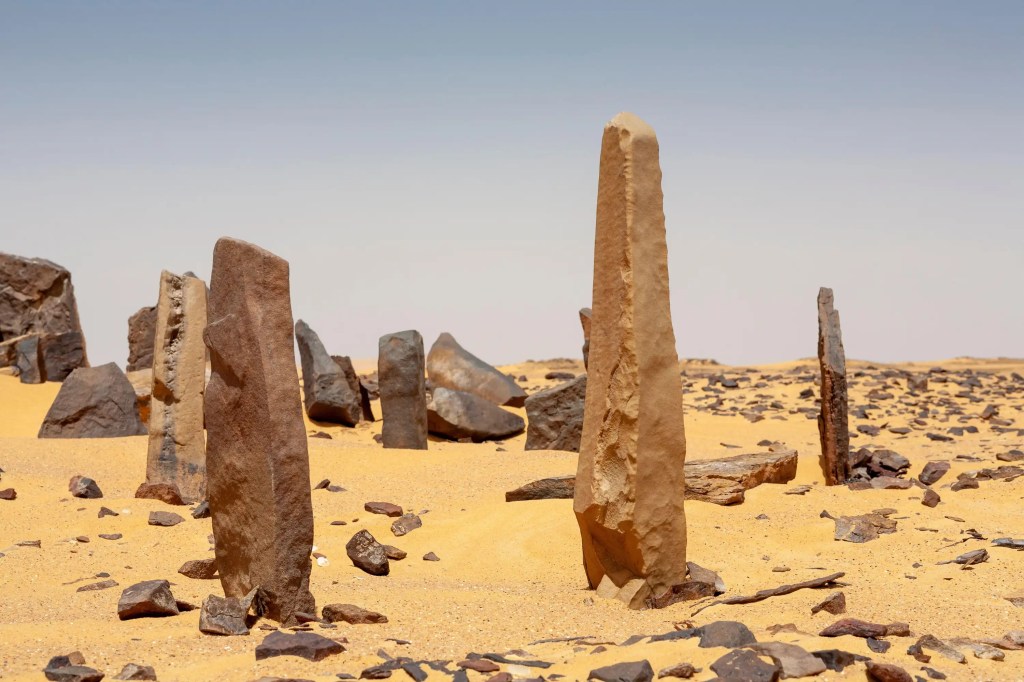
Original site in the Western desert of the ‘Calendar Circle,’ Nabta Playa, Nubian desert, Egypt. Mike P Shepherd / Alamy Stock Photo, via the National Museum of African American History and Culture, Smithsonian Institution

If you have ever scrolled through social media during, as most of us are now incessantly fond of doing, you will notice that astrology is everywhere. From the infamous Mercury retrograde posts, to new and full moon celebrations, and the often-feared and misunderstood phenomenon of eclipses. Astrology is everywhere and has since become a global, multibillion-dollar industry centered on the relationship between human beings and the celestial bodies above us. 

Yet, when you think of astrology, rarely do you hear any mention of Africa. For the OG astro-heads, you might have learned about the differences between Tropical and Sidereal Astrology; one is largely Western-centric, and the latter, emerging from Eastern cultures, specifically Babylonia. In the mainstream conversations about astrology, the influence of Africa is largely absent, and it is certainly not because Africans did not look up to the stars. 

Quite the opposite. If you consider that Africa is the birthplace of humanity, then it naturally follows that Africa is where humanity’s relationship with the cosmos began. Long before the ancient Greeks and  Babylonians, and long before the zodiac as the West now knows it was drawn up and exported around the world, the various peoples of Africa maintained an intricate knowledge of the stars upon which they ordered their lives and societies. The use of astrology by Africans influenced farming and harvest seasons, many rituals, and ultimately, the understanding of what it means to be human in a vast and living universe.

This post is an attempt to bring some of that knowledge back into the light.

A quick note before we dive in: the separation of astronomy — considered a legitimate science — from astrology — dismissed as superstition — is not a universal truth. It is a Western invention, a product of the post-Enlightenment Scientific Revolution. Ancient Africans practiced both as one unified knowledge system, and that wholeness is precisely why their cosmology was complete.

The First Astronomers: Nabta Playa

Nabta Playa is the oldest known astronomical site on Earth — predating Stonehenge by several millennia, with a calendar circle constructed as far back as 7,000 years ago. The stone circle at Nabta Playa is located approximately 800 kilometres south of modern Cairo, in a stretch of the Nubian Desert near the Egyptian-Sudanese border. The stone circle was a prehistoric calendar that helped mark two significant celestial phenomena — the summer solstice, which signalled the onset of summer rains and the flooding of the Nile, and as a sky map which helped the builders understand the arrangement of stars in the night sky and relied on it as a guide through the desert. 

Since its discovery, satellite surveys have confirmed what was theorized about this stone circle: its alignments were used to track the rising of Arcturus, Sirius, and Alpha Centauri. The repetitive orientation of large stone monuments, human burials, and cattle burials all facing the northern regions of the sky reveals an early symbolic connection between the earliest humans and the heavens. This connection, transcending science, shows a profound spirituality in which life, death, water, cattle, Sun, and stars were not separate domains of existence but rather a unified living system.

The people of Nabta Playa were sub-Saharan African pastoralists, nomadic herders who moved with the seasons and, in so doing, learned to read the sky, relying on it as a guide. It has been posited that, when the Sahara began to dry around 5,000 BC, these communities migrated northeast toward the Nile, carrying their cosmological knowledge with them. If this turn of events is indeed true, then the astronomical sophistication associated with ancient Egypt, the alignment of temples with the solstices, and the mythologies woven around Sirius and Orion may have roots even older than Egypt itself.

Namoratunga: East Africa’s Stellar Calendar

Just under 2,000 kilometres south of Nabta Playa, near Lake Turkana in modern-day Kenya, stand the Namoratunga stones. The site features an alignment of 19 basalt pillars oriented toward specific stars and constellations, which modern eastern Cushitic peoples still use to calculate an accurate calendar. The pillars date back to about 300 B.C., over 2000 years ago, and confirm that a prehistoric calendar based on detailed astronomical knowledge was in use in Eastern Africa.

Here again, we find evidence of indigenous African astronomical precision: a calendar system not imposed by external forces, one developed by the people who needed and used it. The Cushitic communities of East Africa used the stars to time their agricultural cycles, their ritual calendars, and their social gatherings. 

While Nabta Playa is the oldest known astronomical site on Earth, Namoratunga is the first archeoastronomical evidence located in Sub-Saharan Africa. It provides evidence that rather than spectators of a cosmic unfolding, ancient Africans were intimately involved with the stars. The stars the Ancient Turkana people observed include Triangulum, Pleiades, Bellatrix, Aldebaran, Central Orion, Saiph, and Sirius, collectively known as the Borana Stars, which formed the basis of a 12-month calendar, also known as the Borana Calendar, consisting of 354 days. 

The Dogon of Mali: When Africa Knew Too Much

Perhaps no example of African astronomical knowledge has generated as much controversy within the scientific community as that of the Dogon people of Mali. The Dogon people of Mali possess, perhaps, the most extensive knowledge of astronomy of any known peoples in Sub-Saharan Africa. Their extensive knowledge of the Sirius star system, particularly Sirius B, a smaller, white star invisible to the naked eye, has set the Dogon far ahead of modern science. Similarly, the oral traditions of the Dogon also described the moons of Jupiter and Saturn, long before Western astronomers documented them. Their knowledge of Sirius B included details about its orbital period and its extraordinary density, information that modern science only confirmed in the twentieth century.

The response from Western academia to the Dogon’s extensive knowledge of the stars has been illuminating in the worst possible way. Scholars, including PBS astronomer Carl Sagan, speculated that the Dogons’ knowledge of celestial bodies must have come from European or extraterrestrial influence rather than from independent intellectual observations. For some scholars, the choice was between aliens and Europeans as the source of Dogon astronomical knowledge. The idea that the Dogon might simply have known, through centuries of careful, sophisticated inquiry, was apparently too difficult to accommodate.

Admittedly, the Dogon also claim that encounters with extraterrestrial entities informed their extensive knowledge of the stars. Dogon folklore maintains that knowledge of Sirius was handed down to them by amphibious beings, Nommo (which means “to drink”), whom they encountered as they migrated from their ancestral homelands. According to the Dogon, the aliens came from the Sirius star system and appeared to have human torsos and snake-like lower bodies. 

Whether or not their extensive knowledge of the star system was self-engineered or handed down by human aliens or extraterrestrials, the same epistemic violence that dismissed animism as superstition, that reframed African governance systems as primitive, that renamed the gods of our ancestors as demons, this same violence has been applied to African science, and specifically African knowledge of the stars. Thus, the Dogon’s knowledge was either appropriated or delegitimised, rather than simply respected for its uncanny accuracy even without the use of modern technology.  

Notwithstanding, the Sirius star system is cosmologically central for the Dogon, and the Nommo, the spiritual beings associated with water and creation, were said to have descended from the Sirius system, bringing with them the knowledge that seeded Dogon civilization. The Dogon had their own systems of astronomy and calendrical measurements, methods of calculation, extensive anatomical and physiological knowledge, and a systematic pharmacopoeia. The cosmos, for the Dogon, was not separate from medicine, governance, or spirituality. It was the same conversation.

The Orisha as Cosmic Forces

In the Yoruba spiritual tradition — which has been explored extensively in relation to Yemoja, Oshun, and the divine feminine — the relationship between the heavens and human life is woven into every dimension of practice.

The Yoruba believe that there are 400 Orisha, each a different aspect of nature serving as earthly representations of the cosmos and heavenly energies. Nothing exists or happens in the sky that does not have its influence or vibration on Earth within nature’s elements, and also in human behavior. Using this framework, we see that what Western astrology calls “planetary influences” are, in Yoruba belief, the personalities and domains of specific Orisha: Shango, for instance, is the force of thunder, Ogun, the energy of iron and action, and Oshun as the pull of Venus toward love, creativity, and flow.

Between 10,000 and 6,000 BC, the Africans of the Nile valley and the great lakes region devised the stellar calendar. In 4,000 BC, the solar calendar marked the era of a new age. The Ifá divination system — one of humanity’s oldest and most sophisticated oracular traditions, now protected by UNESCO as Intangible Cultural Heritage — uses the Opon Ifá, a divining board that is similar to the astrological birth or natal chart, divided into twelve houses equalling thirty degrees, the distance it takes the Sun to travel in a day. This is astrology. It is simply astrology that has not been called that, perhaps because naming it would require acknowledging that Africa gave this knowledge to the world, not the other way around.

Women and the Sky

Any celebration of African astrology must pause on the particular intimacy between women and the heavens, an intimacy that runs through so many of the Continent’s traditions.

In Ancient Egypt, the sky goddess Nut is said to swallow the Sun every night, giving birth to it again in the East every morning. Her daughter Isis — associated with the star Sirius — follows her husband Osiris (the constellation Orion) across the sky. Isis and Hathor were both connected to Sirius, the brightest star in the night sky, and it was the heliacal rising of Sirius — its first appearance on the horizon before sunrise after a period of invisibility — that marked the beginning of the Egyptian new year and the flooding of the Nile. 

Goddess as calendar. Goddess as an agriculture, and Goddess as a star.

Similarly, the |Xam people of South Africa, a girl creates the Milky Way by throwing ashes and roots into the sky. The Arimi of Tanzania named the Pleiades “Kiimia”, also known as the supreme wife and mother, whose return in September marked the end of the dry season and whose very being represented cherished ideals for women. The Tuareg of the Sahara called the individual stars of the Pleiades each by a name, and collectively referred to them as “girls of the night.” 

In other cultures on the Continent, the moon is ascribed feminine attributes and thus revered for its power to regulate menstrual cycles and initiate women into womanhood. For example, the Luba of the Democratic Republic of Congo, the white light of the moon was associated with insight gained during spirit possession ceremonies, and among the Nga of Nigeria, ritual and domestic space is organised according to moon phases.

Why This Matters Now

It would be easy to frame this as a history lesson. But I do not think it is only that.

We live in a moment when many people — particularly those of African descent, and those who have grown up at the intersection of modernity and ancestral erasure — are searching for something. We scroll through astrology content, looking for a language that helps us make sense of our lives, buying birth chart readings from apps that reflect Greek planetary mythology and Hellenistic house systems, both of which stem from traditions that themselves drew heavily on Babylonian and Egyptian sources. Without knowing it, we consume diluted derivatives of knowledge that once belonged to our ancestors in a far more whole and living form.

In contemporary African societies, there is still a lingering disdain for traditional ancestral systems that guided our ancestors’ lives. While in diasporic African communities, the movement to reconnect with traditional beliefs appears to be gaining momentum, this revival is driven by a desire to reclaim ancestral knowledge that was once forcibly taken away and repressed to separate enslaved Africans and their descendants from their cultural identity.

African astrology, in its various forms, was never primarily about self-knowledge in the individualistic Western sense. It centered on relational knowledge, understanding one’s place in the web of seasons, spirits, community, and cosmos. It was about knowing when to plant, when to grieve, when to celebrate, and when to call upon the Ancestors. It was a practice of listening to the sky, to the land, and to the invisible presence that moves through both.

It is this vital connection to all life around us that was lost once separated from our cultural knowledge and identities. As such, reclaiming these lost aspects, and specifically centering African astrological knowledge and practices, is not simply nostalgia. It is, as I have argued before in this space, the work of re-indigenisation. It is the work of remembering that we were a complete people before any of what we now call “history” attempted to make us forget.

The stars have always guided and reflected us to ourselves, and after centuries of separation, it is time we remembered and honored our connection to them.

Further Reading & Sources

Spirit and Nature: An Exploration

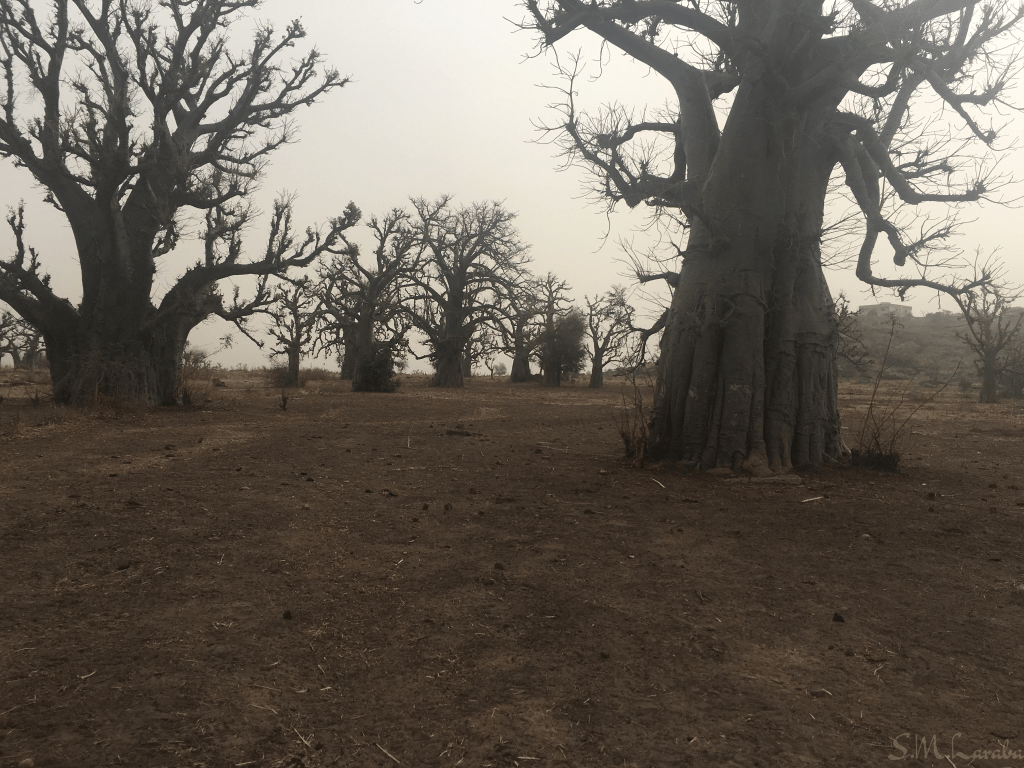
Photo: ‘Baobab Yola’ by Laraba Sambe © 2019

Previously, we discussed animism as a worldview that regards every aspect of nature as imbued with, and therefore an extension of, Spirit. This perspective fosters a profound respect for and connection with nature, as seen across diverse animistic traditions worldwide. Building upon that foundation, this piece elaborates on the central belief that nature, as an extension of Spirit, is sacred. It also examines the resulting sense of ecological responsibility—expressed through reciprocity and ritual—that enabled indigenous cultures to thrive in harmony with nature prior to Western imperialism.

The Separation Myth: Nature as Commodity

Life in 2025 is characterized by ongoing confrontations with a range of crises that, although distinct in time and place, collectively signal a profound disconnection between humanity and its spiritual essence. Western imperialism, as a systemic force, has permeated virtually every facet of global society. Today, numerous genocides—widely covered by the media but insufficiently challenged by the international community—serve as stark illustrations of a system that devalues the sanctity of life. Within this paradigm, all life is commodified for profit, and the loss of innocent lives is regarded as an acceptable cost in the relentless pursuit of resources.

Recent mass killings in regions such as Gaza, Sudan, and the Congo are often linked to the exploitation of natural resources by imperialist forces. To facilitate resource extraction, these entities frequently seek to suppress resistance from local populations, who are often indigenous to these areas. As a result, the environment itself becomes central to the broader context of violence and conflict. The large-scale attacks witnessed today reflect a continuation of historical tactics employed by imperial powers against indigenous populations that resisted their operations.

Over time, Western imperialism has continually refined its justifications for dominance. Initially, expansion was framed as the divine right of monarchs. Before that, Christian missionaries felt compelled to spread their faith worldwide. Unfortunately, colonial expansion frequently followed missionary activity, converting colonies into sites for resource extraction by European powers. Consequently, contemporary global power structures are a reflection of the disparities established during the colonial era. While former colonies may no longer be directly exploited for their land and resources, they still experience significant indirect consequences. Today’s global politics constitute a competitive arena in which powerful nations vie for control over land, resources, and markets. Within Western economic frameworks, these resources are considered scarce, and the ongoing struggle for them has perpetuated and intensified imperialistic practices.

Sankofa: Reconnecting with the Spiritual Essence of Nature

Long before the concept of the divine right of kings emerged and before missionaries arrived in indigenous lands, animistic cultures around the world—despite differences in belief—shared a central principle: profound reverence for nature. In these traditions, the Cartesian distinction between Spirit and matter does not exist. Indigenous peoples view themselves as integral to nature, not separate from it. For them, every aspect of life that is not human-made is regarded as an extension of God or Spirit. As Godwin Sogolo (1993) notes, “To the African [Indigenous] mind, reality is one unified whole. What happens to one part of creation reverberates through the entire system.”

The concept of interconnectedness is central to animistic beliefs and, over centuries, has fostered a sense of duty and stewardship for nature within indigenous cultures. Trees, forests, rivers, animals, and soils are not merely resources to be exploited; instead, they are recognized as essential components of the cosmos, imbued with Spirit, and thus regarded as sacred. Unfortunately, colonial missionaries—often agents of imperial expansion—dismissed these beliefs as superstition or, at times, labeled them as witchcraft. As a result, animism and its sophisticated ecological philosophy have largely faded from collective human consciousness (Kimmerle, 2006; Gumo et al., 2012). Now, at a pivotal moment in history, when the consequences of this loss are increasingly apparent, humanity must confront its past and reclaim the sacred knowledge that once enabled harmonious coexistence with the natural world.

The wisdom embedded in animistic practices is extensive. In recent years, modern science and Western academic thought have begun to incorporate animistic principles, particularly in fields such as spiritual ecology, ecofeminism, and environmental conservation. Scholars, theologians, and conservationists increasingly turn to animism as both a philosophical framework and a relational approach to engaging with the natural world—an orientation that may prove vital to humanity’s survival. Distinct aspects of animistic thought and humanity’s relationship with nature have generated significant interest among Western thinkers.

Reciprocity as an Animistic Principle

Reciprocity stands as a fundamental principle in animistic traditions. In “Ontology and Ethics in Cree Hunting,” Colin Scott (2014) explains that, among the Cree—especially hunters who engage with wild animals—reciprocity is rooted in respect. Although the meaning of respect may shift depending on the context and entities involved, it consistently serves as the ethical foundation for all relationships. Scott frames “respectful reciprocity” as the approved way of relating not only between hunters and animals but also between humans and the natural world as a whole.

The importance of reciprocity is deeply embedded in animistic cultures and is manifested in various forms. In Cree mythology, for instance, this idea is woven through cosmological narratives, illustrating how humans received culture, fire, language, and tools from animals who originally possessed them. Scott’s observations of the relationship between Cree hunters and the animals they pursue exemplify how animistic cultures perceive their connection to non-human nature as one of gift exchange (Adloff, 2025). Indigenous animistic traditions emphasize drawing resources from nature while simultaneously giving back, fostering a balanced and enduring exchange between humans and the natural world. These societies demonstrate profound respect for nature and honor the sacred partnerships formed through reciprocal exchanges in hunting and sustenance.

Adloff (2025) asserts that in cultures maintaining reciprocal relationships with nature, the notion of human superiority is inconceivable. Instead, these societies emphasize gratitude for nature’s gifts, recognizing that both humans and nature are components of a unified whole. As Sogolo (1993) notes, ‘what happens to one part of creation reverberates through the entire system.’ The resources offered by nature and the stewardship provided by humans circulate in a continuous cycle that sustains all life. Ultimately, indigenous societies flourish by acknowledging nature’s abundance and reciprocating through responsible care and stewardship of the environment.

The Role of Rituals in Honoring Nature

Within indigenous cultures, rituals are essential for nurturing, preserving, and honoring the connection to the divine and the spirit world. In “Ritual: Power, Healing and Community,” Elder Somé (1993) underscores the significance of rituals, observing that “the abandonment of ritual can be devastating.” He further asserts, “from a spiritual standpoint, ritual is inevitable and necessary if one is to live.” Recognizing this sacred imperative, indigenous societies have formalized their commitment to the Earth through diverse rituals and celebrations that honor the natural world.

In Nigeria, the Osun-Osogbo Sacred Grove holds profound importance for the Yoruba people as a site dedicated to the river goddess Osun, who is revered for bestowing fertility, healing, and protection. Annually, the Osun-Osogbo festival draws thousands of Ifa practitioners from around the globe. This multi-day celebration features singing, dancing, prayers, and offerings, honoring a centuries-old covenant between the community and the river. Similarly, rainmaking rituals are prevalent among the Shona people of Zimbabwe. During periods of drought, the Shona convene at sacred hills and riverbanks to invoke ancestral spirits for rain. These ceremonies include millet beer, livestock offerings, and ritual songs, reflecting the belief that rainfall is not guaranteed but is a blessing contingent upon maintaining a harmonious relationship with the land and Spirit.

Even before the spread of Christianity across Europe, indigenous European societies had honored nature through various rituals. The Celts, for example, regarded oak groves and wells as sacred spaces where Druids mediated between humans and the unseen world. Offerings—such as jewelry or weapons—were placed in rivers and lakes as gifts to the deities and spirits believed to inhabit those waters. In Northern Europe, Norse communities revered Yggdrasil, the cosmic tree linking heaven, Earth, and the underworld. At sacred groves and springs, sacrifices were performed to ensure fertility, protection, and balance.

Indigenous cultures across Africa, Europe, and beyond demonstrate deep respect for nature through both personal and communal rituals. These practices extend beyond mere symbolism; they represent continuous, intentional engagement with the natural world and reflect a foundational belief in the interconnectedness and interdependence of all existence. Whether in the groves of Osogbo, the sacred wells of the Celts, or the rain shrines of Zimbabwe, indigenous societies have historically honored nature through ritual. As Mbiti (1969) states, “The physical and the spiritual are but two dimensions of the same universe; ritual ensures they remain in harmony.”

Reclaiming Animism in Contemporary Society

The renewed interest in animism among modern scientists and within Western academic discourse parallels a global revival of animistic practices. In the West, there is a notable resurgence among members of the African diaspora seeking to reconnect with their ancestral heritage, which is inherently animistic and grounded in the recognition of, and respect for, the Spirit that unites humanity and nature. These movements are instrumental in healing the wounds of colonial disruption by fostering spiritual kinship, which, in turn, informs more sustainable ecological practices (Gumo et al., 2012). Similarly, eco-activist Wangari Maathai, founder of the Green Belt Movement, drew profoundly on ancestral reverence for trees as she mobilized women to plant millions across Kenya. Maathai described planting “seeds of peace and hope,” grounded in the belief that humanity cannot achieve peace on an endangered planet.

Animism, as expressed through diverse indigenous cultures worldwide, offers a compelling alternative to Western ecological paradigms. Animistic beliefs approach the Earth as kin rather than as a resource to be exploited. From this vantage point, the crises currently facing our planet—including environmental and climate challenges—are not merely surface-level issues, but manifestations of a profoundly fractured relationship between humanity and Spirit, the essential thread binding us to nature and all living beings.

In conclusion, reengaging with animistic worldviews invites us to reconsider our relationship with the natural world—not as detached observers or exploiters, but as participants in the dynamic and interconnected web of life. By acknowledging the wisdom embedded in indigenous traditions and embracing a sense of reciprocity, respect, and spiritual kinship with nature, we can foster more sustainable and harmonious ways of living. As global challenges intensify, adopting these perspectives offers a hopeful path toward spiritual and, ultimately, ecological restoration for a more balanced and compassionate future for both humanity and the planet.

References

  • Chirikure, S., Nyamushosho, R., Chimhundu, H., Dandara, C., Pamburai, H., & Manyanga, M. (2017). Concept and knowledge revision in the post-colony: Mukwerera, the practice of asking for rain amongst the Shona of southern Africa.
  • Feiler, B. (2014) Sacred Journeys With Bruce Feiler | Osun-Osogbo, PBS.org. Available at: https://www.pbs.org/wgbh/sacredjourneys/content/osun-osogbo/ (Accessed: September 10, 2025).
  • Gumo, S., Gisege, S. O., Raballah, E., & Ouma, C. (2012). Communicating African Spirituality through Ecology: Challenges and Prospects for the 21st Century. Religions, 3(2), 523–543. https://doi.org/10.3390/rel3020523
  • O’Driscoll, D. 2022. “Introduction To Animism: Definitions And Core Practices For Nature Spirituality – The Druids Garden.” The Druids Garden – Spiritual Journeys In Tending The Living Earth, Permaculture, And Nature-Inspired Arts. July 14, 2022. https://thedruidsgarden.com/2022/07/14/introduction-to-animism-definitions-and-core-practices-for-nature-spirituality/.
  • Scott, C. 2014. Ontology and Ethics in Cree Hunting: Animism, Totemism and Practical Knowledge. Edited by Graham Harvey. London: Routledge.
  • Sogolo, G. (1993). Foundations of African Philosophy: A Definitive Analysis of Conceptual Issues in African Thought. Ibadan, Nigeria: Ibadan University Press
  • Somé, M. P. (1997). Ritual: Power, healing, and community. Penguin.
  • Taylor, B. (2013) ‘Kenya’s Green Belt Movement Contributions, Conflict, Contradictions, And Complications In A Prominent Environmental Non-Governmental Organization (Engo)’, in Trägårdh, L., Witoszek, N., and Taylor, B. (eds) Civil Society in the Age of Monitory Democracy. New York: Berghahn Books, pp. 181–207. Available at: https://doi.org/10.1515/9780857457578 (Accessed: September 10, 2025).

Decolonizing God (Re-Indigenizing Spirit)

“In order to perpetuate itself, every oppression must corrupt or distort those various sources of power within the culture of the oppressed that can provide energy for change.” — Audre Lorde

In a recent conversation, I found myself defending the spiritual traditions of the Akan against one of its descendants, who, now spiritualized in and by the West, harbors that familiar yet loathsome contempt many Africans still feel towards the spiritual traditions of their people.

I am a Nigerian woman who has lived with and embraced alternative spiritual beliefs in a country that is almost evenly split between Christianity and Islam. The casual disdain many Nigerians show towards African spiritual traditions, due to their upbringing in either the Church or the Mosque, is not new. Until proven otherwise, I have come to expect this disdain and, consequently, the dismissal of African spirituality from Nigerians and other Africans.

Yet, even though this disdain no longer shocks me, it still manages to surprise. Like when a Nigerian global superstar dismissed the spiritual culture of her ancestors and clung firmly, and rather ironically, to the spiritual beliefs of another people. Or when my Akan counterpart, a rather queer individual, casually demonized the water spirits of her ancestral land.

These dismissals are surprising and reflect a self-denial that was externally imposed by the colonial machine and is now perpetuated by the colonized. What are the consequences of this ongoing self-denial? Who benefits when Africans and other colonized peoples worldwide continue to self-abnegate?

Since the pandemic shattered our collective illusion about the world we live in, it has become even clearer and easier to see how the hetero-patriarchal-capitalistic world we have created is unsustainable for our survival now, let alone for future generations. Movements have sprung up across all corners of the globe demanding a shift from these oppressive and anti-life ways of being. Over the last year, nearly two years, we have witnessed a concerted global effort to draw attention to the atrocities in Palestine, a movement that has rippled through and is bringing awareness to injustices in other places like the Congo, Sudan, West Papua, and so on.

The world is awakening to the lies that the West has told for eons, and humans are demanding external change. This is positive; it signifies progress for the species. However, our push for change should not begin and end with external ways of survival. The emphasis on the external and material aspects of existence is part of the deception we have been sold. It has necessitated a focus on material gains and excessive consumption at the expense of the individual and collective human spirit.

The word ‘spirit’ comes from the mid-13th century, meaning: “life, the animating or vital principle in man and animals.” 

Spirit also has the following derivatives, “spirit, soul” (12c., Modern French esprit) and derives directly from Latin spiritus “a breathing (of respiration, also of the wind), breath;” also “breath of a god,” hence “inspiration; breath of life,” hence life itself.”

A disconnection from the spirit means a disconnection from life itself, and we wonder why we live in an anti-life world. No person or people disconnected from their spirit can make sense of life or find any true joy or meaning because they are essentially separated from the spring (Spirit), which is the source of all things. Thus, it becomes easier for such people to become agents of destruction or be easily destroyed.

The myths and Spirits of indigenous cultures nourished life in the people and imparted a sense of meaning that has since been lost and, in many cases, replaced by the spiritual beliefs of a more dominant culture. Many Nigerians who are now Christian or Muslim have embraced these spiritual traditions at the expense of their ancestral beliefs. Even though history is visible to all, we often pretend that many of these conversions did not occur violently.

Perhaps denying the violence that led to the loss of our spirits is necessary for our survival, but I find that the question remains: who benefits from our self-abnegation? What systems—spiritual, economic, agricultural, etc.—thrive when we continue to either willingly, passively, or unknowingly reject ourselves?

This brings us to the opening quote: To perpetuate itself, every oppression must corrupt or distort those various sources of power within the culture of the oppressed that can provide energy for change.

For the colonial machine to establish itself, it had to strip indigenous people of their sources of power. For the colonized, this meant the destruction and distortion of all systems and practices that connected them to an idea of God or the Great Spirit, as many traditions called it, who is the source of life and, therefore, power.

In a world where injustices are apparent and the fight against them shapes how many of us live our lives, it is crucial to make a connection between the state of the world and the separation from Spirit//God. As stated earlier, this separation necessitates our fixation with the physical and everything that concerns it.

Yet, Spirit can only be ignored for so long before it demands a reckoning.

To emphasize this point, let’s recall the beliefs of the Mawri in Niger, who explained this essential connection to the spirit through the belief that each human is born a twin. One twin is bound to the human world of existence, while the other is bound to the spirit world. It is the responsibility, then, of humans to nurture the connection with their spirit sibling; otherwise, they would have a difficult life.

The story captures the current state of human existence. We have, for so long, lived as if separate from our individual and collective spirits, and now we are all feeling the pain of that separation. The degree of the pain felt is proportional to how far a person, group, or society has strayed away from their Spirits, but there is no mistaking it: we are living in difficult times, a situation only worsened by the fact that many of us refuse to recognize that our true source of power is not anything that can be seen, touched, or felt in the material.

We are now doing the colonizers’ work for them by refusing to see that we were a complete people with cosmologies, ontologies, and views of the world that shaped our lives and thus gave them meaning before the trauma of colonization fractured our identities. The work of decolonization, which I argue should be termed ‘reindigenization,’ can never be complete without addressing and tackling this crucial separation between the colonized and their Spirits.

If our Spirits animate life, give it meaning, and are the breath of God within us, and thus life itself, then the separation between the colonized and their spirits has created zombie-like people who are alive and animated but lack the crucial vital energy that infuses life and gives it any meaning. As such, our efforts to ‘decolonize,’ perhaps also lacking the true essence of Spirit, will only bring us so far.

We will never know true freedom until we remember who we are, and we will never remember who we are if we continue to reject our Spirits because we learned long ago that only the spirits of our oppressors are good, even when they tortured us to drive the point home.

Much Ado About Decolonization

Female Nok Head from the ancient Nok Civilization in Modern Day Kaduna State, Northwestern Nigeria

I have lived in Europe for a little over a year now. The experience has felt like a personal social experiment to find a place in the world I belong outside of my ‘natural habitat’ and the lands of my ancestors in the far northwestern state of Kaduna, Nigeria. 

As I settle into these Western worlds and attempt to create for myself a place in it, I am continually jarred by what I can only describe as a prevailing disconnection between the human and their soul. This is not necessarily a new phenomenon that I have observed. The case is also largely true for many people in the country I come from. In Nigeria, I met, loved, cared for, and even worked with people whose detachment from their spirits was glaring in how they treated themselves and responded to the world around them. 

Having lived here now for a over year, I am observing that the major difference between the human-soul separation in the West and my ancestral lands is the fact that this separation from spirit has gone on for much longer and has thus happened so extensively that it feels almost hopeless that there may be redemption for the populations in these parts of the world. 

In my home country, I see that this separation is happening quite gradually and it makes me fear for the future of my country, and the people I love who are still there. It makes me wonder if there will ever be a safe way back home, to the heart and soul of what it originally meant to know ourselves and perceive each other as powerful spirits who have incarnated here on Earth for a collective human experience. 

A buzzword I have come to have a love-hate relationship with is “decolonization.” Everybody and their grandmama wants to decolonize something. I am not even going to play innocent, I have been on the decolonization bandwagon for years now and this is evident in at least three well-funded projects I have been a part of. What has however remained a jarring experience is that many people I have come across who are on this decolonization train, that is headed only god knows where, are still very much colonized in their thinking and how they relate to the world around them. 

Now, I will be the first to make excuses for people because most of us alive today have been socialized in a colonized world. Many of us know nothing of a world before colonization and that is not necessarily of our own making. However, after being a part of the conversation now for some time, and having questioned my intentions, beliefs, and actions, I have come to see that decolonization is nothing more than a buzzword that gets people and institutions a certain kind of attention and access when they need it. Worse, the actions of many agents and institutions that seem to center this idea of decolonization are, in fact, a sort of neo-colonization of already colonized populations and cultures. 

This is dangerous territory because these people and institutions are only interested in specific aspects of the culture and lives of already subjugated people that fit a certain narrative and agenda. These folks are not interested in the sovereignty of previously colonized cultures or even restoring colonized peoples and cultures to their former glory. For them, ‘decolonization’ is a cool word to throw around to show that they are aware of the evils of colonialism, and possibly that they also believe in the autonomy of the colonized. However, when one attempts to engage deeper in the discourse on decolonization, beyond the niche area that has been chosen as the main lens through which we can engage in the discourse, one begins to find various gaps in the knowledge, understanding, and even interest of what it truly means to decolonize.

As a spiritual practitioner and a person who leads and lives spirit-first, quite like my pre-colonial ancestors did, I have come to find the discourse on decolonization to be shallow, lacking in spirit and thus substance. Furthermore, this emphasis on decolonizing still centers the ‘colonial’, and that simply rubs me the wrong way. 

I love a good inquiry, questions have led me down the path of many a life-changing realization and revelation. So, my question to everyone, and no one at all, is this: 

When you use the word ‘decolonize’ what are you attempting to say or do? 

Do your ‘decolonization’ efforts only begin and end when a project is proposed, planned, and implemented, or are you working also on decolonizing your mind, beliefs, and the structural systems that prevail?

I simply am unable to see beyond the fact that this word continues to center a system of oppression many of us claim we do not want. I wonder what alternative words and nomenclature exist for our collective and individual efforts to return to a place before the horrors of colonialism separated us from our individual and collective human spirits.

Speaking of spirits, people want to talk about decolonization and yet are deathly afraid of admitting that they are spirit beings having a human experience. There is no Indigenous culture on Earth that does not allude to humans having a spirit or the fact that we are, by existing, in a relationship with a higher realm beyond this physical and material existence. Yet, I continue to meet people who want to decolonize the world and cannot even fathom this crucial aspect of Indigenous life. 

It makes me wonder, if we cannot understand and reconcile this crucial separation that has happened between spirit and matter, what exactly are we then trying to decolonize? If these so-called decolonial efforts are not leading back to a union between spirit and matter, what exactly are we fighting for?

It is laughable at best, and at worst, we are witnessing the coopting of Indigenous knowledge and wisdom in a similar way that colonizers took land, resources, and anything else of value they could lay their hands on after they encountered Indigenous folks. The people and institutions pushing for decolonization without first doing an internal soul-search of how their actions and systems maintain a colonized structure are simply paying lip service and are thus not different from the colonizers who pillaged Indigenous cultures.

The way I see it, this is what it comes down to: are we truly interested in restoring Indigenous systems where people lived in communion with the Great Spirit, the Earth, and each other, or are we simply interested in surviving and getting by in these post and neo-colonial worlds?

Animism: Exploring the Ancient Belief System Connecting Humans and Nature

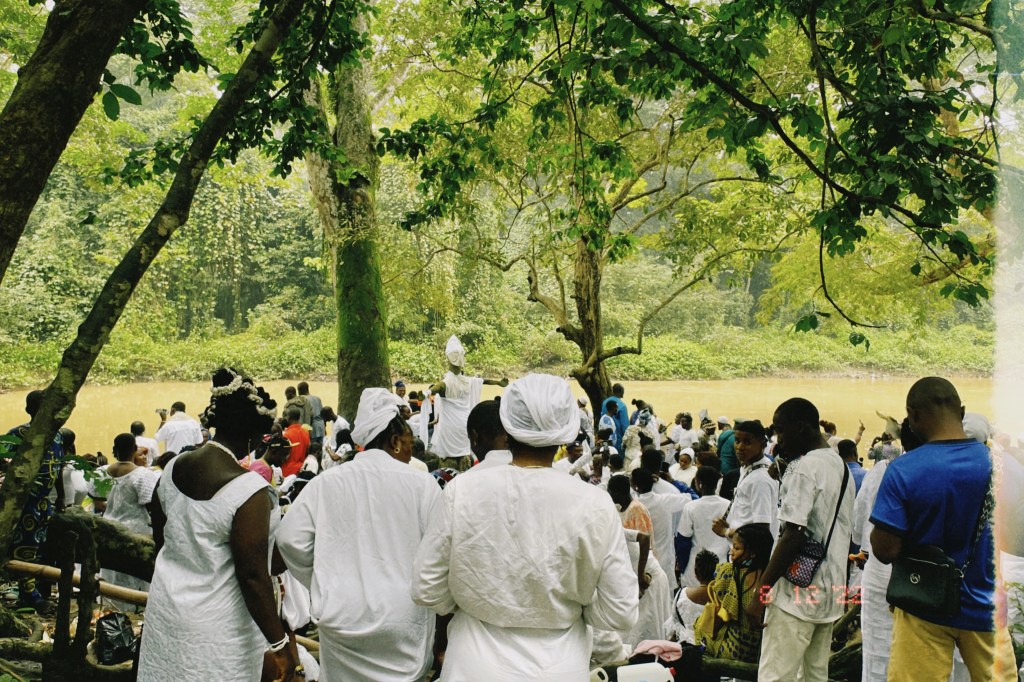
Devotees at the Osun-Osogbo Festival, Osun State, Credit: Oyefeso, Folu

Animism, among humanity’s oldest philosophical and spiritual belief systems, continues to play a vital role in the cultural and spiritual lives of numerous indigenous communities worldwide. Central to animism is the conviction that all elements of the natural world—trees, mountains, rivers, and more—possess a distinct spiritual essence. Far from being confined to a specific region or era, animism has influenced a wide array of civilizations across different geographies and historical periods.

This article explores the multifaceted nature of animism, tracing its origins, foundational principles, and ongoing relevance in contemporary society. By examining animism’s historical and cultural context, we aim to present a concise yet comprehensive overview of this enduring worldview. Our analysis highlights animism’s contemporary importance, including its influence on spiritual practices, environmental ethics, and evolving cultural traditions worldwide.

Historical Roots of Animism

The etymology of the term “animism” can be traced back to the Latin word “anima,” which translates to “soul” or “life force.” However, the underlying idea predates the term and has its roots in the ancient cultures of prehistoric societies. Animism emerged as a means for early societies to comprehend the world and forge a relationship with the natural environment. The Paleolithic era offers evidence of animistic practices, as seen in cave paintings and artifacts, which suggest a profound reverence for animals, plants, and celestial bodies.

At the core of animistic philosophy lies the belief that all entities, regardless of form, possess a spiritual essence. This essence is not limited to humans, but also animates animals, plants, rivers, mountains, and even inanimate objects such as rocks and tools. Moreover, animists perceive the natural world as intrinsically interconnected and interdependent, underscoring a complex web of relationships among all beings. This worldview inspires reverence, respect, and a profound sense of responsibility toward nature. Animistic traditions frequently incorporate elaborate rituals and ceremonies intended to sustain this delicate balance and promote harmony between humans and the natural environment.

Notably, animism has served as a significant cultural force throughout human history and continues to inform the worldview of many indigenous societies. Its emphasis on the spiritual dimension of existence and the interconnectedness of all things resonates with those seeking a deeper and more meaningful relationship with the world.

Illustrative Cases of Animism

Although animism does not adhere to a single cultural tradition, its presence can be identified wherever indigenous peoples have lived. In northern Nigeria, for instance, the indigenous pre-Islamic inhabitants of what is now Kano practiced animism. They worshipped a supreme being, venerated spirits, and offered sacrifices beneath a sacred tree known as Shamuz (or Shamus in some records). Only the high priest, Barbushe, was permitted to approach the Shamuz shrine and conduct sacrifices on behalf of the community. Similarly, the Mawri of Dogondoutchi in Niger believe that humans were separated by the creator from their spirit siblings and are required to appease these spirit siblings to maintain a balanced life.

The presence of elemental deities and spirits associated with various facets of nature attests to the extensive reach of animistic beliefs among prehistoric cultures. The Earth was frequently regarded as the domain of fertility goddesses, such as Uwargona in Hausa tradition, Ala in the Igbo pantheon, and Assase Ya among the Akan. Likewise, the reverence for water spirits—for instance, the goddess Osun in Yoruba tradition—underscores the enduring and profound connection to elemental forces within animistic societies.

Contemporary Relevance of Animism

Anthropologists have observed a renewed interest in animism, often termed “new animism.” This contemporary movement centers on fostering respectful relationships with all beings, both human and non-human—including spirits and entities believed to exist beyond ordinary perception. New animism encourages environmental awareness and draws attention to the widening disconnect between humanity and the natural world. As ecological crises become more acute, this perspective is poised to exert significant influence, promoting stewardship, sustainability, and holistic approaches to planetary well-being.

It is crucial to recognize that, despite the term “new animism,” these beliefs are anything but new. Animistic worldviews and relationships with nature have been foundational for indigenous peoples across history—though they were often denigrated and suppressed by colonial, missionary, and jihadist forces, especially in Africa. Across cultures, animists have cultivated a profound respect for the natural world, recognizing the intrinsic value and agency of all living beings.

Embracing animist principles offers a compelling framework for confronting ecological challenges. It is essential, however, to recognize that animism is a holistic worldview grounded in the spiritual interconnectedness of all beings, and should not be viewed merely as a tool for utilitarian or extractive purposes. Adopting animistic perspectives enables individuals to deepen their awareness of the interdependence of all life forms, thereby fostering more sustainable and harmonious relationships with the environment. Meaningful engagement with animism requires respect, cultural sensitivity, and an informed appreciation of its significance and its potential to advance environmental stewardship.

Image Credit: Oyefeso, F. (2022, September 11). The Osun-Osogbo Festival, Osun State. https://www.foluoyefeso.com/post/the-osun-osogbo-festival-osun-state

Spirits and Deities: Exploring the Distinctions in Supernatural Beings

The belief in supernatural beings is a common thread that ties diverse cultures and spiritual traditions among indigenous people. Spirits and deities are two distinct categories of supernatural beings, each with various characteristics and roles within belief systems. This article will explore the differences between spirits and deities, examining their nature, attributes, and the various cultural contexts in which they are revered.

Spirits are often considered less powerful than deities and may be associated with specific places, objects, or events. Deities are often considered more powerful and may be associated with wider aspects of the natural world or human experience. The nature of spirits and deities can vary greatly from culture to culture. In some cultures, spirits may be considered benevolent, while in others, they may be malevolent. Deities may also be considered benevolent, malevolent, or a mix of both.

Deities: Divine Beings of Power and Worship

Spirits are ethereal beings that occupy an intermediary position between the human and divine realms. In indigenous belief systems, spirits are often associated with specific locations, natural elements, or ancestors. They possess individual identities, consciousness, and agency, yet many spirits lack the grandeur and worship typically accorded to deities, which are a different kind of spirit.

John Mbiti has famously categorized spirits into two groups: those created as spirits and those once human beings. Among those created as spirits are divinities or deities, also known as “those who are associates of God”. Divinities—deities from here—often refer to spirits who are personifications of a supreme being’s activities and manifestations of natural phenomena and objects. Examples of these beings include nature (elemental) spirits, deified heroes, and mythological figures.

Deities are supernatural entities regarded as powerful and transcendent beings embodying various divine aspects. They typically possess elevated status and supreme powers and are revered through worship, rituals, and other religious practices. The Yoruba belief system, for example, recognizes over a thousand deities, Orisa—the most extensively recorded of any African belief system. The Orisa are associated with various aspects of nature, human life and experiences. They are revered as direct messengers who are also often described as an aspect of the supreme itself governing specific domains or spheres, such as love, fertility, war, iron, and wisdom.

Deities are often depicted in human form, but they may also be represented by animals, plants, or other objects. They may be benevolent or malevolent, and they may be invoked for help or protection. Deities play an important role in many cultures and religions, and they continue to be a source of fascination and inspiration for people worldwide.

Non-Deific Spirits

In addition to deities, there are also ordinary spirits, or “spiritual beings who are beneath the status of divinities and above the status of men” (Mbiti, 1970). The origin of spirits varies by spiritual belief system. For example, the Mawri in Dogondoutchi, Niger, believe that spirits are the invisible siblings of humans who were condemned to remain unseen as punishment by the supreme being for the sins of their parents, the first man and woman. In this narrative, and others similar to it, spirits are considered contemporaries of humans because they exist in the same plane as humans, with the most obvious difference being that humans cannot perceive them with their sense of sight.

Perhaps the most commonly recognized spirits are those of deceased humans whom their living relatives often venerate. Beliefs about what happens to our spirits after they depart the human body vary from culture to culture. However, formerly embodied spirits are widely recognized within African spiritual systems. A previous post discussing what happens when we die established that the supernatural plane, where formerly embodied spirits reside, is regarded as an integral part of the material world. As such, in every aspect of our human existence, transitioned spirits “are not merely invoked and observed; their participation and benediction are also requested” (Okwu, 1979). Invoking formerly embodied spirits for their participation and benediction constitutes ancestral veneration.

One key distinction of spirits is their accessibility to human interactions. They are considered approachable, often mediating between humans and higher supernatural powers. Spirits can be invoked, propitiated, and engaged through various rituals, offerings, or acts of reverence.

Key Differences between Spirits and Deities:

The main differences between deities and non-deific spirits can be seen in their power, status, modes of veneration, domains of influence, and transcendence. Deities are often considered more powerful and hold higher status than non-deific spirits. They are worshipped on a grander scale and are associated with broader cosmic functions and mythologies. Deities often receive “formal” veneration through organized practices, such as rituals and ceremonies. 

On the other hand, non-deific spirits may be venerated through more informal means, such as offerings or prayers. Deities are typically associated with specific domains and spheres of influence, such as nature, love, war, or wisdom. Non-deific spirits often have a narrower focus and are connected to ancestral lineages within familial clans and groups.

Deities are often perceived as being transcendent, transcending beyond the human realm. Non-deific spirits are more immanent, tied to specific locations or natural phenomena.

The distinctions between spirits and deities can vary in cultural and religious contexts. For instance, in some belief systems, certain spirits may be elevated to the status of deities over time through communal recognition, while in other cultures, deities may have originated as spirits before gaining prominence and broader worship. Moreover, the line between spirits and deities can blur in certain traditions, with beings possessing both qualities. In these cases, the categorization may depend on the cultural lens and individual interpretations within the belief system.

Summing Up Supernatural Beings: Key Takeaways

Deities and non-deific spirits represent two distinct categories of supernatural beings that hold significant roles within various cultural and religious frameworks. While spirits are intermediary beings with accessible and localized presence, deities are powerful and transcendent entities, often venerated on a larger scale. Understanding the differences between spirits and deities enhances our comprehension of diverse belief systems, providing insight into the complex relationships between humans and the supernatural world.

It is important to recognize that the nuances of these distinctions can vary greatly across cultures, emphasizing the diversity of human spiritual experiences and the multifaceted nature of supernatural beliefs. By exploring these differences, we can better appreciate the rich tapestry of human spirituality and the myriad ways individuals and communities connect with the unseen realms.

Citation

  • Mbiti, J. S. (1970). African religions & philosophy. Heinemann.
  • Okwu, A. S. O. (1979). Life, Death, Reincarnation, and Traditional Healing in Africa. Issue: A Journal of Opinion, 9(3), 19. 10.2307/1166258

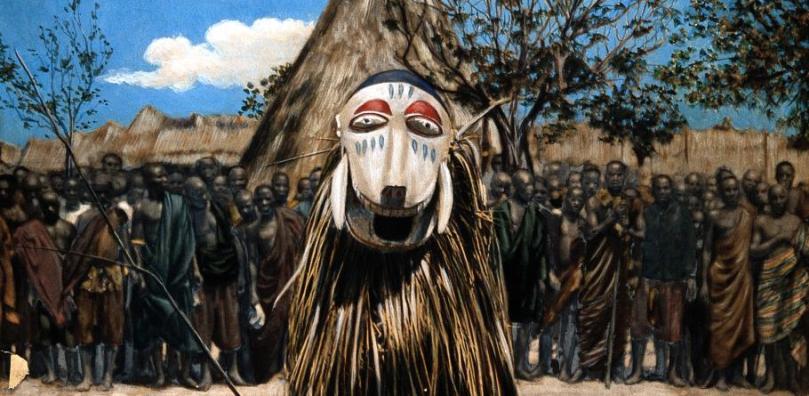
Image credit: Heywood, Paolo. (2017) 2023. “Ontological turn, the”. In The Open Encyclopedia of Anthropology, edited by Felix Stein. Facsimile of the first edition in The Cambridge Encyclopedia of Anthropology. Online: http://doi.org/10.29164/17ontology

Spirit Possession: a return to wholeness?

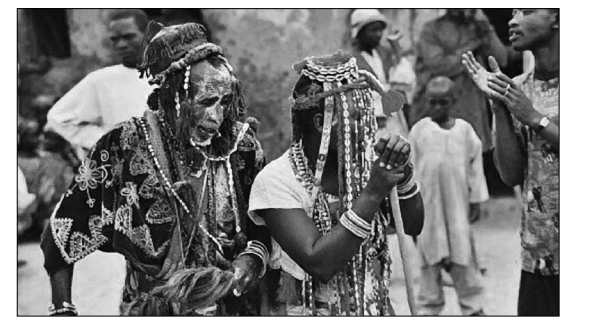
Sarkin Rafi during a Bori performance in Zaria. Source: (Okagbue, 2008)

This article continues the exploration of spirits in Hausa Animism which was shared in a previous article titled ‘Spirits (Bori/Iskoki) in Hausa Animism‘. In the previous article, we learned that the Hausas believe that spirits were at one point humans who were then condemned to live as spirits, in the unseen world, by god.

The god-made division between the spirit and human siblings had consequences, especially for the human siblings who have to spend much of their lives appeasing their spirit-siblings. The spirit-siblings, according to Sullivan (2005), have had to rely on two main mediums of expressions, “the language of malady, which expresses their displeasure at being ignored or defiled” and “the language of the adept’s body, in which [the] spirits can manifest their otherwise ethereal presence in corporeal form.” Sullivan (2005) argues that spirit possession, or Bori, is a reintegration between the long-separated siblings, which brings about a balance (wholeness) in the wellbeing of the humans who would otherwise be doomed to suffer afflictions.

This piece is an attempt to uncover if and how other belief systems across the continent are similar to Hausa Animism in the belief that humans need to foster relationships with spirits for the sake of their wellbeing and wholeness.

Ngoma: Swahili ( Tanzania)

In Tanzania, spirit possession ceremonies are called Ngoma but, beyond possession rites, they are avenues for the veneration and propitiation of spirits to obtain healing, protection and help to ward off the influence of evil spirits and witchcraft (Giles, 2018). The term Ngoma also refers to various “performance(s), drumming, dancing, celebration, and ritual therapy” (Janzen, 1992). A simple search of the term Ngoma will bring up many results, most of which fail to state that Ngoma is, in fact, first a healing/possession ceremony (Ngoma za kutibu) out of which emerged the now better known and purely entertaining form of the ceremony (Janzen, 1992).

As Janzen (1992) shows in great detail, Ngomas are often an avenue for healing. The typical scenario is this: an individual suffers an ailment of unknown causes, and after a series of consultations with traditional medicine people, it is determined that a specific spirit is responsible for the sickness. At this point, a ceremony holds to appease the spirit. In many cases, the individual becomes an initiate into the cult of the spirit responsible for their ailment.

Ngoma cults have been referred to as “cults of affliction” (Janzen, 1992), perhaps because most new adherents join after being healed from their afflictions. It is worth noting that not all members of these cults suffered ailments before they joined. Both Janzen (1992) and Giles (2018) go into detail about the differences in Ngoma cults across Tanzania. Each region has various spirits they recognize, and in many cases, these spirits are often categorized based on their location (e.g. land and water spirits), their origins (e.g. Kiarabu or spirits of Arab origins, and Kipemba spirits or native Swahili spirits), e.t.c.

So while Ngoma might, in the modern-day, be a form of entertainment, its origins emphasized the role of spirits who are responsible for afflictions from which humans sought healing.

Holle Hori: Songhay (Niger)

The belief in spirits is a central feature in the religious system of the Songhay in Niger. Similar to Swahili, they also have characterizations of spirits based on their origins and some times, race. The more contact they had with foreigners, the more their pantheon of spirits expanded. For instance, the Genji Kwari, or white spirits, were included as they interacted with the Tuareg, who at the time were Islamic dispute arbitrators. Similarly, Hausa spirits (of sickness and death), were included in the Songhay pantheon in the nineteenth century (Stoller, 2010).

The existence of these spirits necessitated a cult of worshippers and possession troupes which often included priests, mediums, singers, and instrumentalists who launched spirit possession ceremonies or Holle Hori and staged rites that allowed the interaction between spirits and humans (Stoller, 2010).

Like in Tanzania, initiates of a particular spirit cult are typically those who have suffered ailments believed to be caused and healed by the spirit a cult is dedicated to. Similarly, and in many cases, it is only after being initiated that the spirit grants reprieve from the afflictions and the new devotee can live in harmony with the spirit. New members into spirit cults are said to “devote a large part of their lives to their spirits; they wear clothes associated with them, make sacrifices to them, and attend possession ceremonies” dedicated to these spirits (Berliner, 2009).

Two Halves of a Whole

Across the spiritual traditions discussed here, we see that humans and spirits seem to have a symbiotic relationship—where the existence of one depends on the other. A thread that connects Bori, Ngoma, and Halle Hori is the belief that humans are each born with an accompanying spirit, who might inflict an affliction on individuals if and when neglected. Any form of healing or respite comes after the spirit has been sought out and appeased. In many cases, these offerings are also initiation rites for the afflicted individual who then becomes a part of the cult dedicated to the spirit that had caused their ailment.

Belief in spirits, as observed in these traditions, have broad implications including. One implication is the conviction that there are forces beyond what human senses can perceive, and that these forces have a locus of influence spanning across every aspect of existence on Earth. As expressed by the fact that most aspects of the natural world have governing spirits, from rain, ailments, trees, animals, rocks and mountains, etc.

In Bori, for instance, we see that totem animals and certain sites (rivers, mountains, hills, trees) are venerated and protected because of their spiritual significance to adherents. As a result of the value placed on these animals and sites, they are often not allowed to be hunted or killed, and the sites are protected because they are holy (Danfulani, 1999).

Another implication of the belief in spirits would be the need to preserve the natural environment while being mindful that the existence of other living things enriches human existence. As seen with Bori, certain animals were sacred because they were totemic spirits, while parts of nature were holy sites because spirits resided there (Danfulani, 1999). Likewise, in Tanzania, we see distinctions between land and water spirits (Janzen, 1992). As a result, it is safe to assume that the behaviour of any people who hold such beliefs would aim at maintaining a balanced relationship with their immediate natural environment because they believe that spirits can and often do, lash out when not propitiated.

Naturally, these implications lead to more questions like, what explanations can be we find in African belief systems for the current state of the world? How would they explain global warming, or the COVID-19 outbreak, or mental health crises, for that matter? Should we be looking to these systems for redemption?

Refrences

Dale, G. (1920). The Peoples of Zanzibar: Their Customs and Religious Beliefs. Universities’ Mission to Central Africa.

Danfulani, U. H. D. (1999). Factors Contributing to the Survival of The Bori Cult in Northern Nigeria. Numen, 46(4), 412–447. https://doi.org/10.1163/1568527991201437

Giles, L. L. (1999). Spirit Possession & the Symbolic Construction of Swahili Society. In H. Heike & U. Luig (Eds.),   Spirit Possession, Modernity, and Power in Africa  . The University of Wisconsin Press.

Giles, L. L. (2018). Translocal Interconnections within the Swahili Spirit World. In F. Declich (Ed.), Translocal Connections across the Indian Ocean Swahili Speaking Networks on the Move. Brill.

Janzen, J. M. (1992). Ngoma Discourses of Healing in Central and Southern Africa. University of California Press. https://publishing.cdlib.org/ucpressebooks/view?docId=ft3779n8vf&chunk.id=d0e440&toc.depth=100&toc.id=d0e440&brand=ucpress

Luig, U. (1999). Constructing Local Worlds: Spirit Possession in the Gwembe Valley, Zambia. In H. Behrend & U. Luig (Eds.), Spirit Possession, Modernity, and Power in Africa. The University of Wisconsin Press.

Okagbue, O. (2008). Deviants and Outcasts: Power and Politics in Hausa Bori Performances. New Theatre Quarterly, 24(3), 270–280. https://doi.org/10.1017/s0266464x08000328

Stoller, P. (2010). Fusion of the Worlds. University of Chicago Press.

Sullivan, J. (2005). Exploring Bori as a Site of Myth in Hausa Culture. Journal of African Cultural Studies, 17(2), 271–282. https://doi.org/10.1080/13696850500448378

Spirits (Bori/Iskoki) in Hausa Animism

In the Beginning God Created Iskoki

According to the Mawri people of Dogondoutchi in The Niger Republic, in the beginning, God created a man and woman who procreated and bore fifty sets of twin babies. God was pleased and wanted to marvel at children and so asked the man and woman to see them up close, however, doubting God’s motive, the woman told her husband to hide the better-looking twin from each set in a cave. Knowing what they had done and displeased by it, God decided to punish the man and woman by cursing the children who were hidden in the cave. These children were cursed to disappear (become spirits) and remain in the unseen world, forever invisible to their parents and siblings, yet, dependent on them for sustenance. The children who remained on the human plane of existence were, on the other hand, bound to their invisible siblings to seek protection and guidance and placate them with offerings (the origin of sacrifice) or risk being haunted (Masquelier, 2001)1

This story establishes the presence and importance of spirits by centering them in the creation story of the Mawri people. Indeed, spirits are an essential aspect of belief in Hausa Animism as can be seen in the story of the Maguzawa from Kano who, even though they believed in Ubangiji, the supreme being, were never known to worship nor seek his help (Danfulani, 1999)2. Rather, they interfaced strictly with spirits, known as iskoki or Bori, through various ways and particularly through spirit possession, a practice that has endured over the centuries and is perhaps the most notable spiritual practice in Hausa Animism. It is also worth noting that the Mawri people in Dogondoutchi do not worship a supreme being, however, like the Maguzawa, they believe that each person comes into the world with an Iska (singular of iskoki) or multiple attached to them. The Mawri also believe that certain iskoki can be inherited from the family one is born into and these familial spirits often have physical influence over the family, like the line of work a family might be known for (Masquelier, 2001). 

The Maguzawa and Mawri people also believed that spirits inhabited the physical natural environment and as a result, they had a deep reverence for the natural environment which influenced the manner both peoples interacted with the land, trees, and rivers they encountered in their daily lives. The Maguzawa, for instance, centered their religious activities around Dalla Hill in Kano where their first leader performed religious rites and ceremonies to Tsomburburai, a pantheon of spirits who inhabited a sacred tree known as Shamuz. Likewise, the Mawri believe their ancestors were led by Sauraniya, a woman possessed by a spirit of the same name, who led them from the Hausa State of Daura to their current location in Niger. The Sauraniya (Hausa for queen), was also a spiritual leader who was said to be devoted to land spirits and thus helped her people connect to these spirits. The Mawri also used stones as anchorage for their spirits. These often doubled as altars to the spirits and it is believed that each spirit chose the stone to be used on its behalf.

Things Change but Spirit Remains the Same

Even though Hausa Animism experienced a tidal wave of change with both the arrival of Islam and colonization, like many resilient cultures across the African continent, adherents found ways to incorporate these changes into their belief systems. It has been argued that for both the Mawri and Maguzwa, syncretizing with Islam is one of the main reasons both people have not completely lost their indigenous beliefs (Danfulani, 1999; Masquelier, 2001). Both the Mawri and Maguzawa peoples indeed adapted elements of Islam into their beliefs and localized practices, however, one thing remained the same, the existence of iskoki/bori. 

The Maguzawa, for instance, introduced Muslim bori into the pantheon of spirits that already existed. The Maguzawa even went so far as to differentiate Muslim bori from pagan bori who were believed to be village dwellers, in contrast to the Muslim Bori who were city dwellers (Danfulani, 1999). This contrast is believed to have represented the emergence of cities and urban living among the Hausa and its association with trade and commerce, and subsequently with Islam (Danfulani, 1999). Consequently, the Muslim bori were perceived to be light-complexioned (farfaru), indicating the divine, holy and pure nature of the light and truth of Islam, while the so-called pagan Boris were dark-complexioned, malevolent and relegated to the world of pagans and infidels (Danfulani, 1999). 

Elsewhere in Mawri, Masquelier (2001) claims that the interaction between Islam and Bori was extensive and complex such that it was nearly impossible to tell where one ended and the other began. Masquelier (2001) cites the example of known Bori practitioners who travelled on pilgrimage to Mecca, as well as those who were present at and participated in bori possession ceremonies. The influence of Islam can also be seen in the initial story of the first man and woman narrated earlier. Versions of the story told among the Mawri claim that the name of the first woman was Hawa (or Adama) and her husband, Adamu. It is not a coincidence that these are the names of the first man and woman in the Islamic version of the creation story.

A Double-Edged Sword

According to Danfulani (1999), one of the reasons the Maguzwa belief system (simply referred to as Bori) has survived so long is because it converted spirits into Islam and Bori practitioners accepted that iskoki were also creations of Allah. This notion was somewhat easily accepted because iskoki were then categorized alongside jinns, the supernatural beings that predated Islam but were co-opted by it. Whereas the Maguzawa simply categorized spirits based on whether they were malevolent or benevolent, the categorization into fairer and darker spirits was representative of the Islamic notions of dar-al-harb and dar-al-Islam, meaning the abode of war (the world of pagans and infidels) and the abode of Islam, respectively (Danfulani, 1999). This simple yet profound misrepresentation of iskoki would become one of the reasons why more Bori practitioners would forsake the belief system.

While the syncretization of Islam and Hausa Animism might have influenced its survival so far, it is also worth noting that Islam has also significantly contributed to the suppression of Hausa Animism most notably through the jihad led by Sheikh Usman Dan Fodio which resulted in a predominantly Islamic empire around the region that is now northern Nigeria. The consequence of this crusade is still seen today in the marginalization and almost complete disappearance of Bori practitioners across northern Nigeria where they initially thrived. Still, there are pockets of practitioners to be found in Nigeria, and indeed across the continent. As Masquelier (2001) puts it, Bori has continued to reassert itself through its capacity to become a multifaceted belief system that addresses a variety of needs and expectations, even when that means containing contradictions paradoxes. 

Sources:

  1. Masquelier, A. (2001). Prayer Has Spoiled Everything. Duke University Press.
  2. Danfulani, U. H. D. (1999). Factors Contributing to the Survival of the Bori Cult in Northern Nigeria. Numen, 46(4), 412–447. http://www.jstor.org/stable/3270434